
Shotgun King: The Final Checkmate for macOS
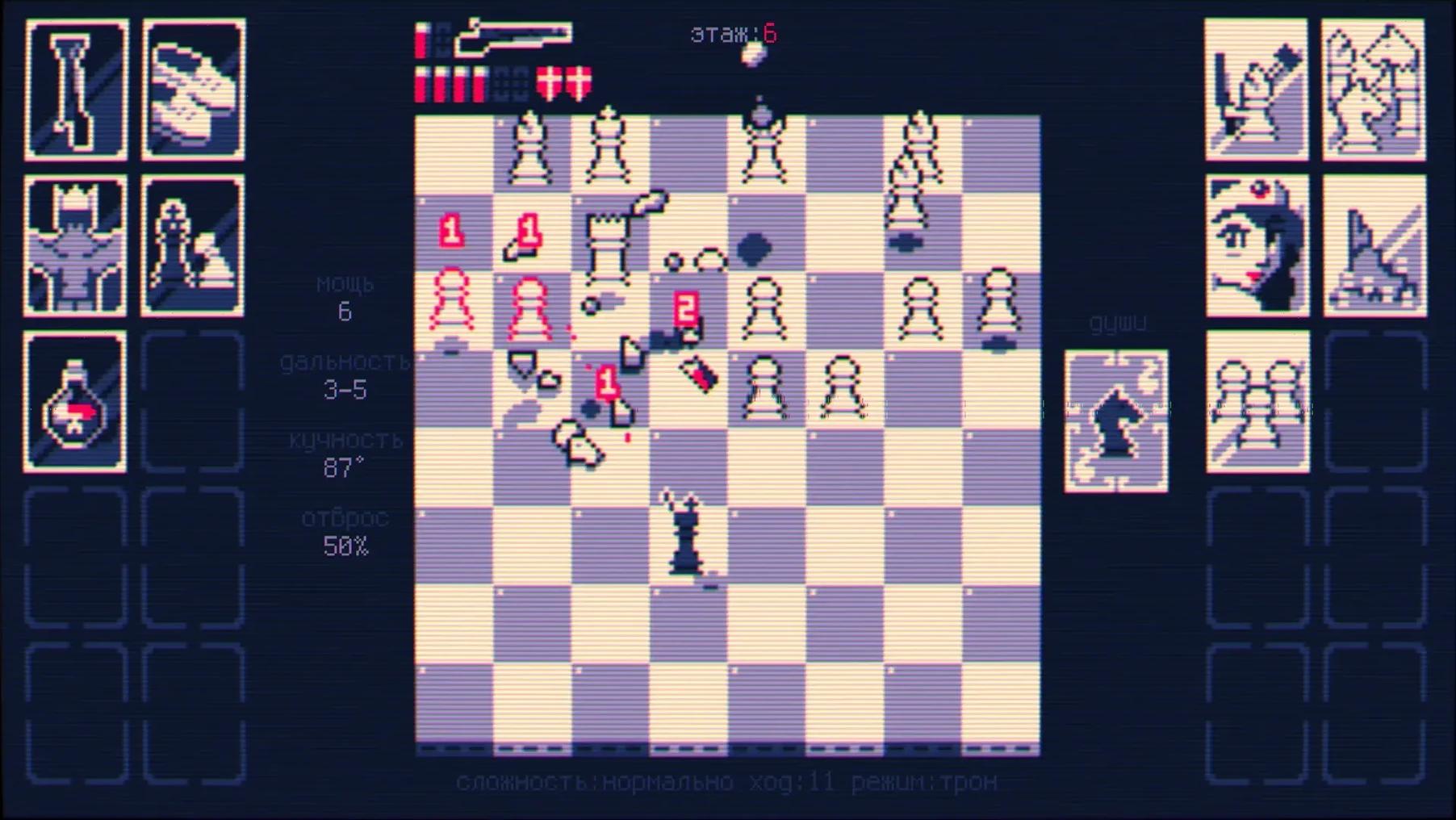
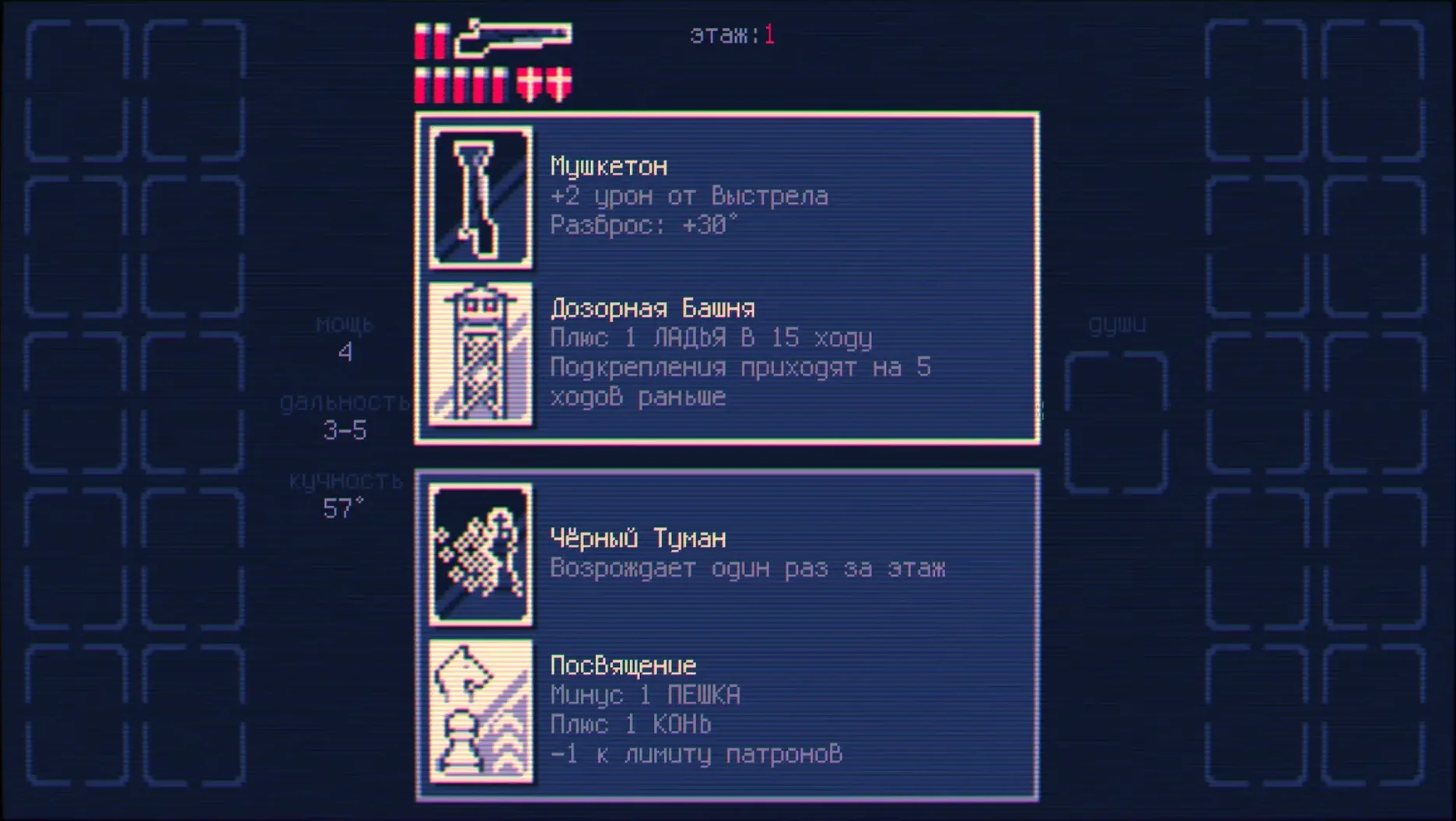
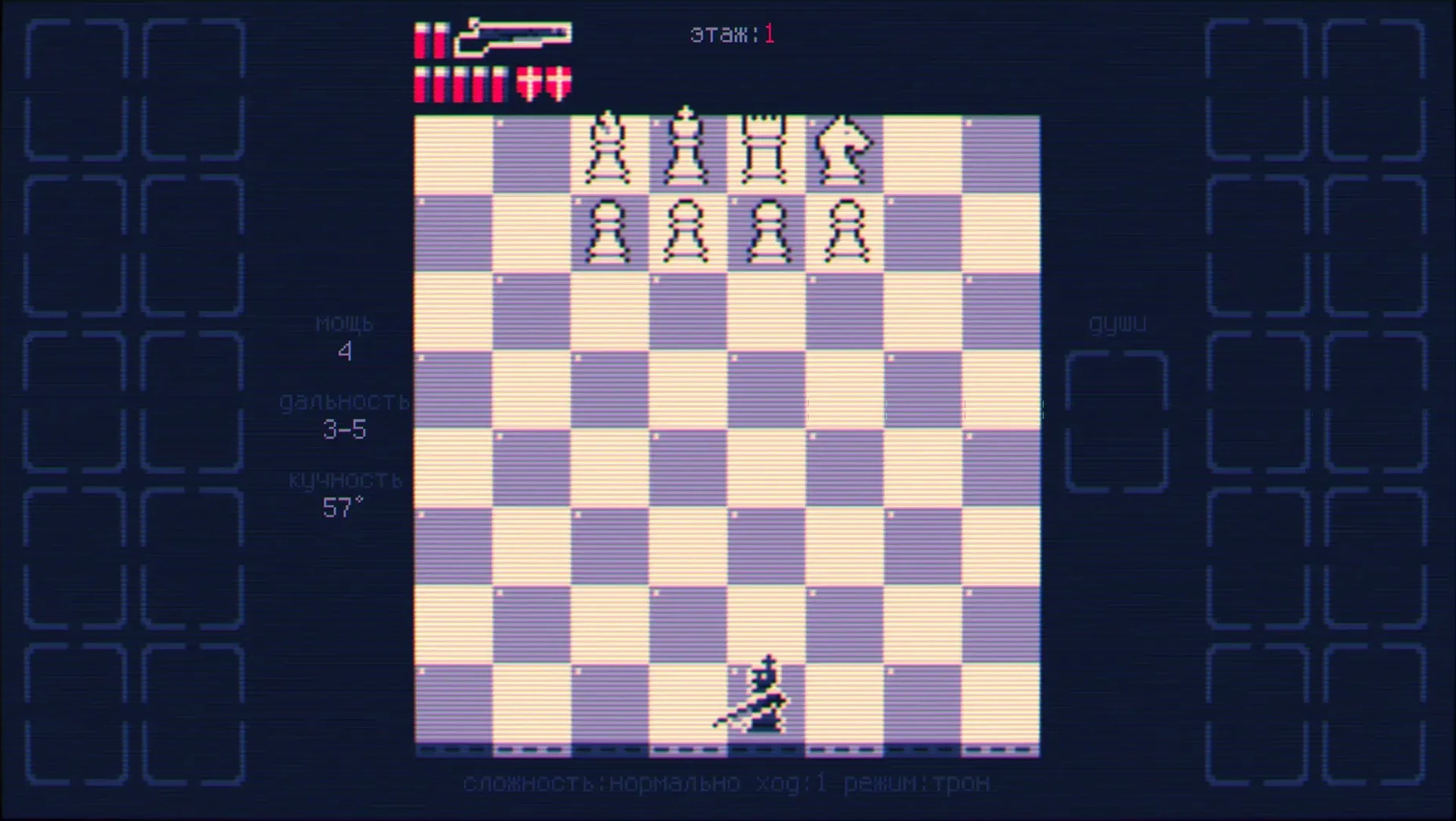
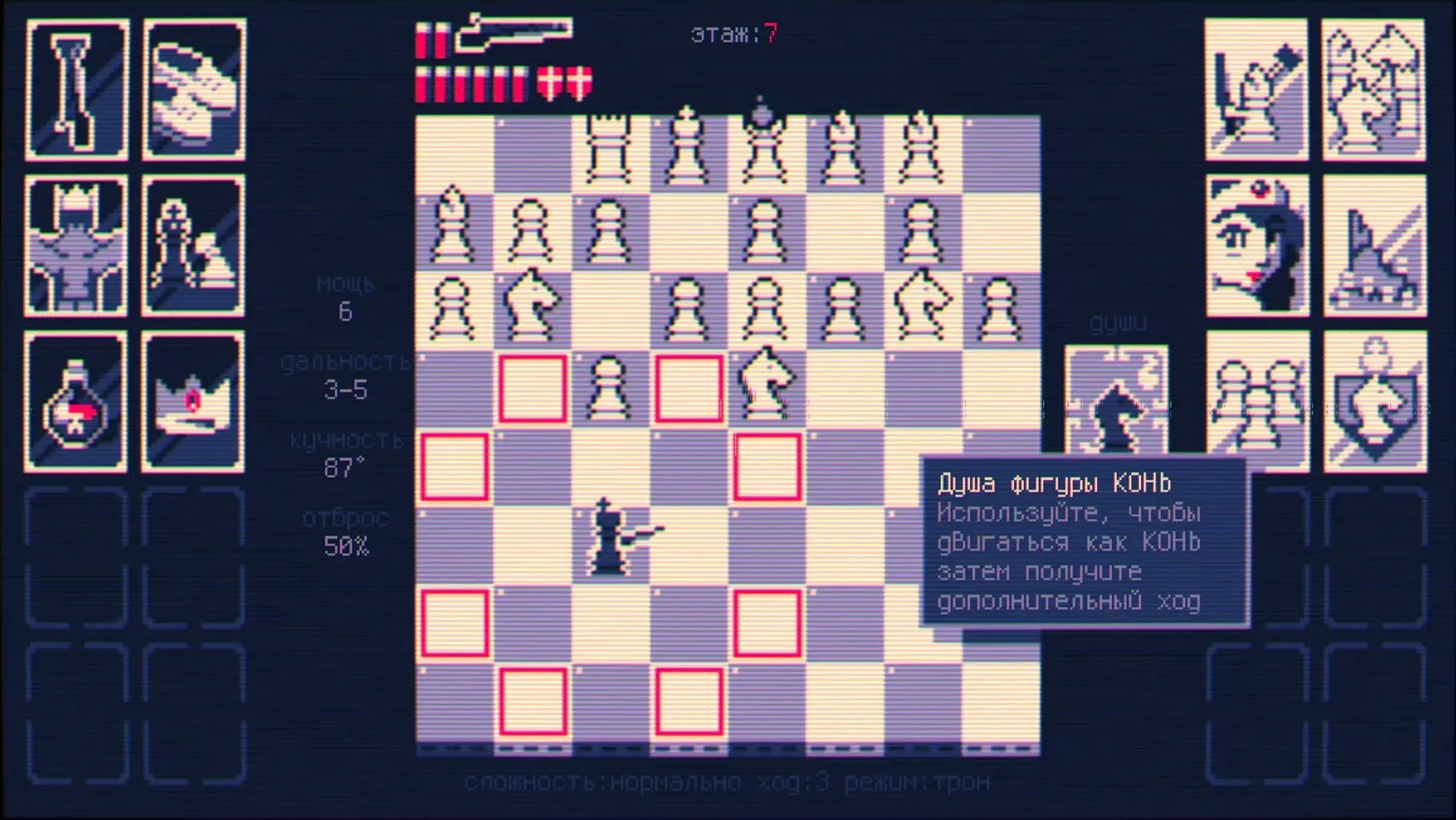
Shotgun King: The Final Checkmate is for the player who grins at unfair odds. You are the black king, and you have just dismissed your entire army in favor of a single break-action shotgun. Every turn, you move one tile on a chessboard, then fire at the white pieces advancing toward you. It is a simple loop with a nasty twist: survival depends on choosing your poison after each floor.
Who will enjoy this
This is a game for turn-based tactics fans who appreciate short, high-pressure sessions. A full run clocks in around 20 minutes, so it fits neatly into a lunch break. You need to be comfortable with asymmetry. After clearing a floor, you pick between two random card pairs. One card in each pair buffs the king—extra shells, more health, a wider blast radius. The other card strengthens the enemy side by adding new piece types, giving them armor, or triggering chase mode, where the entire board pursues you relentlessly. If you hate the idea of making your own problems worse just to get a small edge, this might not click for you. But if you thrive on tactical puzzles where every choice has a visible, often painful consequence down the line, the loop is magnetic. Endless mode is there for when you need to push a lucky build to its absolute limit.
Why the trade-off system can feel punishing, not empowering
Don't come in expecting a power fantasy. The core trade-off system means you are almost always outnumbered and outgunned in some way. The action-strategy-indie genre blend sounds broader than it actually is; this is a tight, minimalist design, not a cinematic experience. If you prefer carefully balanced, symmetrical multiplayer strategy or you get frustrated by runs ending because of a single bad floor of card offerings, the roguelike structure will chafe. The chase mode in particular flips the tactical pacing on its head, turning a careful positioning puzzle into a frantic scramble, which not every strategy player will find enjoyable.
A floor-clearing workflow, move by move
Say you land on floor seven with the Scatterblast upgrade (three-pellet spread) and a board full of white bishops. Bishops own the diagonals, so the first five seconds are pure zoning. I count the light-square bishops, then the dark-square ones, and note which squares both colors touch. That overlap is the danger zone, so I step off it immediately with a single king move to a safe file.
Next, I pick the bishop cluster that threatens the shortest path to the white king. One shot with Scatterblast can delete two or three pieces if they line up right, so I spend a turn repositioning to force a diagonal alignment. The shot clears the lane but costs me a reload turn. During that reload, I retreat one square toward a corner where I can funnel the remaining bishops into a narrow approach. By the time the shotgun is ready again, I have a single-file kill zone and a clean line to the enemy king. It sounds methodical, but the whole sequence happens in under a minute once you internalize the reload rhythm.
Right-click threat highlights and other subtle speed boosts
Several small features speed up play considerably in the macOS build. Right-click on any enemy piece and the game highlights every tile it threatens in red for a split second. The reload indicator under your king sprite actually pulses on the final waiting turn, so if you glance away from the screen, that little pulse catches the eye. In the card-selection screen after each floor, you can press the number keys 1 or 2 to pick a card pair instead of clicking, which shaves off enough time to matter across a long endless mode run. The game also remembers your last difficulty rank and mode between sessions, so you can pick up exactly where you left off without re-navigating menus.
White kings now retreat harder when cornered
Version 1.623b tightened a few everyday-play edges. Enemy king pathfinding used to occasionally stall when cornered by its own pieces; that is fixed, so white kings now retreat more aggressively and require an extra turn of planning to trap. A handful of unlockable upgrade cards that previously felt redundant, like Royal Armor I, got slight numerical tweaks so they compete more credibly against damage-focused alternatives in the early floors. The chase mode spawn rate was also rebalanced. Enemies now trickle in from all sides with a tiny initial delay on lower difficulty ranks, which means you get one extra turn to orient yourself before the full scramble starts. It is a small grace period, but it makes the mode feel fairer without blunting its tension. For the macOS build, the .dmg installer was streamlined so the drag-and-drop path works without any hidden permission prompts on Apple Silicon Macs running the latest updates.
- Tested on macOS Tahoe
- Intel and Apple Silicon Macs
- Tested on a Mac mini 2024 M4
$ man shotgun-king-the-final-checkmate | grep -A2 "?"
What is the core combat loop in Shotgun King?
You control the black king on a chessboard. Each turn, you move one square, aim with a cursor, and fire a shotgun blast at the white pieces before they get their move to capture you.
How do the upgrade cards work after each floor?
You are offered two random pairs of cards. In each pair, one card makes the king more powerful, and the other card improves the enemy forces, forcing you to choose a buff while also making the game harder.
What happens in chase mode?
In chase mode, the standard turn-based maneuvering shifts into a survival scenario. All enemy pieces continuously pursue the king from every side of the board, demanding a much more aggressive escape strategy.
Comments 0
Sign in or create an account to leave a comment.
No comments yet. A codec, a slice, a machine — they appear after moderation.