Angry Birds Reloaded for macOS
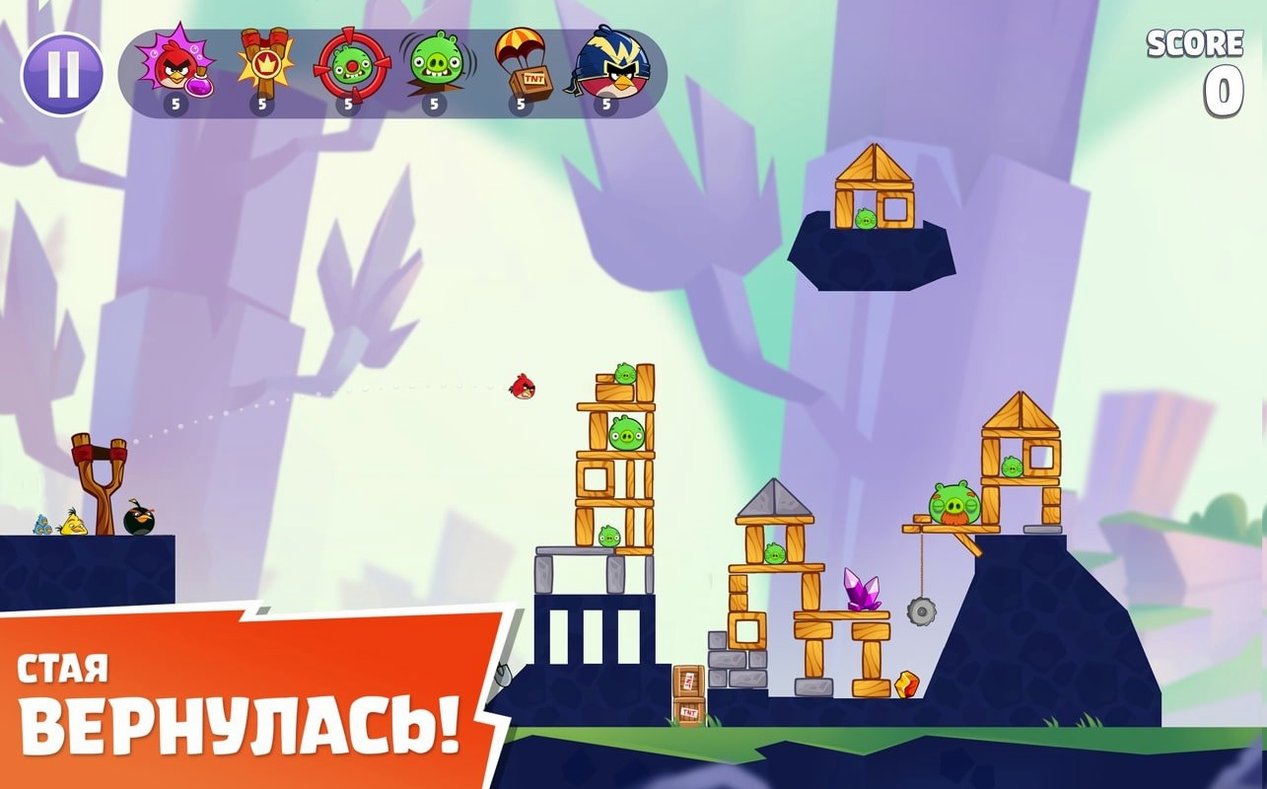
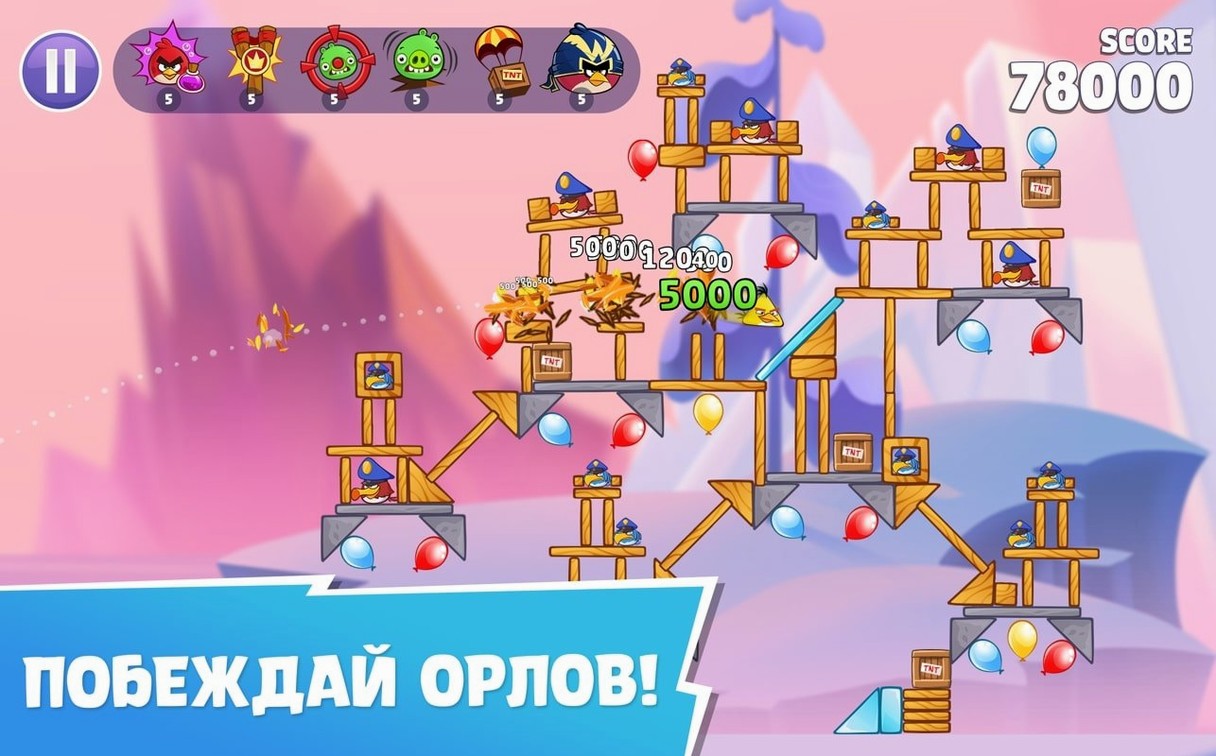

Over 500 levels ship in the 4.2 release. A new world sits on the map, and you pull back a slingshot. The first bird arcs toward a pig fortress. The tower wobbles, blocks slide, and the structure collapses. That loop—aim, release, watch—defines every minute.
- Pick a level from the world map. The camera pans to a pig-built structure with birds lined up on the left.
- Drag the slingshot back. A dotted trajectory line shows the arc. Release to launch the bird.
- Wood splinters, glass shatters, and stone tumbles. Each material reacts with its own weight and strength.
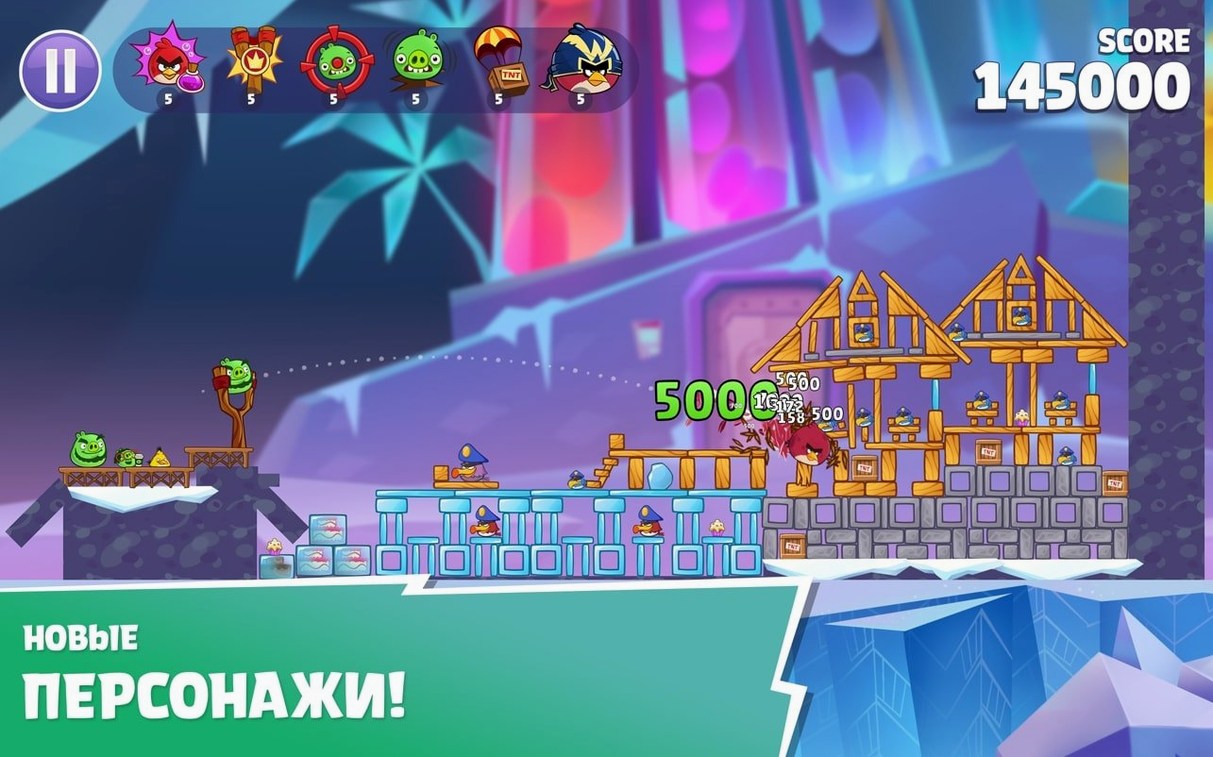
- Birds activate mid-flight with a tap. A yellow bird accelerates; a black bird explodes. The physics engine recalculates the destruction in real time.
- Pigs pop when crushed or struck by debris. Clear all pigs to finish the level. The score tallies based on birds left and damage caused.
- Progress unlocks new birds, worlds, and eagle challenges. Scores sync to a single iCloud account.
Content from the original games and movies is folded in. New levels and eagle events arrive with updates. The package runs native on Apple Silicon and Intel under macOS 11.0 and later, distributed as a .dmg exclusive to Apple Arcade. Rovio keeps the formula tight: no story mode to grind, just a string of physics puzzles where the fun is watching a poorly stacked tower pay the price.
What does a full run through a tricky level actually look like?
Take a mid-game level with three towers connected by narrow bridges and a king pig tucked inside a stone shell. A first-day player might lob Red straight at the nearest tower and hope for the best. A better approach works in layers.
Open with a yellow bird—Chuck—sent through the leftmost bridge supports. Tap while he’s in flight to trigger the speed burst, and aim for the spot where wood meets stone. The bridge collapses and the left tower tips into the center structure. That chain reaction weakens the middle without spending a second bird.
Next, send a black bird into the rubble pile. Detonate Bomb on impact. The explosion clears loose blocks and flips the king pig’s stone shell on its side. If the pig survives, the third bird is Silver. Loop Silver back around with a post-launch tap and strike the exposed pig from the side. Three birds, zero leftovers, maximum points.
This sequence works because the game’s physics are consistent: wood splinters under acceleration, stone resists everything except explosions, and chain reactions multiply damage. Learning the material rules takes a few sessions, but once you internalize them, you stop guessing and start planning.
Why pacing your first session unlocks progress
The angry birds reloaded dmg lands on your desktop as a disk image. After dragging the app to /Applications, resist the urge to marathon the first three worlds in one sitting. The game rewards pacing.
Spend the first session replaying the initial ten levels. Each replay earns a higher star rating, and the three-star thresholds teach you efficiency: less bird waste, better angle selection, faster clear times. The muscle memory you build on early levels transfers directly to later worlds where pig fortresses grow taller and more complex.
Second, open the character roster and read each bird’s ability description. Red has no special move, but his damage on direct hits is higher than it looks. Chuck accelerates. Bomb detonates. Silver loops. Matilda drops an egg mid-arc. The Blues split into three on tap. Knowing these without hesitation means you react in flight rather than fumbling for the tap timing.
Third, ignore the eagle events for the first week. They unlock early, but they consume a limited resource and the score thresholds are balanced for players who already understand ricochet angles and debris physics. Use the standard levels as your training ground.
Why aiming only for pigs topples your score
The biggest one is launching every bird at the pigs. Pigs are the win condition, but the structure is the puzzle. A shot aimed at a pig sitting on a glass beam might kill one enemy and leave three towers standing. A shot aimed at the beam’s weak point collapses the whole section. Target load-bearing blocks first.
Another mistake: hoarding power-ups. The game hands out extra-powerful birds and shockwave blasts, and new players often save them for a boss fight that never comes. Levels don’t scale to match your inventory. Use a power-up when a level stops being fun, not when you’ve failed it ten times. The fun is the point.
Some players treat Angry Birds as a touchscreen game and tap constantly during flight. On Mac, the trackpad and mouse give you finer slingshot control—smaller drag distances, precise angle adjustments—but the tap timing for bird abilities is less forgiving than on a phone. Practicing with a light tap rather than a hard click prevents accidental launches. If you’re coming from the mobile version via an angry birds torrent or an angry bird torrent, the input difference takes a few sessions to feel natural.
Finally, ignoring the scoreboard. Local leaderboards are easy to dismiss, but they track your iCloud scores and give you a reason to replay levels with tighter execution. A three-star clear feels different when you see a friend’s score sitting six thousand points above yours.
What small conveniences and shortcuts are easy to miss?
Holding the slingshot at full draw for three seconds zooms the camera slightly further out. The change is subtle—maybe fifteen percent more viewable area—but on levels with towers at the screen edges, it reveals weak points you otherwise scroll past.
The pause menu includes a restart button that resets the level without the penalty animation. Tapping R on the keyboard does the same thing faster. When a first shot goes wrong—bird clips the wrong block, chain reaction fizzles—hitting R the moment you know it’s a reset saves ten seconds per attempt. Across a hundred attempts, that matters.
Birds can be launched in any order the level provides, and the order matters more than the tutorial suggests. Try swapping the sequence. If a level gives you Chuck, Red, Bomb in that order, launching Red second instead of first sometimes opens a better angle for Chuck’s acceleration through a weakened tower. The game never explains this; it’s a discovery the physics engine allows.
The eagle meter fills from leftover birds, not just from eagle-specific events. A level cleared with three spare birds adds more to the meter than one cleared with a single spare. If you’re chasing eagle unlocks, replaying old levels for three-star clears builds the meter faster than pushing through new content.
On Apple Silicon machines, the game loads in under three seconds from a cold start. That quick launch changes how you play: you can open angry birds reloaded v3.21—or the current build—during a five-minute break, clear two levels, and quit. It’s a pick-up-and-put-down rhythm that fits the Mac better than long sessions.
- macOS 11.0 or later
- Apple Silicon and Intel native
- Tested on macOS Tahoe, Mac mini 2024 M4
- No activation required
Comments 0
Sign in or create an account to leave a comment.
No comments yet. A codec, a slice, a machine — they appear after moderation.
More in Games
cd ../ Arctic Awakening
Games 4 GB Updated
 Age of Empires II: Definitive Edition
Games 75 GB
 Aerofly FS 4 Flight Simulator
Games 222 GB Updated
 Assassin's Creed Shadows
Games 145 GB
 Assassin's Creed Unity
Games 42 GB
 ASYLUM
Games 11 GB
 ATOM RPG: Trudograd
Games 10 GB
 Batman: Arkham City - Game of the Year Edition
Games 11.3 GB