
Factorio for macOS
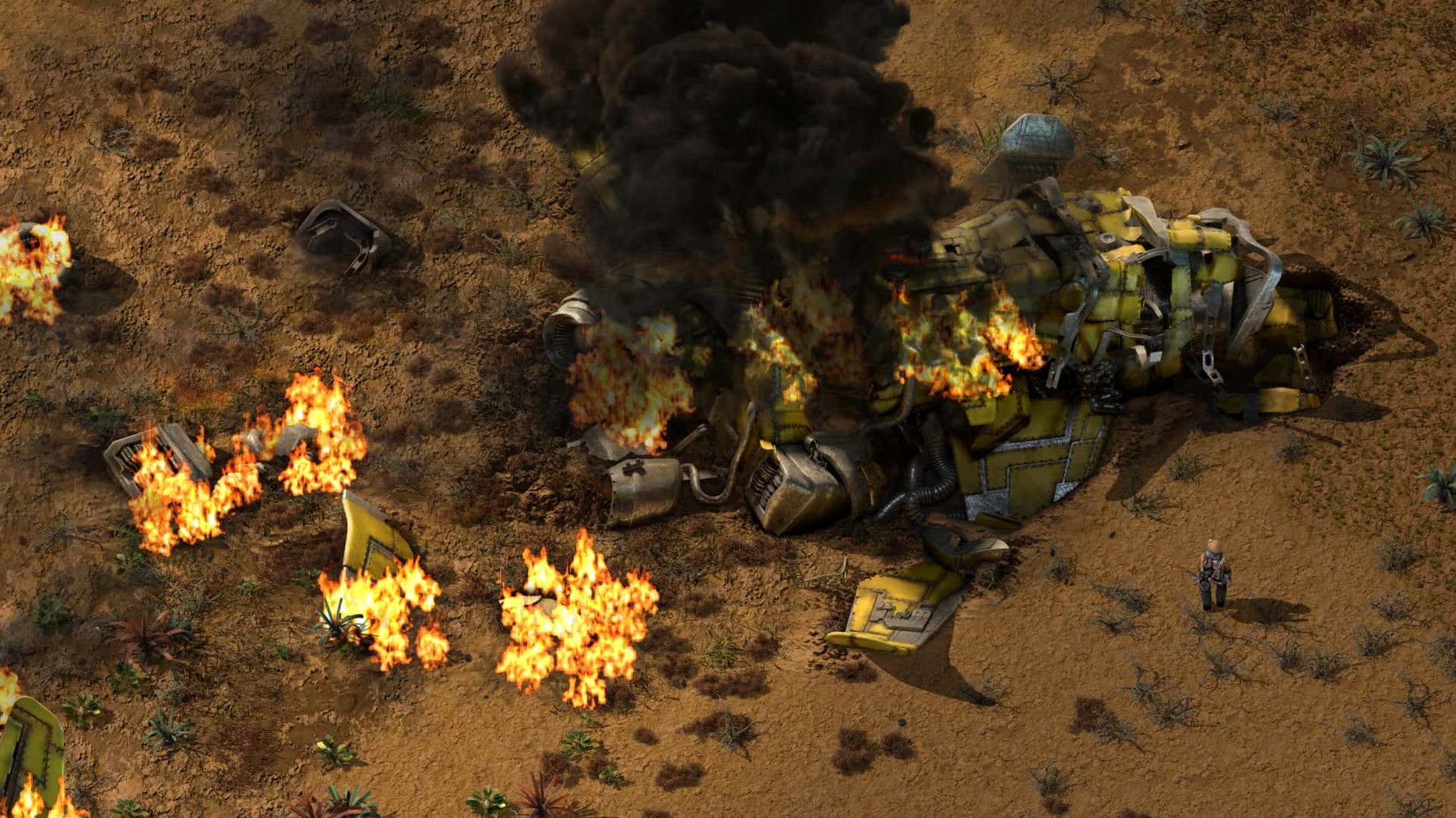
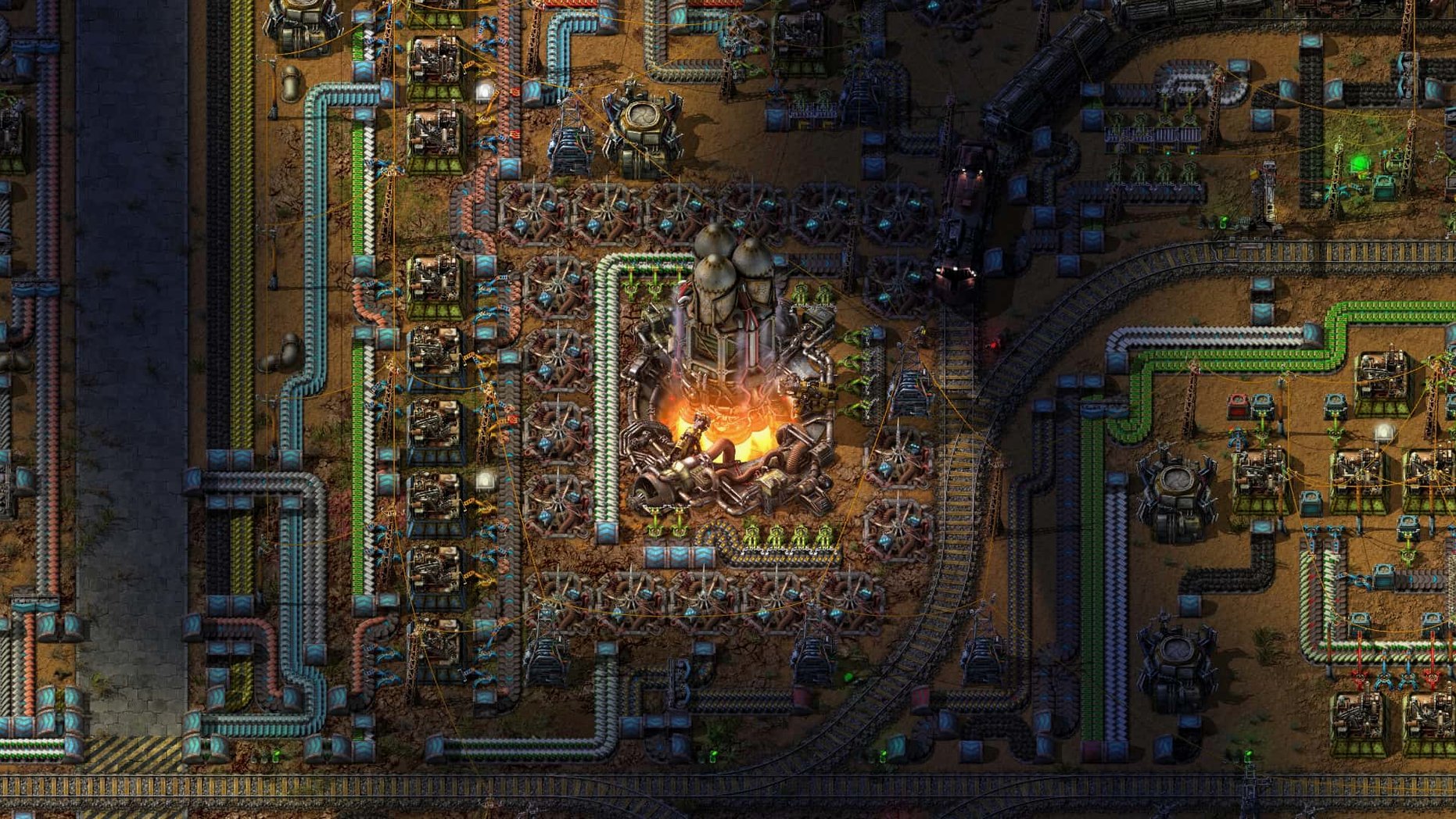
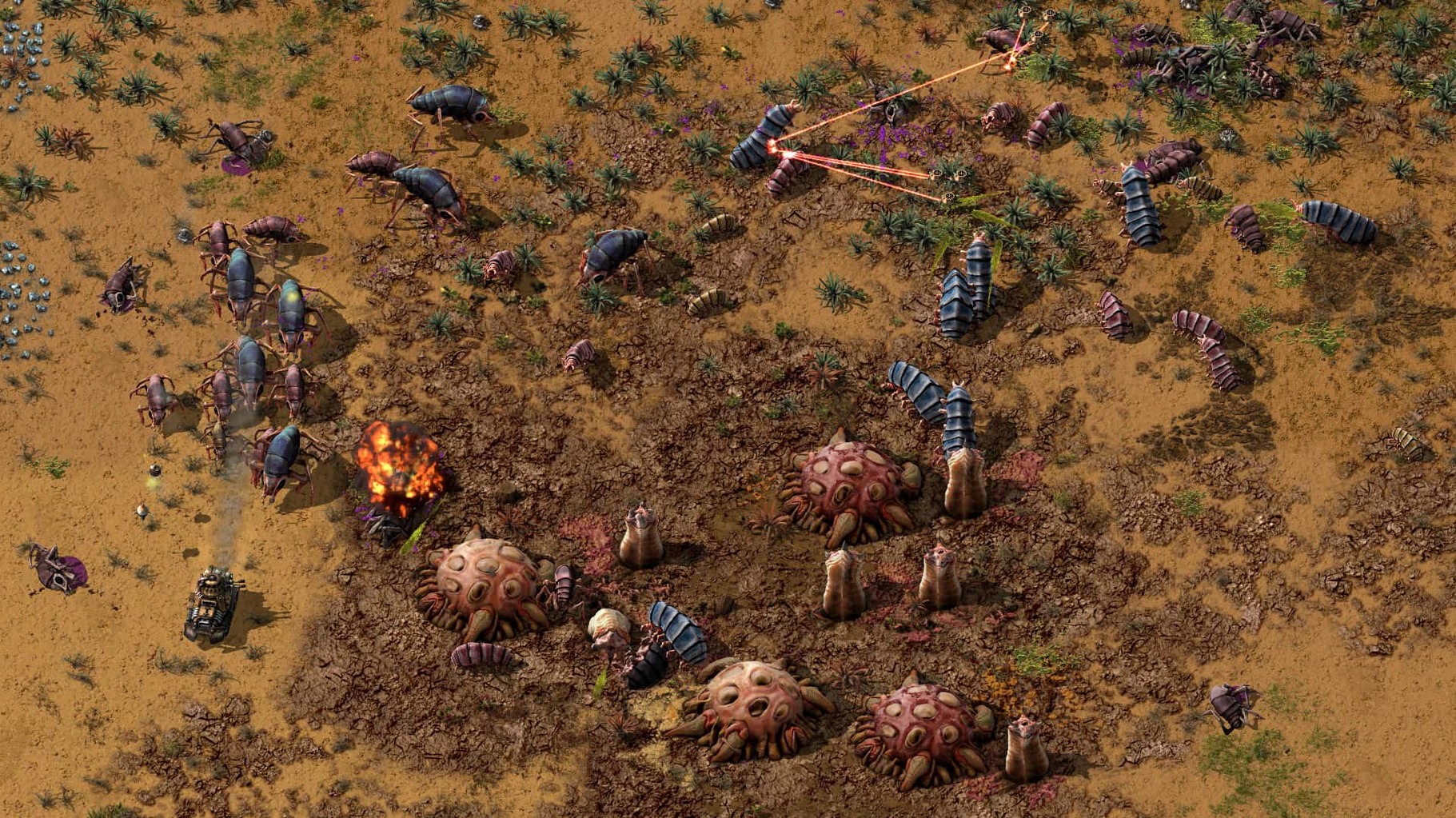
You land on an alien planet with nothing but a burner mining drill and a stone furnace. You chop a few trees, mine some coal by hand, and feed it into the drill over an iron patch. Within ten minutes you are staring at a tangle of yellow transport belts carrying copper plates toward a cluster of inserter arms, and the problem has shifted from "how do I get iron" to "why is my gear production starved." That is the core loop — you solve a bottleneck, create two more, and the factory grows.
Chopping trees and placing miners to feed smelting columns
- Chop trees and place miners on ore patches to feed smelting columns.
- Run transport belts from furnaces to assemblers, using inserters to move items between them.
- Automate intermediate products — iron gears, electronic circuits — so hand-crafting stops being viable.
- Clear alien nests that sit too close to your pollution cloud, usually with a submachine gun and a stack of piercing rounds.
- Unlock research like railways and oil processing, then reconfigure half the base to pipe in crude oil and crack it into petroleum gas.
Where things go once the factory runs
The built-in map editor lets you sketch out test setups without resource constraints, which is handy for prototyping belt balancers. Multiplayer sessions turn the game into a shared engineering argument — one person handles power, another reworks the smelting array, a third drives a tank through a biter nest. Mods live in ~/Library/Application Support/factorio/mods and can overhaul everything from recipe chains to enemy behavior, pulling from a large community library. The version 2.0.77 build runs natively on Apple Silicon and 64‑bit Intel Macs, tested on macOS Tahoe with an M4 Mac mini.
You open the save to fix a copper cable shortage
It is 9 p.m. and you tell yourself you will fix one copper cable shortage. You open the save and immediately notice the iron plate belt on the eastern bus is half-empty. You trace it back — the rail drop-off station has three trains waiting because the unloading inserters are grabbing from only one side of the wagon. You add six more stack inserters to the other side, wire them to a decider combinator so they balance, and watch the belt fill again.
Now the copper cable assemblers are getting enough iron, but they are output-starved because all eight machines feed onto a single yellow belt that cannot carry more than 15 items per second. You rip up the line, upgrade to red belts, and split the assemblers into two output lanes that merge after a balancer. The gear wheel assemblers downstream immediately spin up. It is 11:30 p.m.
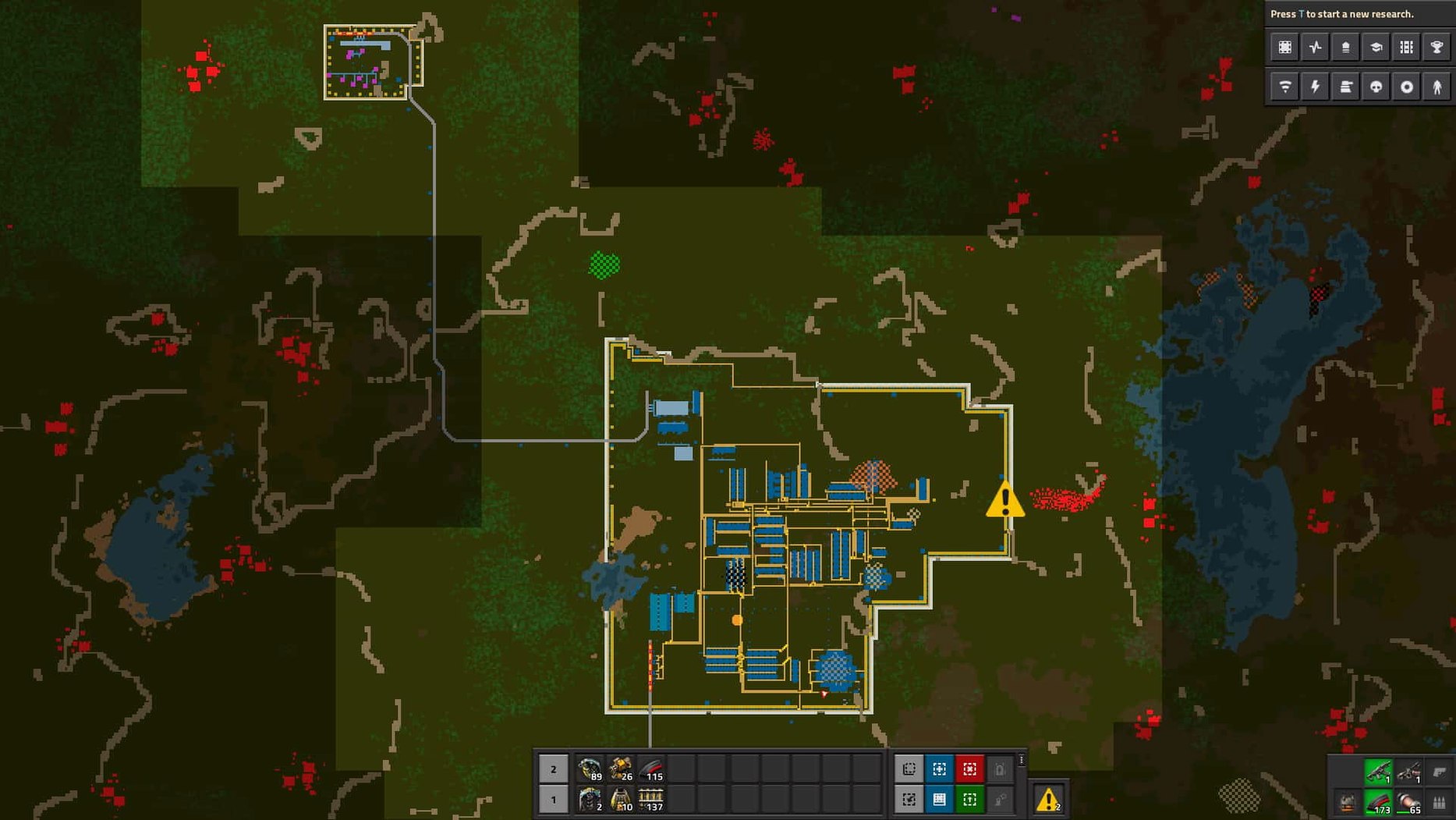
You notice the map blinking red in the northeast — a biter expansion party chewed through a radar outpost. You grab a tank from the garage, load explosive shells, drive out, clear the nests, and place four laser turrets behind a double wall before heading back. On the drive home you spot an untapped uranium patch. You mark it with a map pin, knowing tomorrow night you will start a Kovarex enrichment setup you did not plan to build.
Inserter deadlock fix after dozens of hours
Version 2.0.77 is not a feature drop — it is a stability pass, and the fixes it brings address pain points that players hit after dozens of hours. The inserter deadlock correction means a line of stack inserters waiting on a full belt no longer freezes silently, forcing you to manually rotate and replace each one. Rocket silo deadlocks were similarly frustrating: a silo with a full output buffer would refuse to launch even when the cargo was ready, and the fix restores the expected "launch when full" behavior without circuit-network workarounds.
Cargo pod clipping in the space platform logistics layer could leave items visually stuck mid-flight, making it hard to tell whether a shipment actually arrived. That bug is gone. The crash fixes — one when entities were killed without a valid damage source, another when creating a loader with a stack size override — mostly affect heavy mod users who push entity creation to strange edge cases. The new Lua prototype reads for quality-related values, drops_full_belt_stacks, and visualization_color are aimed squarely at mod authors, giving them cleaner access to data that previously required ugly workarounds.
Building on both sides of the bus too early
The biggest one is building on both sides of a resource bus too early. A single-sided bus with space to expand lets you add more belts of iron and copper later without ripping up assemblers. Tucking green circuit production tight against the bus on both sides guarantees a rebuild at hour twenty.
Ignoring ratios is the second trap. A single copper cable assembler feeds exactly six electronic circuit assemblers when running at speed one — but new players often pair them one-to-one and wonder why half the machines idle. The same applies to gear wheels and red science: two gear assemblers support ten red science assemblers, and overbuilding gears just burns iron and power.
Underestimating the pollution cloud gets players wiped. Biters attack when the cloud touches their nests, not when you get close. If you clear a nest but leave the cloud expanding toward three more, you have bought five minutes of peace at the cost of a larger retaliation wave. Turret creep — placing a line of gun turrets advancing toward a nest — works early, but rushing laser turrets without enough accumulator-backed power causes brownouts that shut down the factory mid-fight.
Finally, treating the factorio mac torrent download as a single-player-only experience misses half the game. The same build supports multiplayer with zero extra configuration, and hopping into a friend's factory to untangle their fluid processing teaches more in one session than ten hours of solo trial and error. If you grabbed the factorio macos torrent to try it out, the factorio download mac package includes everything needed for a co-op session — just uncheck the "visible on LAN" box if you want a private game.
- Apple Silicon native
- Intel 64-bit
Comments 0
Sign in or create an account to leave a comment.
No comments yet. A codec, a slice, a machine — they appear after moderation.