
Farming Simulator 25 for macOS
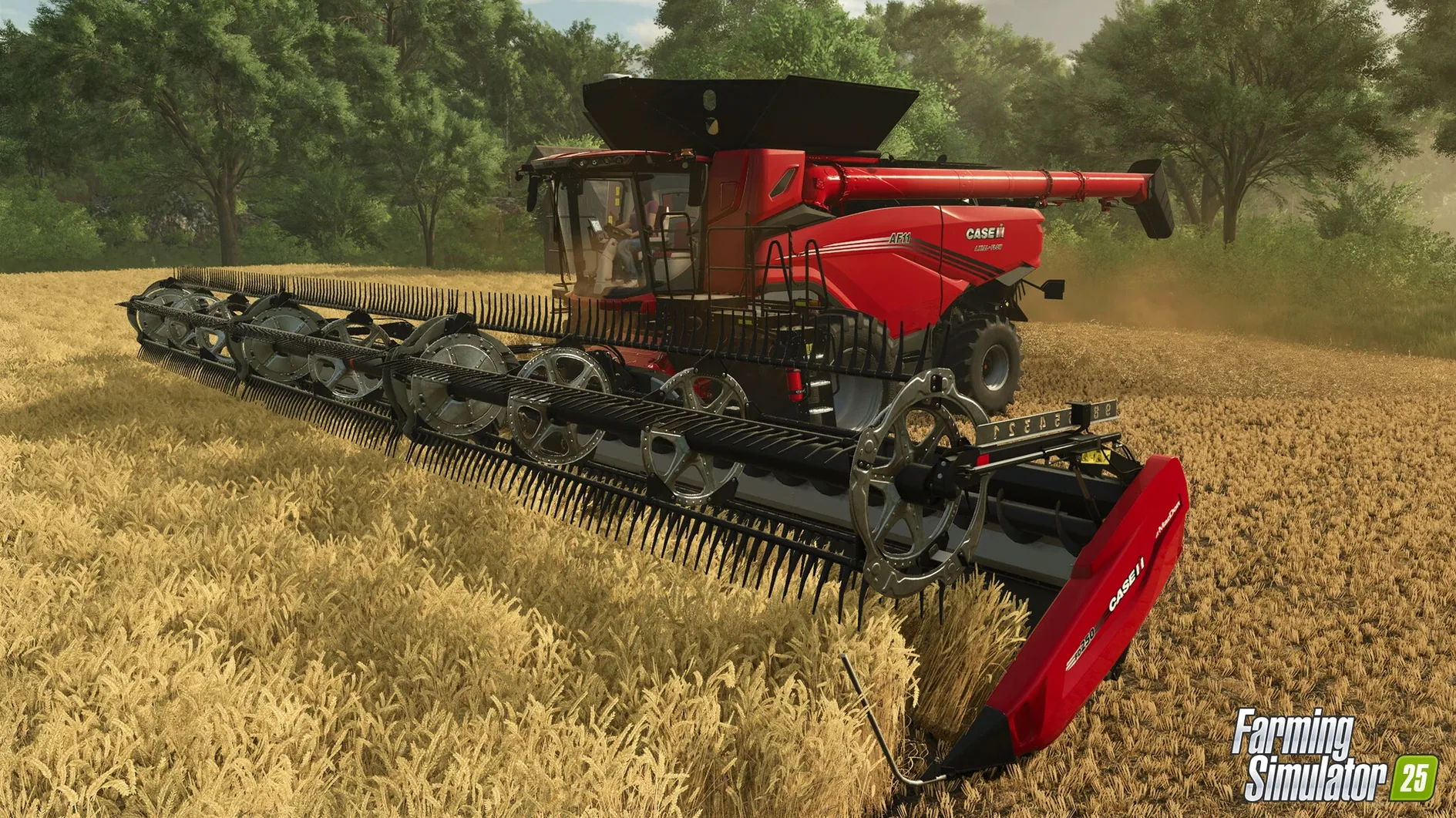
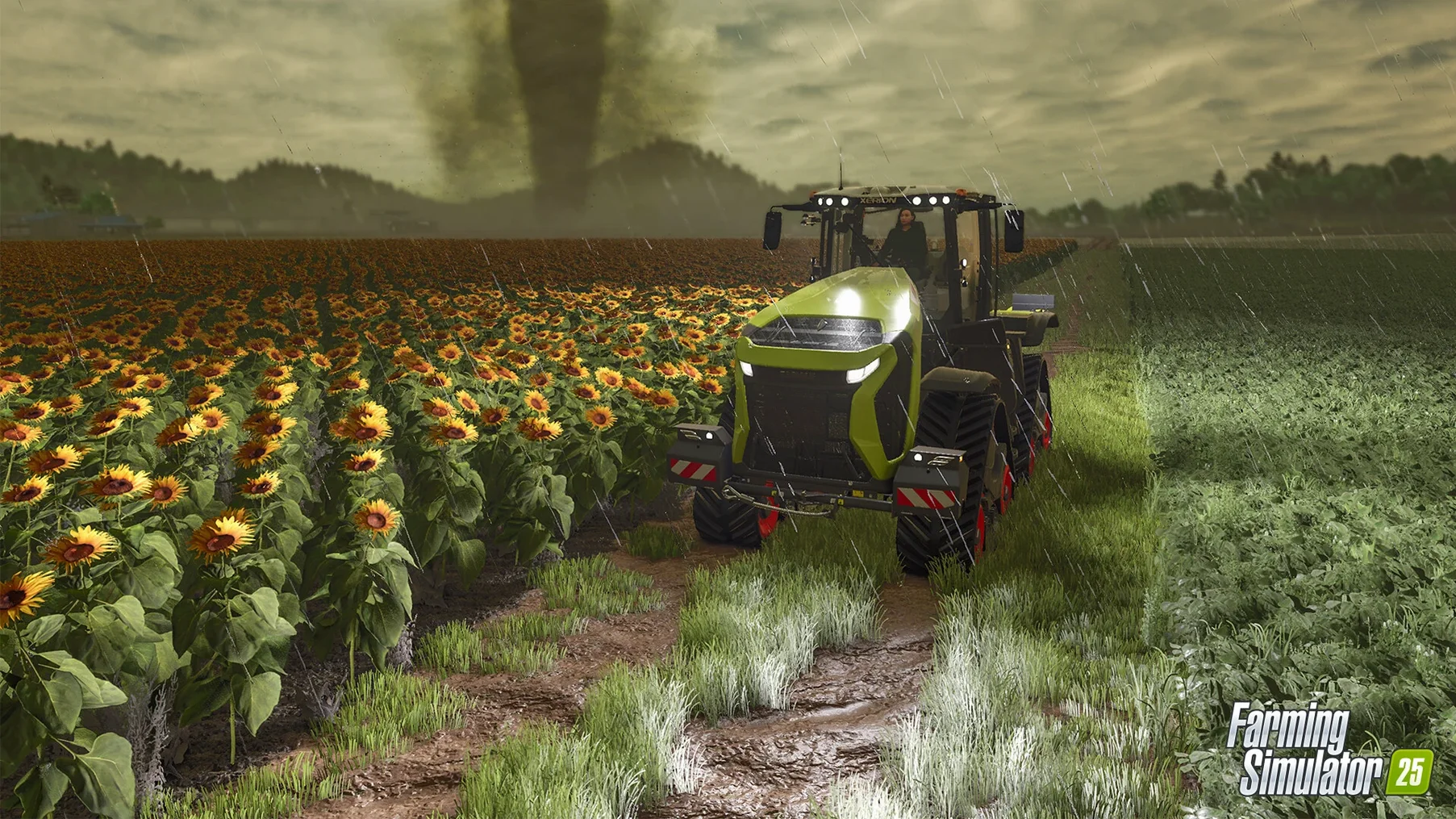
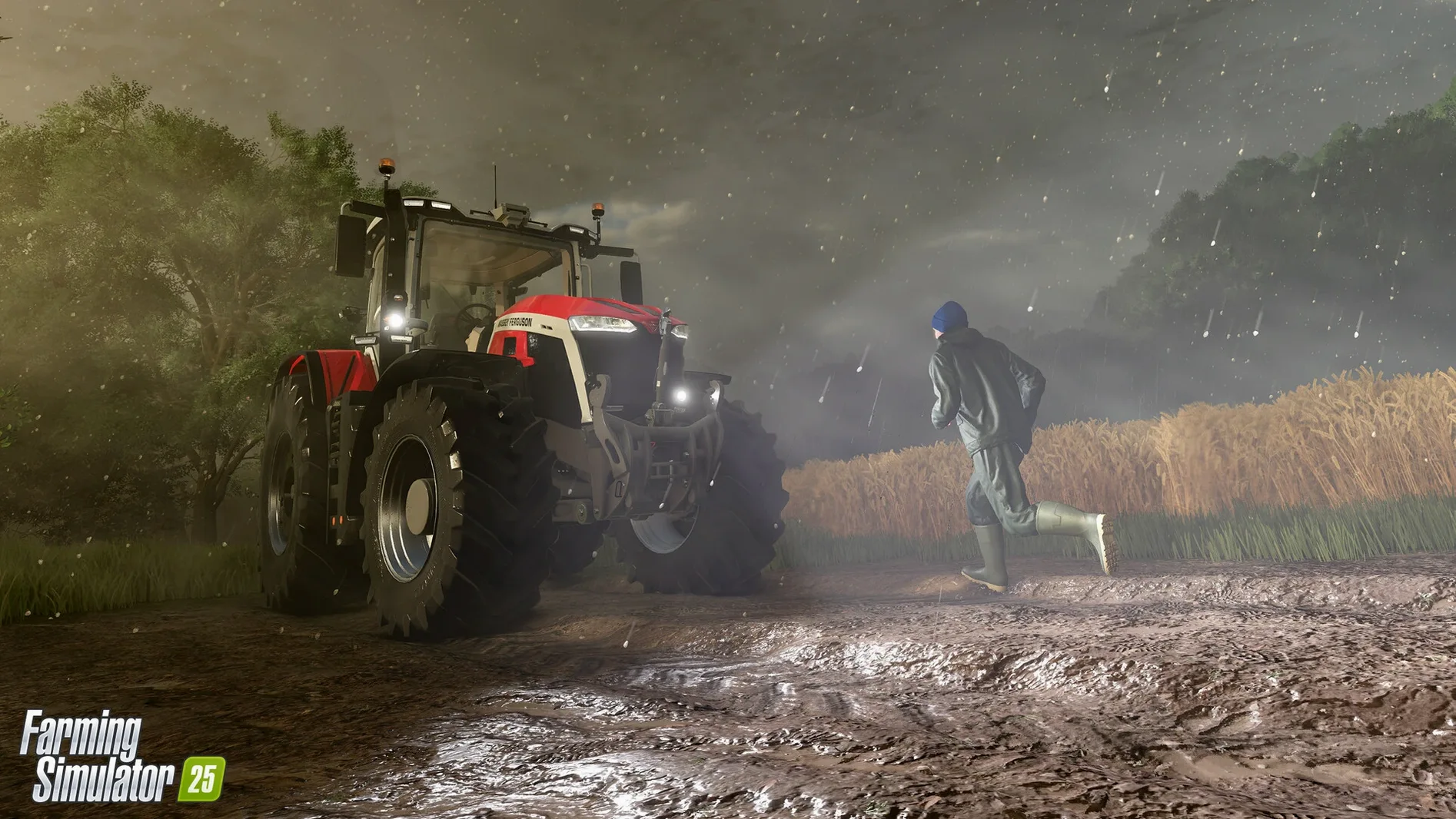
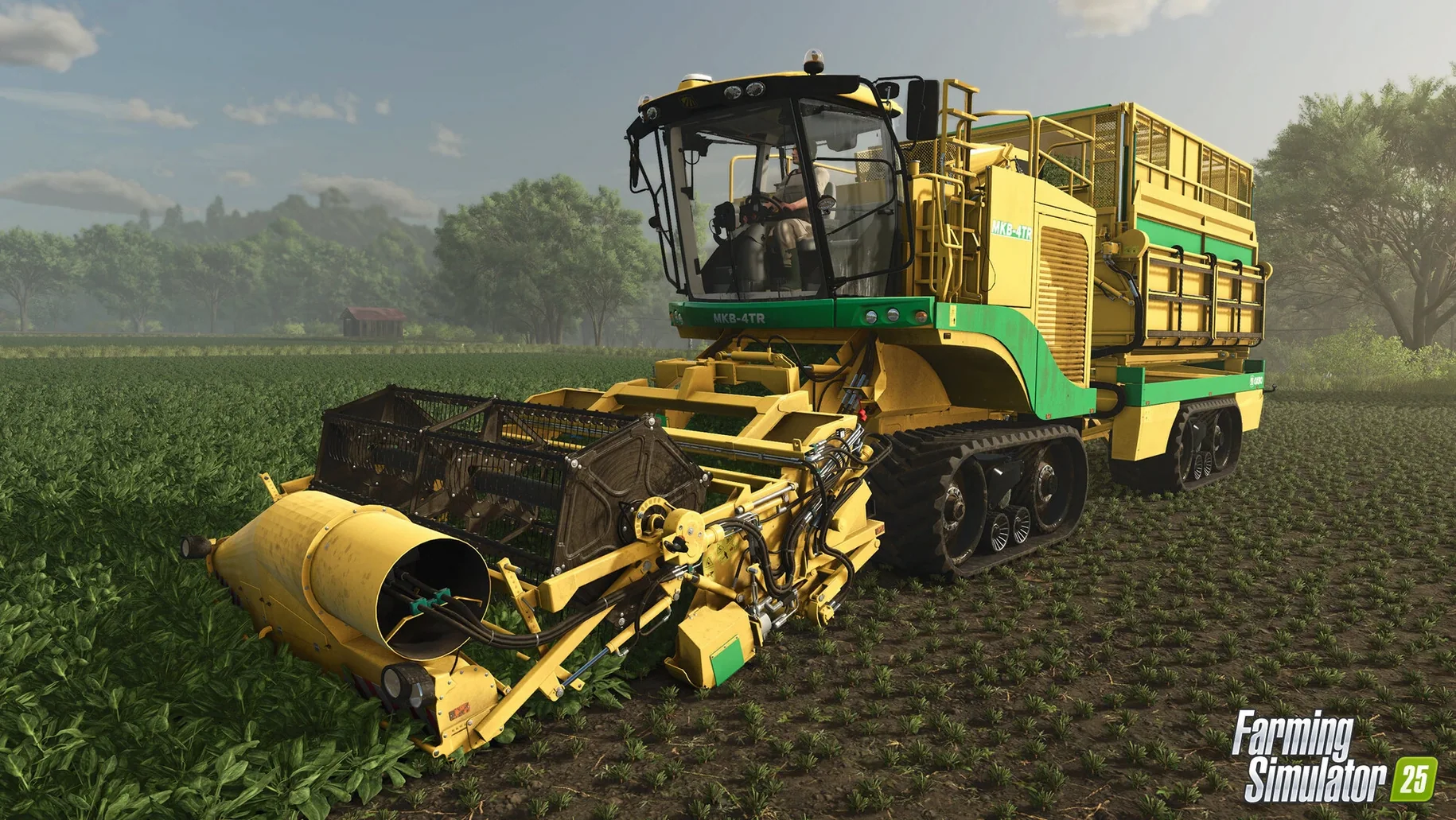

Real farming is a high-stakes gamble on weather, soil, and machinery that breaks at the worst moment. A lot of people want the rhythm and satisfaction of working the land without the financial ruin when a hurricane flattens your spinach crop. That’s the itch Giants Software scratches here — a sprawling sandbox where the pressure exists, but the rewards always feel within reach.
Why rice paddies and baby animals steal the show
| Detail | Note |
|---|---|
| Engine | GIANTS Engine 10 |
| Multiplayer | Single-player & co-op |
| Machinery | 400+ tools from 150+ brands |
| Architecture | Apple Silicon & Intel |
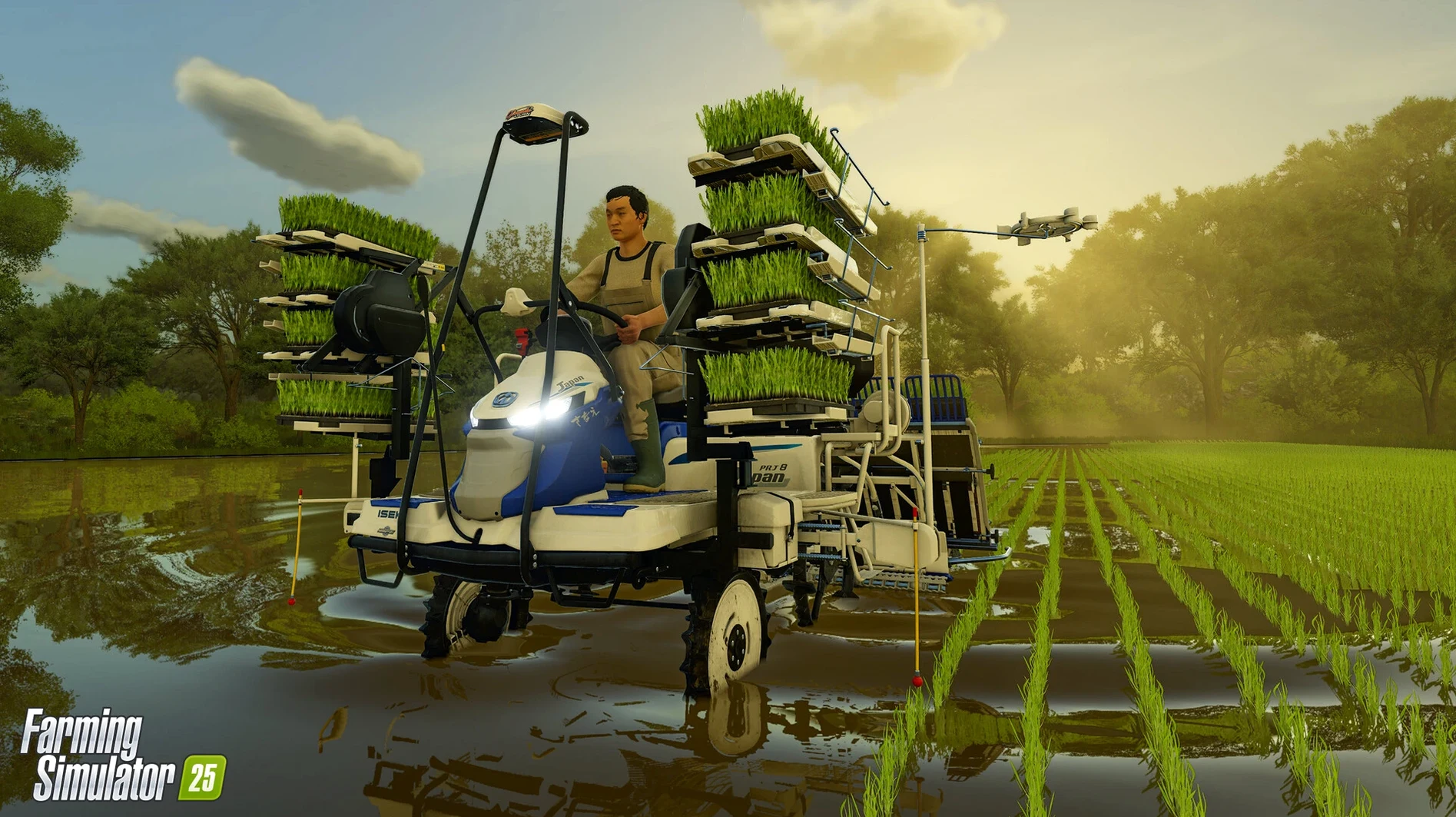
The draw isn’t just the scale — two types of rice to flood and harvest, water buffalo to raise alongside baby animals — it’s the physicality of it. Tire tracks cut into soft ground and stay there through a deformation system. GPS-assisted steering nudges you into perfect rows. The weather isn’t cosmetic either; hail and hurricanes will actually wreck things. You can pivot from growing peas and green beans to running a forestry operation or managing a production chain and farm shop, all in the same save. It’s less a game about tractors and more an open-ended logistics puzzle wrapped in mud and diesel fumes.
Building a spinach-to-frozen-goods chain from scratch
Let me walk you through a production chain I set up on the North American map last week. The goal was turning raw spinach into bagged frozen spinach, and I wanted every step running inside a single play session without loans.
I started by purchasing field 71 — medium size, flat, close to a water source. The soil composition didn’t matter for spinach, but I needed a tractor with a front loader and a seeder that handles vegetable crops. I grabbed the John Deere 6R and a Väderstad planter from the shop, filled the seed tank with spinach seeds, and spent twenty minutes laying down rows with GPS-assisted steering keeping everything arrow-straight. That feature alone saves me from the weird wobbly lines I used to get with a gamepad.
Once seeded, I rolled the field to push small stones back into the dirt — skipping that step costs you yield, and I’ve learned the hard way. Then I set the growth speed to normal and waited. The in-game days ticked by while I busied myself with water buffalo care at the main barn, which is genuinely pleasant busywork: mucking out, topping up water troughs, checking the new calf that appeared overnight.
When the spinach reached harvest stage, I hooked up a specialized vegetable harvester — one of the self-propelled Grimme machines — and drove it slowly across the field. The harvester’s header grabbed four rows at a time, and the crop filled a trailer I’d positioned at the headland. Two full trailer loads of spinach leaves went straight to the production plant I’d placed nearby: a small freezing facility from the construction menu. The plant took pallets of raw spinach and output frozen product every fifteen in-game minutes. I loaded those pallets onto a flatbed and ran them to the farm shop, where they sold for triple what raw spinach would’ve fetched.
Total elapsed real-world time: about ninety minutes. The chain never broke. No machinery glitched into a fence, no pallet launched itself into orbit — which older Farming Simulator builds occasionally did on Mac.
What 60 minutes of play actually looks like
I’ll describe a session from yesterday evening on an M4 Mac mini running macOS Tahoe. The DMG for version 1.23.1.0 had been installed already — just a drag into /Applications like any standard Mac app, no odd permissions or kernel extensions.
6:42 PM. Double-clicked the app icon from Launchpad. The game opened to the main menu in under eight seconds, which is faster than I expected given the size of the map data it loads. I selected my Central Europe save — a mixed farm with pigs, wheat, and a fledgling forestry sideline.
6:44 PM. In-game. The first thing I always do is check the weather forecast panel. A hailstorm was predicted for late afternoon, which meant I had roughly three in-game days to get wheat harvested before potential crop destruction. That weather urgency is one of the few things that genuinely makes me prioritize tasks rather than just pottering around selling eggs.
6:48 PM. I called a worker to run the combine on the wheat field while I took a tractor and tipper to catch the grain. Workers in 1.23.1.0 handle headland turns reasonably well, though they still occasionally miss a strip along uneven terrain edges. I kept half an eye on the hired driver while checking pig feed levels on the second monitor — the game runs windowed without complaining, and I had a browser open looking at modded silo options on ModHub.
7:15 PM. Wheat was in the silo. I switched to forestry, felling a stand of spruce I’d planted two seasons earlier. The chainsaw physics haven’t changed much since GIANTS Engine 9, but the tree weight feels slightly more grounded here — branches catch on neighboring trunks, and a badly angled cut can pinch the saw. I loaded cut logs onto a timber trailer with a wheel loader and drove them to the sawmill, fighting the trailer’s tendency to fishtail on dirt roads.
7:50 PM. Hail hit. I lost about eight percent of a soybean field I hadn’t covered. The deformation system meant the ground afterward looked legitimately chewed up — tire tracks softened into slush, and standing water pooled in the low corner of field 34. I closed the session by repairing two tractors at the workshop and saving manually. Memory pressure stayed green the whole time; the game idled around 6.5 GB of RAM on this machine.
A dairy farmer’s pivot to water buffalo
Consider someone who’s played the series for three iterations, always gravitating toward dairy. They know Holstein milk prices by heart, they’ve optimized TMR ratios, and they can back a trailer into a cramped milking parlor without knocking over the fence. For that player, water buffalo are the new puzzle. The animals produce milk with a higher fat content, which sells at a premium but requires different feed ratios and more frequent water replenishment. The paddock setup is familiar — place the barn, run a water line, stock straw — but the rhythm of care shifts slightly. A missed water top-up hits buffalo harder than Holsteins, and calves appear after a longer gestation, which forces a slower, more deliberate breeding calendar.
This player might run the East Asian map, where the rice paddies complement a buffalo operation thematically. Flooding the paddies, transplanting rice, and then draining fields before harvest is a multi-step process that fills the gaps between milking runs. The two rice types — regular and long-grain — grow at different rates, so staggering planting keeps a steady workload. By the second in-game year, buffalo milk and rice flour run through a production chain into a bakery, and the farm’s income graph bends upward in a satisfying arc. None of that chain existed in previous entries without mods.
Can an M4 Mac mini hold 60 fps when the map fills up?
Let’s talk about how the game actually runs, because simulator titles have a reputation for chugging when the entity count climbs. On Apple Silicon — specifically the M4 in my test machine — the game holds 60 frames per second at 1440p with most settings on high. Shadows and mirror reflections are the usual culprits when the frame rate dips; dialing mirrors down to medium and keeping shadow quality one notch below maximum gets you a locked experience even with three hired workers active and a thunderstorm rolling through.
Loading a save with 40 hours of map modifications takes about twelve seconds. That’s acceptable, though the GIANTS Engine still does that thing where it briefly freezes when the shader cache rebuilds after a driver update or a macOS point release. Once the cache is warm, you won’t notice it again until the next system update.
On Intel Macs — a 2019 16-inch MacBook Pro, for instance — the experience is rougher. The game runs, because the binary is still x86-64 alongside the ARM slice, but you’ll want to drop resolution to 1080p and keep shadows on low. The fans will spin up within five minutes, and the chassis gets warm enough that you won’t want it on your lap. That’s not a knock on the port; it’s just the reality of running GIANTS Engine 10 on Intel integrated graphics from half a decade ago.
Stability-wise, 1.23.1.0 hasn’t crashed on me yet. Earlier builds had a reproducible bug where tabbing out during an autosave could corrupt a slot, but that seems patched. The game handles sleep and wake on Mac laptops without losing audio or input — something I check because sim titles often trip over Core Audio when the system naps.
One thing I appreciate: the mod system doesn’t phone home aggressively. You can drop mods from ModHub into the ~/Library/Application Support/FarmingSimulator2025/mods/ folder and the game picks them up on the next launch without drama. ZIP files work as-is, no unpacking required. The folder structure is flat and predictable, which makes troubleshooting a broken mod much easier than in games that bury asset bundles in opaque archives.
- Apple Silicon or Intel 64-bit Mac
$ man farming-simulator-25 | grep -A2 "?"
What crops can I grow in this version?
Alongside staples you get spinach, peas, green beans, and two distinct types of rice, plus forestry as a whole separate branch of work.
Comments 0
Sign in or create an account to leave a comment.
No comments yet. A codec, a slice, a machine — they appear after moderation.