Spaceflight Simulator for macOS
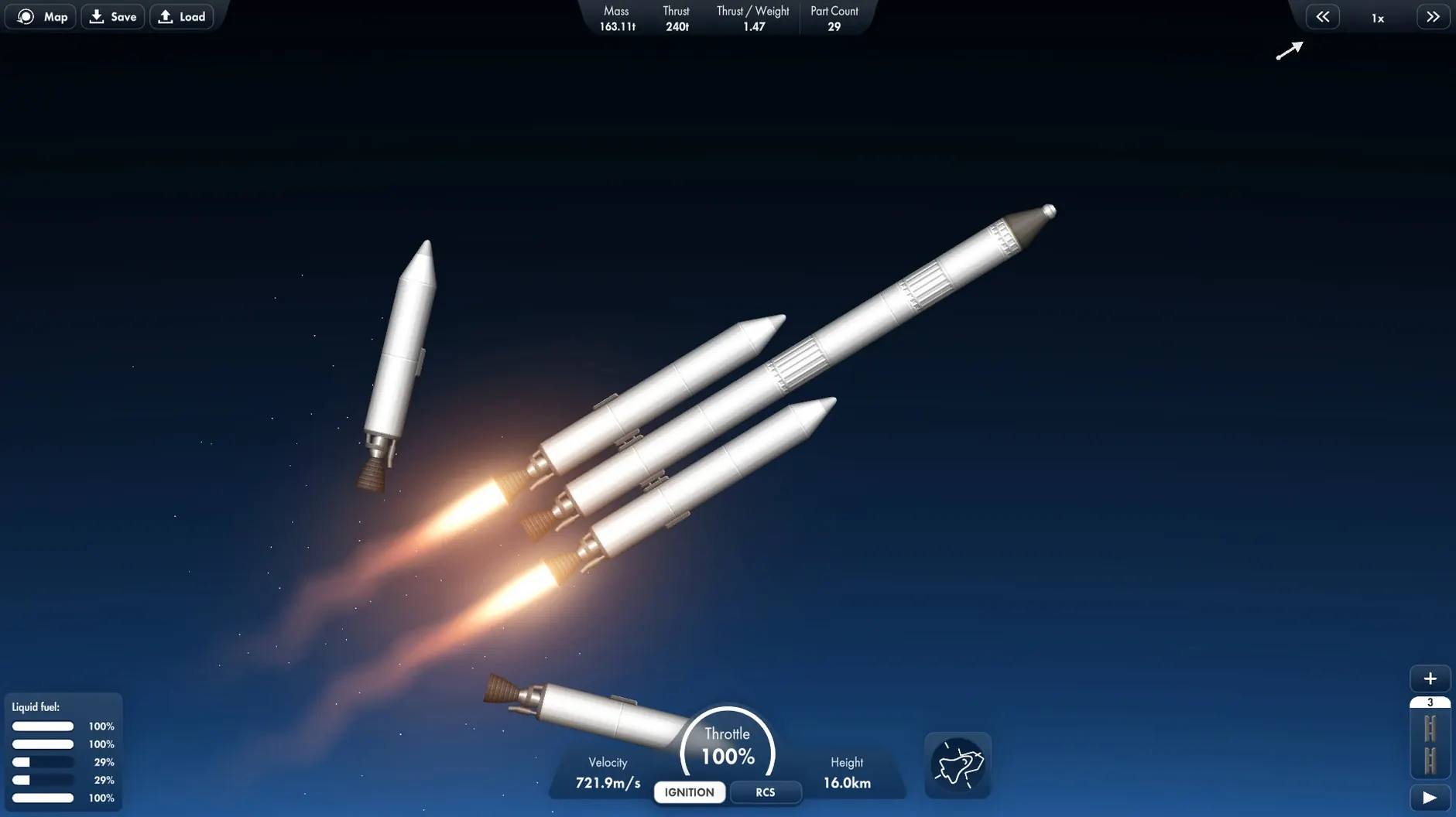
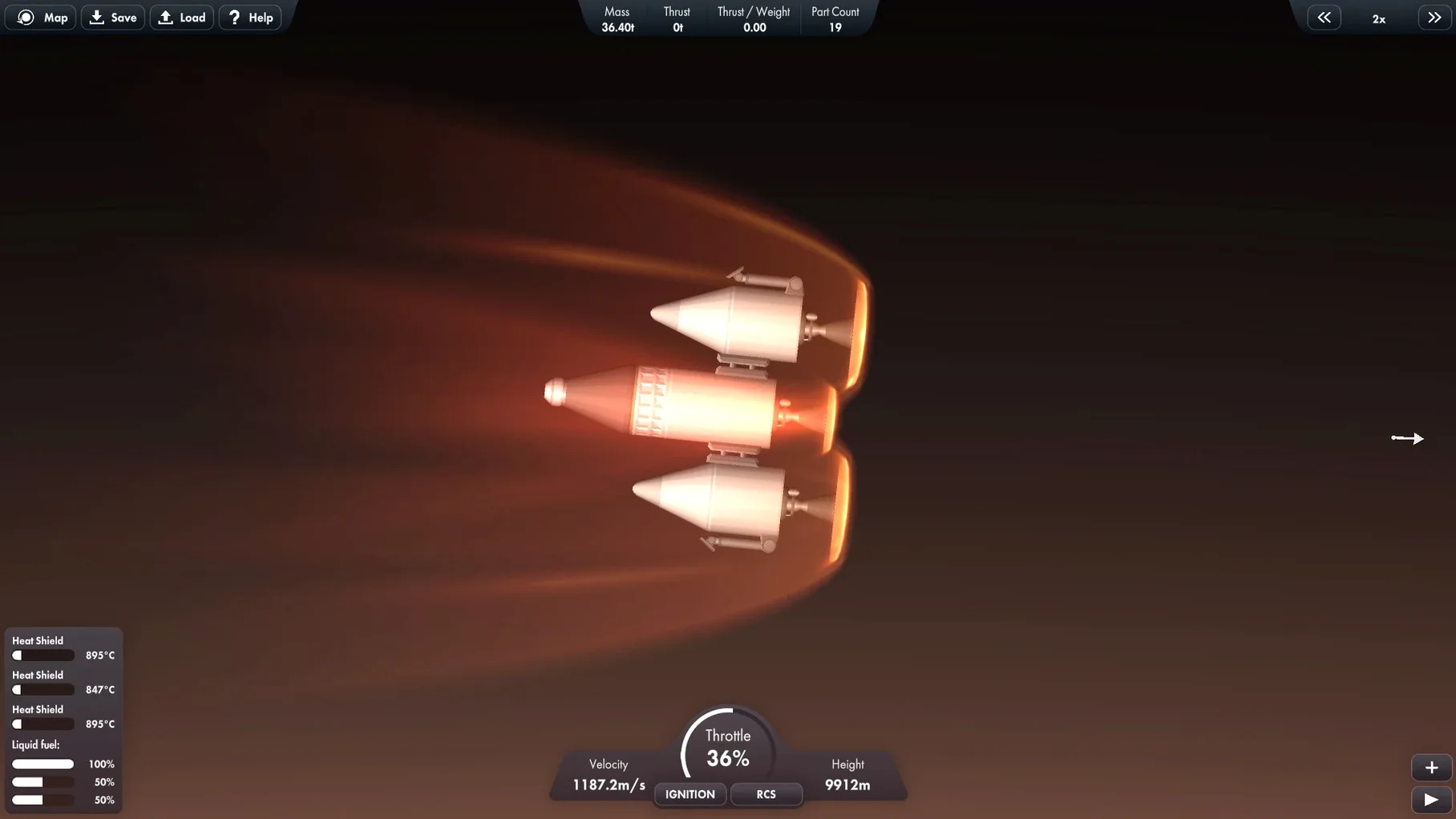
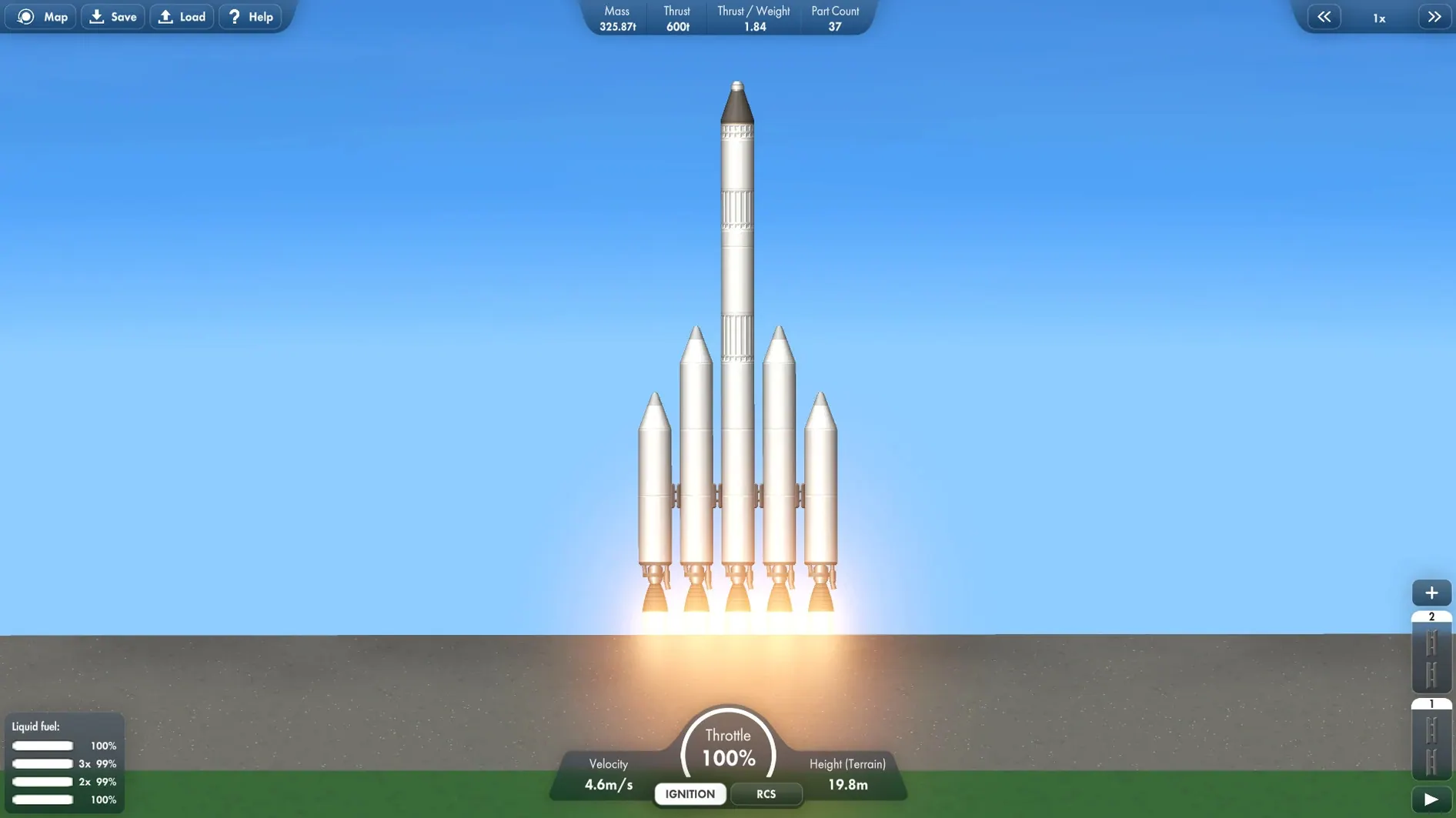
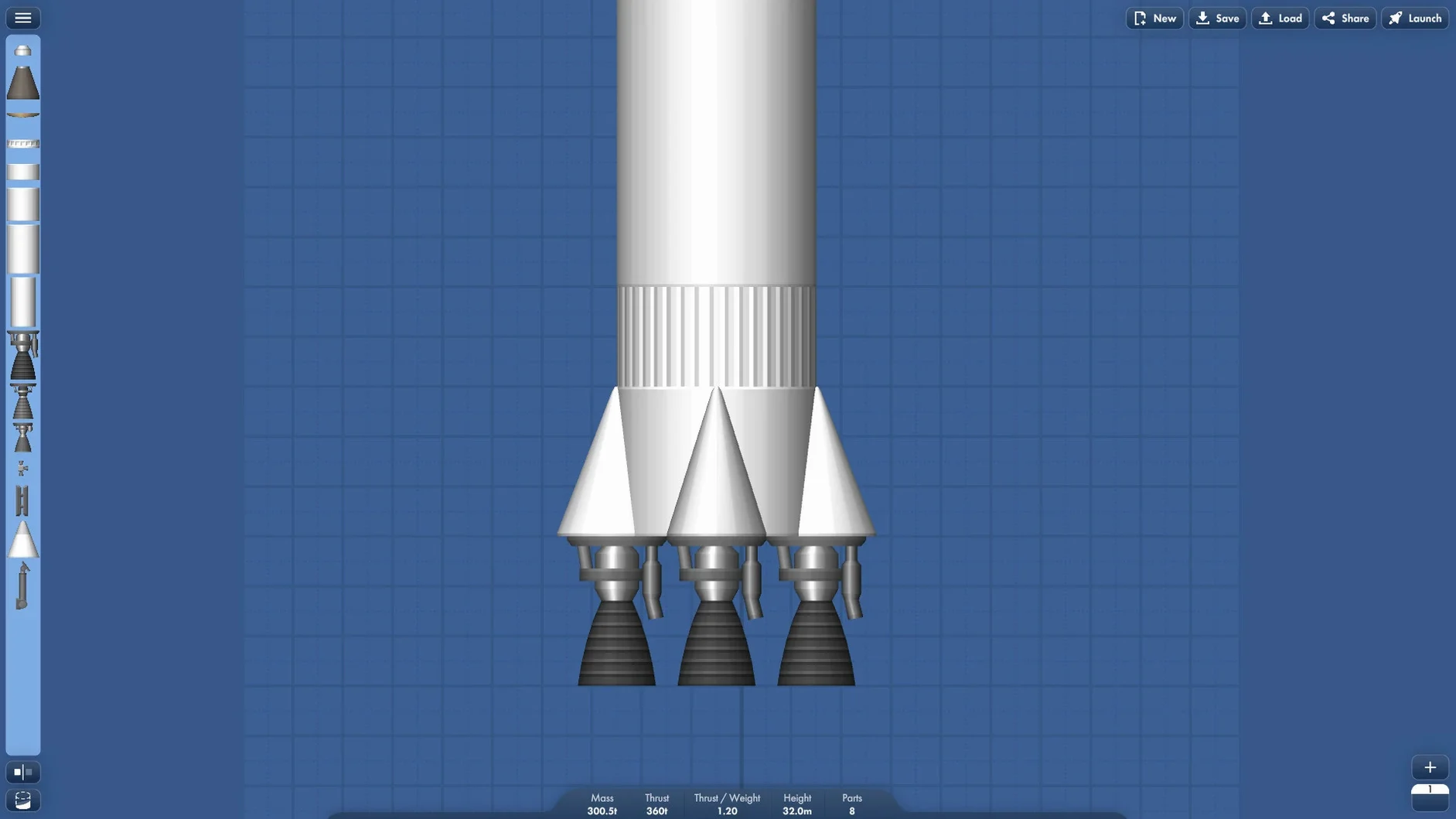
Spaceflight Simulator is a physics-based sandbox where you design, launch, and manage your own space program from the ground up.
Assemble stages, tweak thrust ratios, and deploy payloads
Rocket building — Assemble stages from a catalog of parts, tweak thrust-to-weight ratios, and watch your creations succeed or fail spectacularly based on your engineering choices.
Satellite deployment — Haul payloads to orbit and release satellites into stable trajectories. The orbital mechanics are simulated, so injection burns and circularization are your responsibility.
Space station construction — Dock modules in orbit to build functioning stations. This involves rendezvous maneuvers and precise docking, which is where the physics model really shows its teeth.
Mission system — A set of built-in missions provides specific objectives, pushing you beyond freeform sandbox play with concrete engineering and piloting challenges.
Three types of players who thrive on design-fail-refine loops
This isn't a casual tap-to-launch toy — it rewards players who enjoy the iterative loop of design, failure, and refinement. The people who sink dozens of hours into Spaceflight Simulator for Mac cracked are usually one of three types.
Tinkerers and engineering-minded players. If you've ever stayed up late tweaking a Kerbal lander's fuel lines, you'll recognize the same pull here. The part catalog isn't enormous, but the physics model is honest enough that bad staging or a lopsided thrust vector will end a mission immediately. You learn by breaking things.
Space history enthusiasts. The mission structure loosely echoes real space programs — satellite deployments, rover deliveries, station assembly — and the Solar System is modeled with enough fidelity that transfer windows and gravity turns feel like genuine orbital-mechanics problems, not abstracted minigames.
Sandbox builders who want constraints. Pure creative mode can get aimless. The built-in missions give you a reason to build something specific, and the physics means your space station isn't just a pretty arrangement of parts — it has to hold together under thrust and rotational forces during docking.
A rover delivery, from pad to surface
Imagine a player on a MacBook Air M1 running macOS Ventura who grabs the spaceflight simulator download mac and decides to put a research rover on the fourth planet. They start with a two-stage booster: a heavy first stage with four side-mounted solid boosters for the initial punch, and a vacuum-optimized upper stage for the transfer burn.
The first attempt fails at Max Q — the fairing shears off during ascent because they forgot to add struts between the rover and the upper-stage adapter. Fairing goes, rover tumbles, rocket disassembles itself at 12 kilometers. That's not a bug; that's a lesson in structural reinforcement.
Second attempt: struts added, fairing holds, orbit achieved. They plot a transfer burn using the in-game map to eyeball the phase angle. The burn goes well but the capture is hot — they come in too fast, and the rover's skycrane runs out of fuel three meters above the surface. It impacts at 14 meters per second and becomes a debris field.
Third time: a lighter rover chassis, an extra fuel tank on the transfer stage, and a shallower entry angle. Touchdown at 1.2 meters per second, all wheels intact, science instruments deployed. That sequence — design, test, crash, redesign, succeed — is the whole appeal.
Cap your frame rate to 60 FPS for smoother physics on Intel Macs
The defaults work, but a few adjustments make the experience smoother, especially on Intel Macs where the physics calculations can get busy during high-part-count vessels.
- Frame rate cap. Unlocked by default. Set it to 60 FPS in the graphics options — your MacBook's thermals will thank you, and the simulation tick rate isn't tied to frame rendering anyway.
- Camera sensitivity. The default rotation speed feels sluggish during docking maneuvers. Bump it up by about 30 percent so you can track approaching modules without fighting the mouse.
- Auto-save interval. Set it to every five minutes. The game doesn't auto-save before staging events, and losing a complex interplanetary mission to a mis-click stings more than it should.
- Part snapping tolerance. In the build menu, tighten the snap grid. The default is generous enough that radially attached boosters can end up slightly off-axis, which creates a persistent yaw you'll fight all the way to orbit.
- Sound balance. The music accompaniment is pleasant but mixed loud relative to engine and staging effects. Drop the music volume to about 60 percent and raise effects so you can actually hear when a solid booster burns out.
- macOS 10.13 (High Sierra) or later
- Intel 64-bit or Apple Silicon Mac
- Tested on macOS Ventura, MacBook Air (M1, 2020)
$ man spaceflight-simulator | grep -A2 "?"
Does Spaceflight Simulator run on Apple Silicon Macs?
Yes. The game was tested on a MacBook Air with an M1 chip running macOS Ventura, and it runs fine via Rosetta 2 on Apple Silicon.
What macOS version do I need?
The game requires macOS 10.13 High Sierra or any later version.
Comments 0
Sign in or create an account to leave a comment.
No comments yet. A codec, a slice, a machine — they appear after moderation.