
Stardeus for macOS
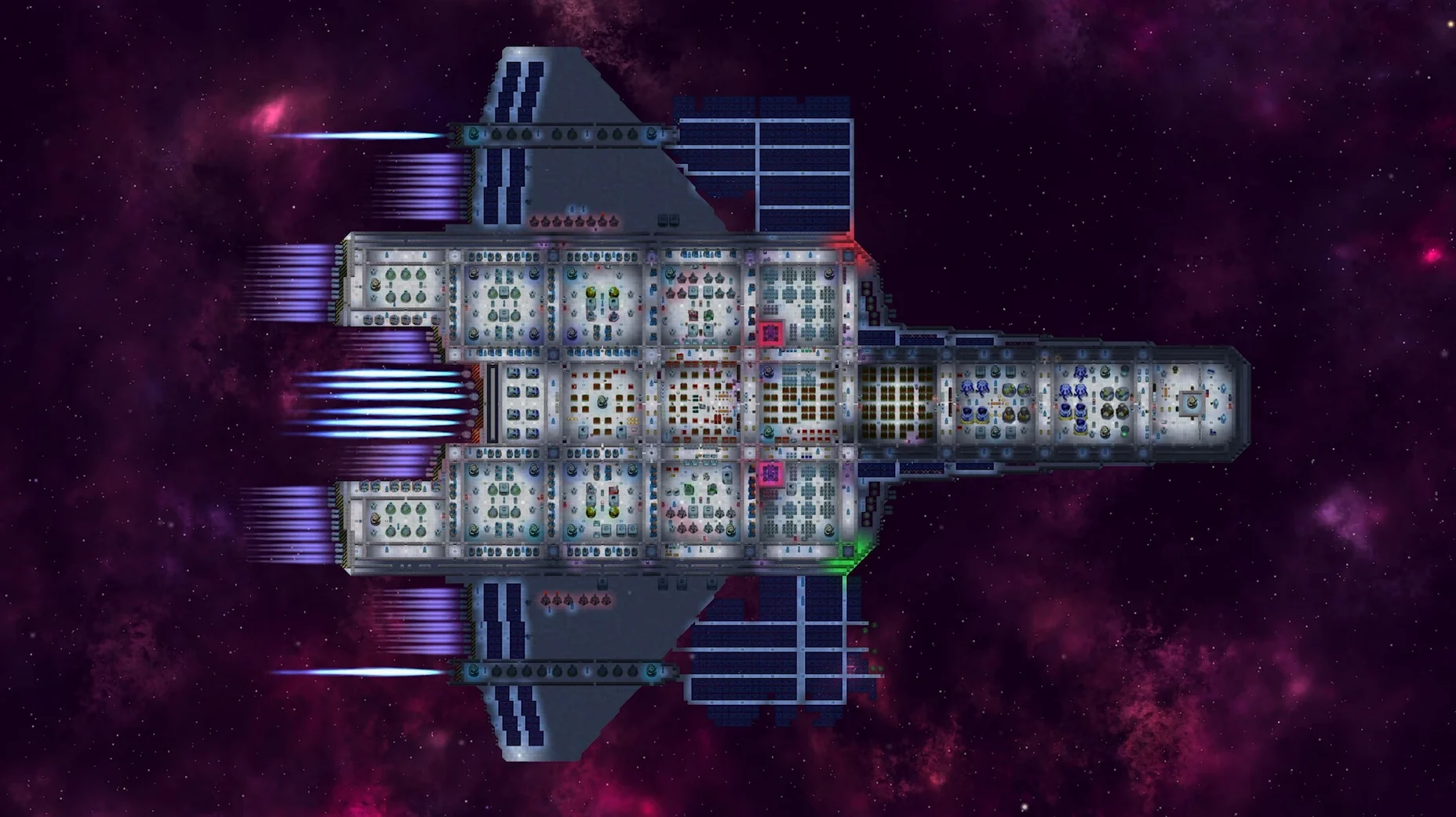
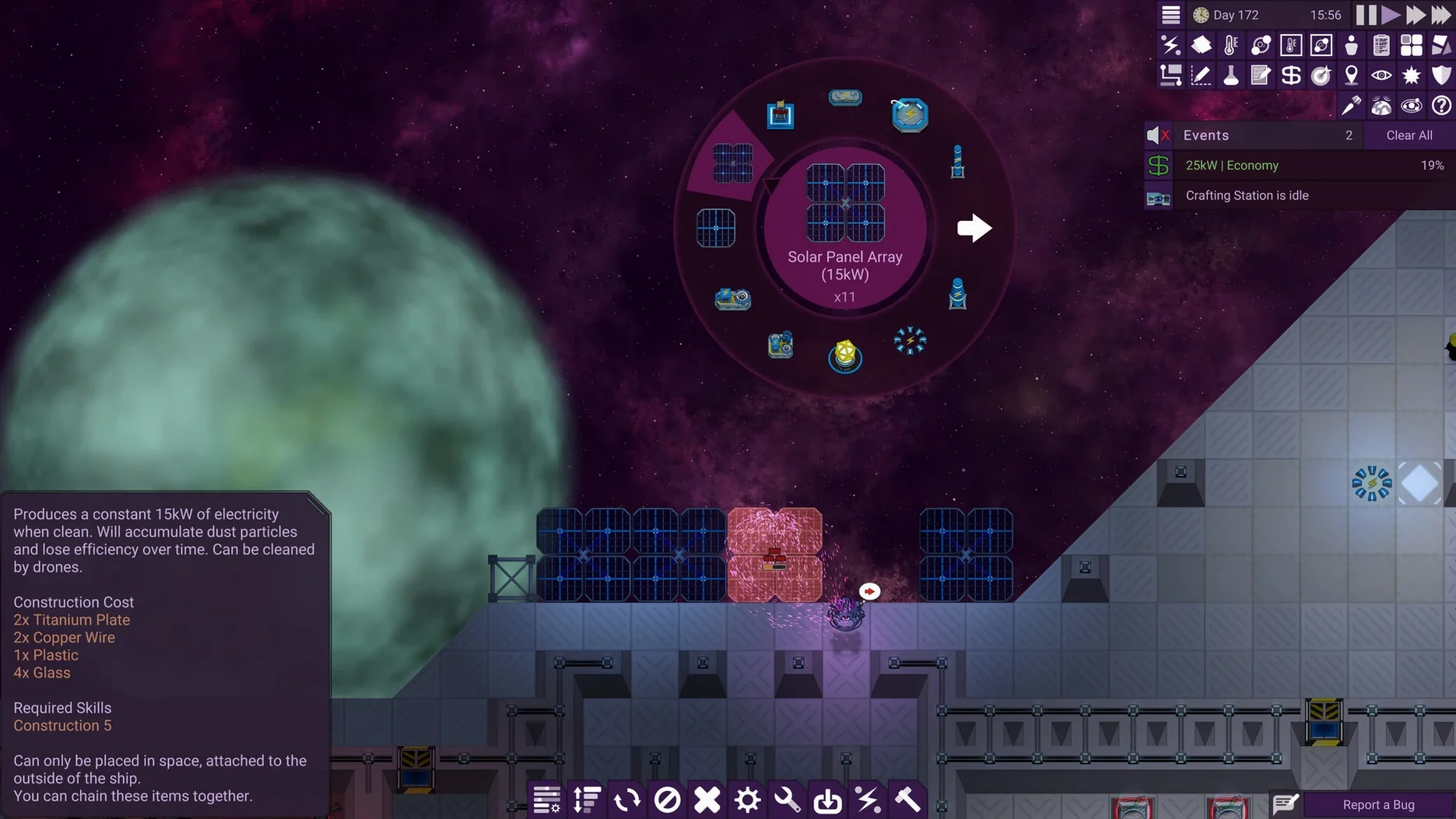
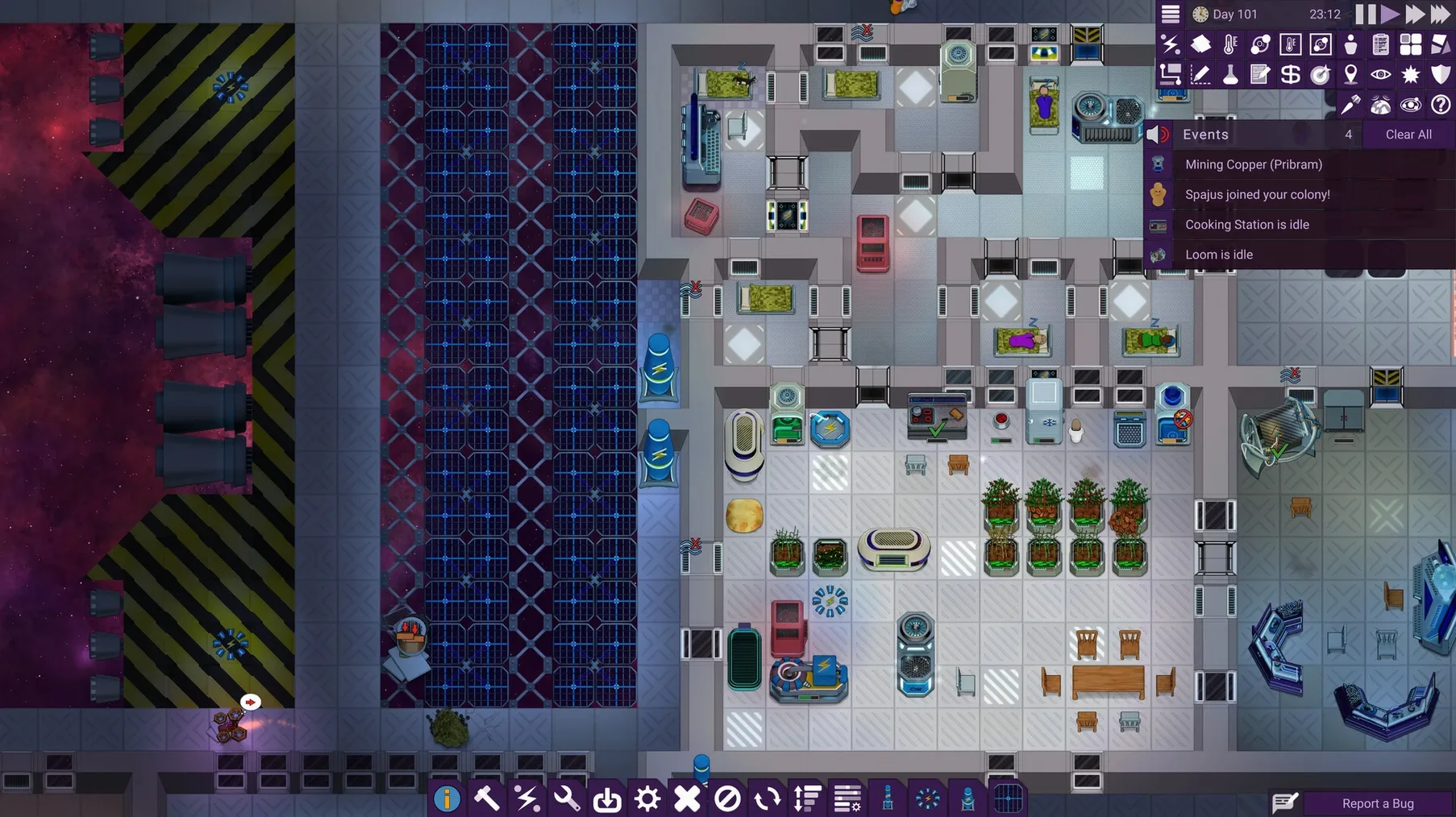
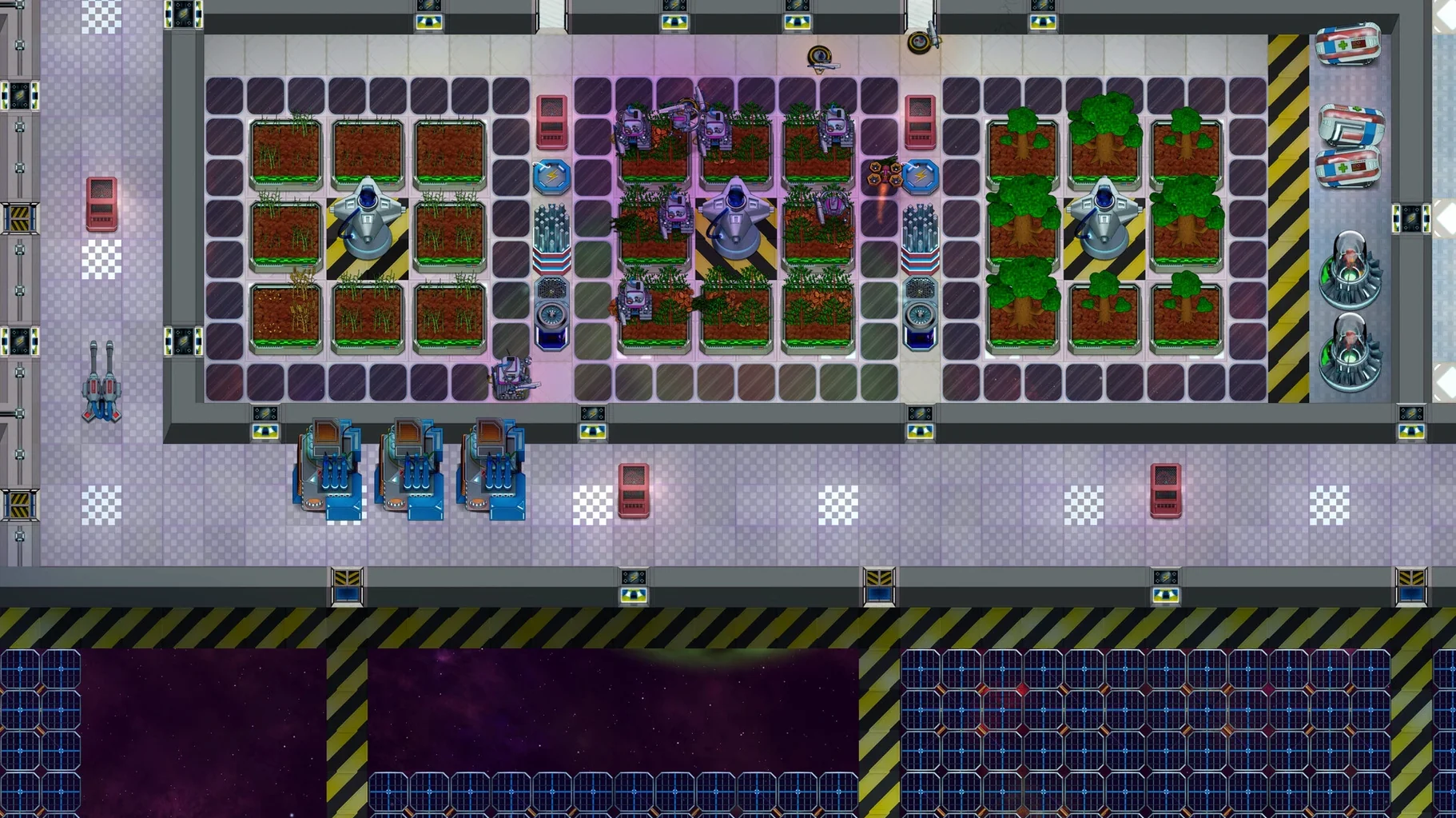
Stardeus fits people who enjoy colony management where the base is broken on purpose and the workforce runs on circuit boards. You wake up as the ship’s AI on a gutted vessel, with a handful of drones and a cargo hold full of frozen humans who cannot help you yet.
Drones — mobile tools you direct to dismantle wreckage, patch hull breaches, and construct new ship sections. They are your hands for most of the early game.
Hibernating colonists — human survivors in cryo. You decide when to wake them and whether the ship has breathable air, food, and heat ready first.
Alien tech tree — researchable off-world artifacts that unlock new ship systems and defenses. Some of it feels like it was never meant for human hands.
Encounters — traders with resources, pirates who want yours, and aliens whose intentions are rarely printed in the manual. Each visit forces a decision about power allocation and crew safety.
Farming — crops grown in shipboard bays, cooked into meals. A colonist eating raw grain is a colonist about to riot.
FTL travel — once the reactor hums and the crew is stable, the ship can move. New regions change the encounter tables and resource availability.
The simulation is open-ended. There is no victory screen, just a ship that either grows functional or becomes a very expensive debris field. Kodo Linija, a solo developer, has been expanding it since the October 2022 Early Access launch.
Shifts pressure from pawn-level survival to spaceship logistics
If you know RimWorld, the DNA here will feel familiar — the solo developer cites it as an influence — but the framing shifts the pressure points. In RimWorld you manage a pawn-level settlement on a planetary surface; in Stardeus you are the ship's AI, issuing orders to drones rather than directing individual characters. That means less social drama and more automation logic. Where RimWorld throws tantrums and infections at you, Stardeus throws short circuits and oxygen leaks.
Space Haven shares the derelict-ship-rebuilding fantasy, but it leans harder into crew morale, schedules, and interpersonal friction. Stardeus keeps the crew abstract for longer — colonists stay frozen until you build the infrastructure to support them, which makes the early game feel more like a pure engineering puzzle. Space Haven gives you a tighter narrative container; Stardeus gives you a procedurally generated universe and a longer leash.
Factorio is the other comparison that comes up, especially if you enjoy the drone logistics layer. Stardeus is not a belt-and-inserter factory sim, but the loop of mining asteroids, processing resources, and routing components to construction jobs scratches a similar optimization itch. The difference: Factorio defends a factory on land with walls and turrets, while Stardeus defends a pressurized tin can hurtling through hostile space.
A workflow: waking the first colonists safely
Here is a start-to-finish sequence for a task every Stardeus run eventually demands — reviving humans without killing them.
- Assess the habitation zone. Use the blueprint overlay to check which hull sections are sealed. Patch every breach with drone-directed repairs. A single open tile vents oxygen into space.
- Stabilize temperature and O₂. Build at least one oxygen generator and one heater in the sealed section. Route power through a dedicated circuit so a reactor trip does not shut them off mid-cycle.
- Stockpile food. Set a growing zone in a powered, heated room. Harvest the first crop, cook it at a stove, and store meals in a reachable container. Frozen colonists waking up hungry will drain your stored biomass fast.
- Assign a drone crew. Park two or three repair-capable drones near the cryo pods before you start the wake sequence. If a breach or fire kicks off, they need to react instantly.
- Wake one colonist. Select a single pod, issue the revival command, and watch the life-support readings. Let the colonist eat, sleep, and settle in before waking the next one. Rushing the sequence kills your oxygen buffer.
- Set a work priority. Once the first colonist is stable, assign them to farming or repairs. Human labor frees drones for mining and construction outside the hull.
The whole process leans on the AI's ability to parallel-task drones, so the human limit is attention, not hands. Once the first hab block is running, you can replicate the pattern in a second section and scale up.
Why frame pacing feels smoother during drone-heavy asteroid flybys
Version 0.14.45.2780 shipped several under-the-hood improvements that affect everyday play more than a feature list might suggest. The Unity engine was upgraded to 6000.2.15f1, which brought quieter rendering on Metal — frame pacing feels smoother during asteroid-field flybys and drone-heavy scenes. The old tractor beam visual effect was replaced; the new version is less wasteful on the GPU, so pulling debris no longer nudges the fan curve on integrated Mac GPUs.
Simulation stability received targeted work. In colonies running past the mid-game with dozens of drones and active life-support zones, lag spikes could desync some subsystems. The patch tightened that loop — colonists stopped getting stuck in unresponsive cryo states during heavy load, and resource tick rates stayed consistent even when framerate dipped. A handful of late-game crashing edge cases were also hunted down, many tied to save files that had survived across multiple version upgrades. The practical result: a run you started six months ago has a better chance of loading cleanly and continuing without corruption.
None of these changes rewrite the gameplay loop, but they make the simulation feel less fragile when you push it hard. For a game where a single oxygen miscalculation can cascade into a dead crew, that matters.
- The Tractor Beam pull effect was replaced with a lighter visual version to reduce GPU load.
- The engine was upgraded to Unity 6000.2.15f1.
- Simulation stability under heavy lag and framerate spikes was improved.
- Fixes targeted several late-game crashing edge cases.
- Runs natively on Apple Silicon and Intel Macs.
- macOS version requirement has not been published by the developer for this build.
$ man stardeus | grep -A2 "?"
What languages does Stardeus support?
The interface is available in Russian, English, German, Spanish, Italian, Simplified Chinese, Korean, Portuguese, Ukrainian, French, Czech, and Japanese.
Comments 0
Sign in or create an account to leave a comment.
No comments yet. A codec, a slice, a machine — they appear after moderation.