Warnament for macOS
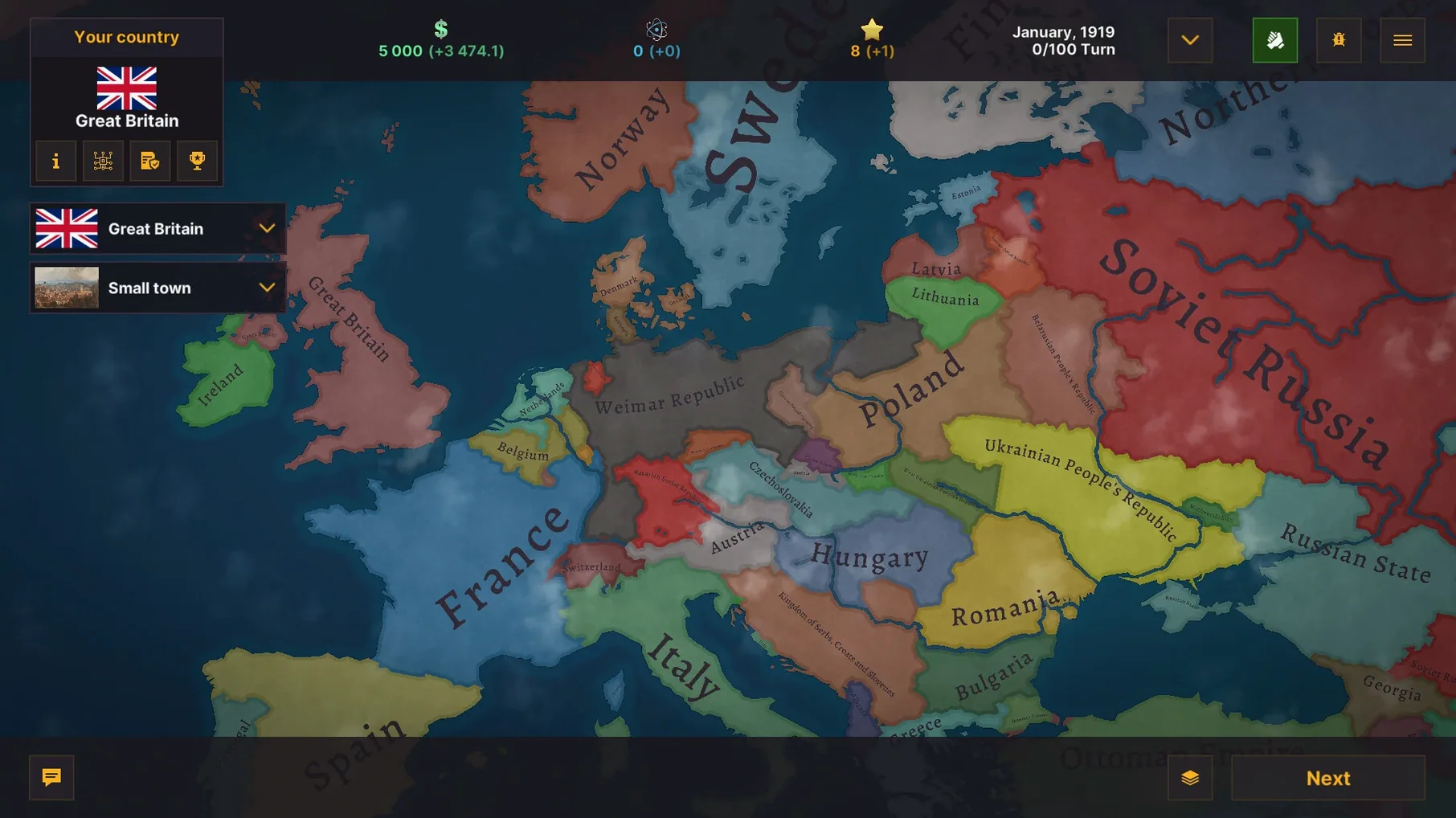
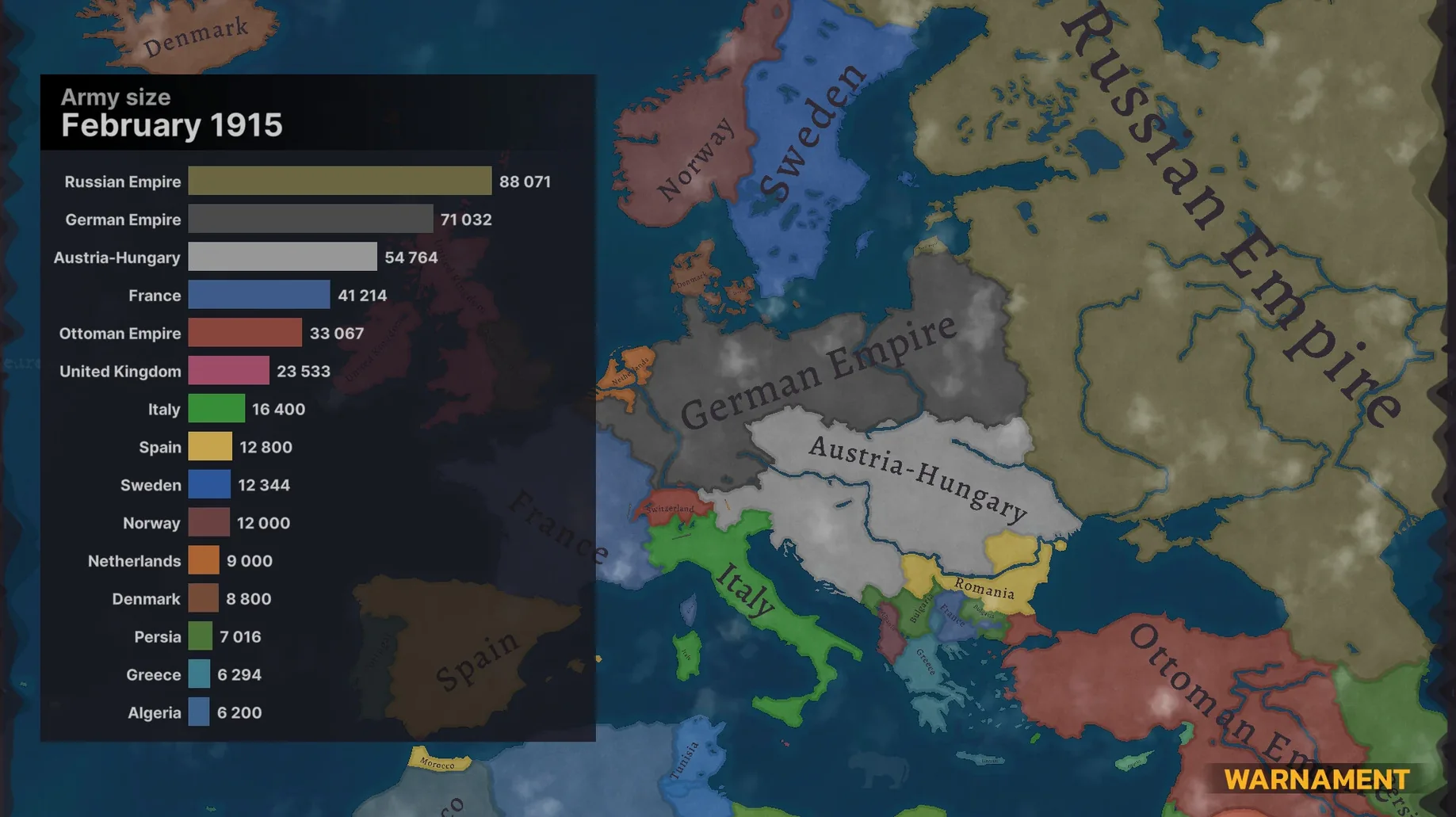
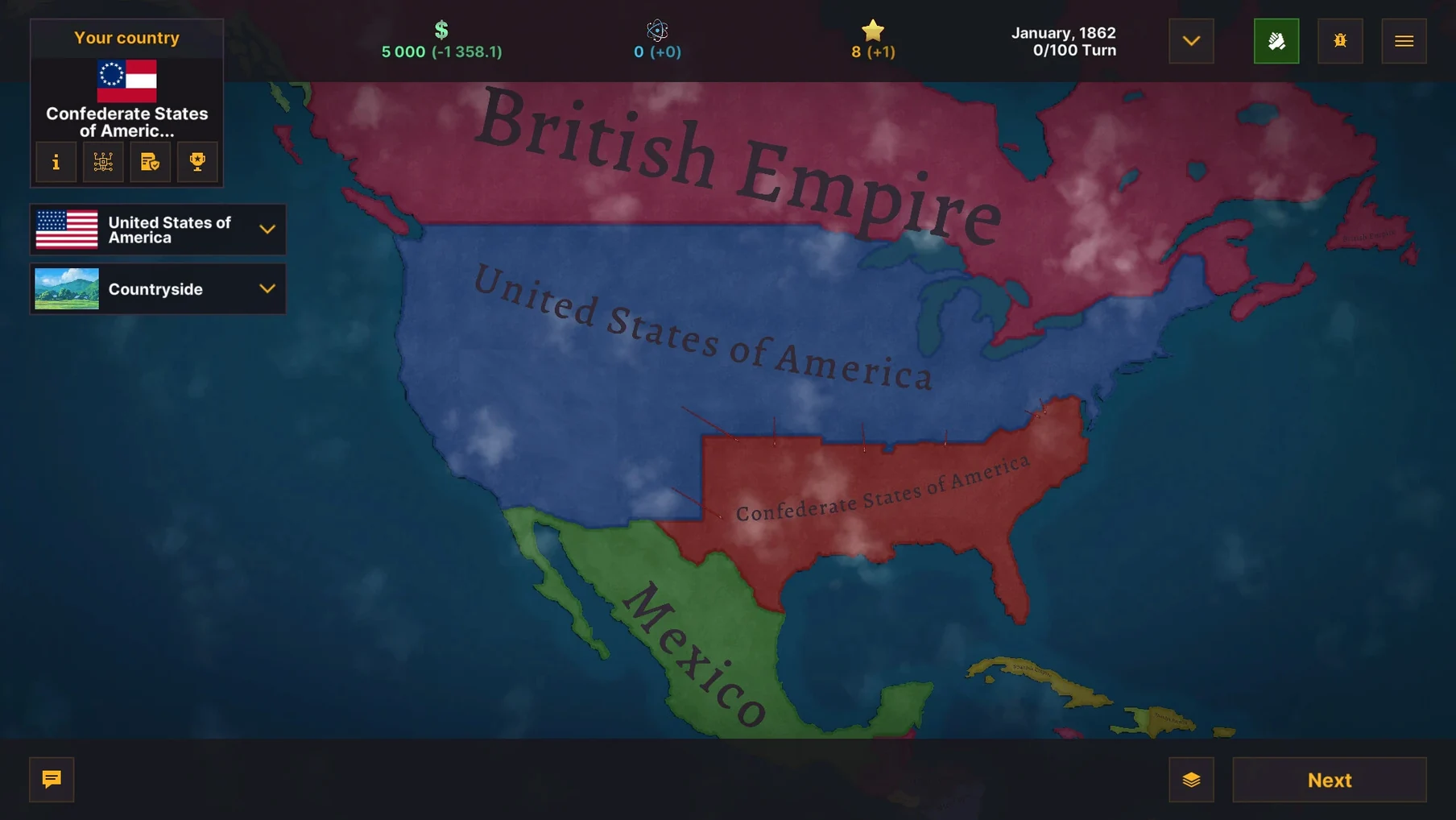
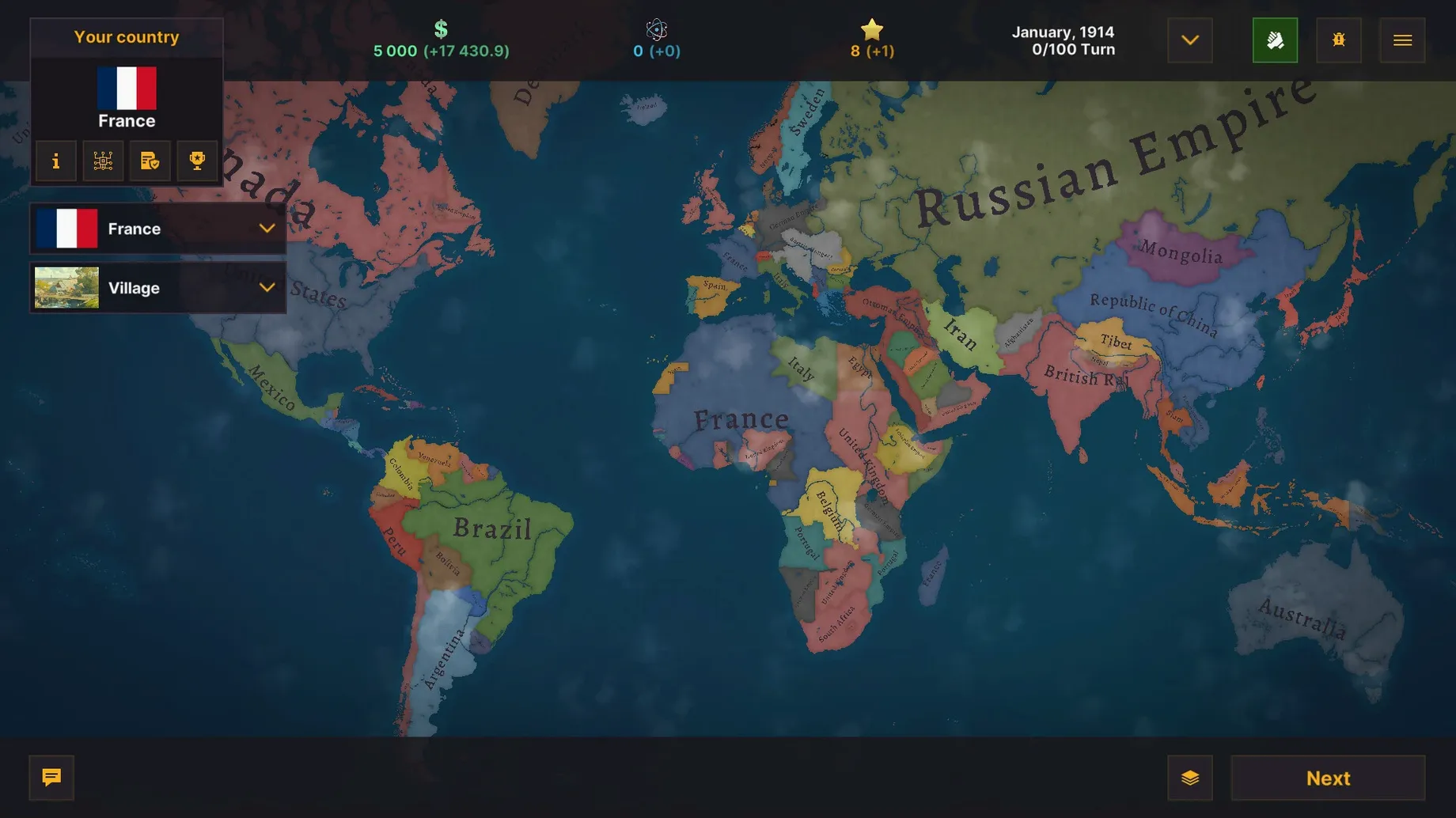
If you've spent time in Paradox's grand strategy titles, Warnament will feel like a recognizable political sandbox stripped down to turn-based pacing. The whole map is your chessboard, but each decision plays out province by province rather than in real-time ticks.
From regime choice to total war
- Pick a regime. Your political system shapes which diplomatic tools carry weight. A dictatorship leans harder on vassalage and direct threats; a democracy leans on guarantees and alliance webs.
- Manage provinces individually. Each territory has its own production, loyalty, and defensive posture. You're not painting with a broad brush — you're nudging sliders per region.
- Declare wars — and end them. War goals are explicit. You can force an enemy into vassalage or guarantee a smaller neighbor's independence. The escalation path runs all the way to chemical and nuclear options, which redraw the map fast but leave diplomatic scars.
- Shape the sandbox. The bundled map editor and scenario creator let you rebuild borders, rewrite starting conditions, and share the result. Luden.io develops the game alongside community feedback, so the editing tools are part of the core loop, not an afterthought.
The native build runs on Apple Silicon and 64-bit Intel Macs, so the turn calculations stay snappy whether you're running a Mac mini M4 or an older Intel machine.
Why your economy collapses after three turns
New players often treat Warnament like a pure conquest sim and ignore the provincial management layer entirely. They crank out infantry, march on the nearest capital, and wonder why their economy collapses three turns later. Each province needs at least a glance at its loyalty and production sliders before you commit it to a war footing. A rebellious province producing battleships for an enemy you haven't noticed yet is a faster game-ender than any invasion.
Another common slip: ignoring the technology tree beyond the early military unlocks. Forts and defensive structures sit further down the tree and feel unglamorous, but holding a choke point with a fortified province changes the arithmetic of every war declaration aimed your way. Similarly, skipping the economic sanctions branch leaves you with fewer levers when a neighbor you can't fight directly starts snowballing.
The nuclear option is tempting the moment it appears on the tech tree, but using it without securing vassalage deals or alliance buffers first tends to unite the remaining powers against you. The diplomatic scars aren't flavor text — they recalculate how every other regime weights your future proposals.
Building scenarios where a naval power starts landlocked
Strategy players who enjoy writing their own alternate-history narratives click hardest with Warnament. The map editor doesn't just let you tweak borders — you can build a scenario where a naval power starts landlocked, or where two small federations begin with a mutual guarantee pact and a shared tech disadvantage against a larger neighbor. If you've ever modded a Paradox title just to see what happens when you shuffle starting conditions, the editor here puts that impulse front and center.
Players on lower-specced Intel Macs also benefit more than they might expect. The turn-based structure means the CPU isn't simulating hundreds of provinces simultaneously between frames. On a 64-bit Intel machine, late-game turns with dozens of naval units and province-level calculations still resolve without the thermal throttle that hits real-time grand strategy titles. The native ARM build on Apple Silicon is faster, but the gap between architectures is narrower here than in real-time games.
People who like diplomatic sandboxes with asymmetric win conditions — not just map-painting — find the regime-and-vassalage system rewarding. Guaranteeing a small neighbor's independence and then watching that guarantee trigger a cascade of alliance calls is a specific kind of satisfaction that pure-conquest games don't deliver.
Workflow: engineering a vassalage cascade without firing a shot
Here's a concrete task — forcing a mid-sized neighbor into vassalage through economic pressure rather than direct war — walked through from setup to resolution.
- Province audit. Open each of your border provinces and check two numbers: loyalty percentage and surplus production. Any province below 60% loyalty gets a loyalty-boosting policy for three turns before you proceed. You need stable home territory before you start squeezing someone else.
- Technology check. If you haven't unlocked the economic sanctions branch, prioritize it now. The sanctions tools sit behind mid-tier economic techs; grab them even if it means delaying a cruiser unlock. Sanctions are your primary weapon here.
- Identify trade dependencies. Open the target regime's trade panel and note which resources they import and which provinces produce them. If they import food from a neutral third party, that's your leverage point — not them, but their supplier.
- Apply sanctions to the supplier. Target the neutral third party with trade sanctions on the resource the neighbor depends on. This sounds sideways, but the supply shock ripples. The neighbor's province loyalty starts dropping as resource scarcity hits.
- Send a guarantee proposal to a smaller power on the neighbor's opposite border. You're building encirclement without moving troops. The guarantee signals to the neighbor that any expansion attempt now triggers a two-front diplomatic problem.
- Wait two turns, then propose vassalage. By now the neighbor is dealing with loyalty decay from resource shortages and a newly guaranteed rival on their flank. The vassalage proposal weighs your economic leverage and the encirclement posture. More often than not, they accept without a single infantry unit crossing a border.
The whole sequence takes about six to eight turns and teaches more about Warnament's interlocking systems than any straight-conquest run. Provinces, tech choices, sanctions, and guarantees all pull weight — and you haven't burned diplomatic capital on a nuclear exchange that makes every other regime treat you as a pariah.
- Apple Silicon or Intel 64-bit Mac
$ man warnament | grep -A2 "?"
Does Warnament include a map editor?
Yes, the game ships with a full map editor and scenario creator so you can design custom borders, starting conditions, and conflict setups.
What diplomatic actions can you take?
You can declare and end wars, guarantee allies' independence, force enemies into vassalage, and choose a political regime that shapes your available diplomatic tools.
Comments 0
Sign in or create an account to leave a comment.
No comments yet. A codec, a slice, a machine — they appear after moderation.
More in Games
cd ../ Wingspan
Games 1.8 GB Updated
 Victoria
Games 9 GB
 Vampire Crawlers: The Turbo Wildcard from Vampire Survivors
Games 635 MB Updated
 Vagrus - The Riven Realms
Games 3.6 GB Updated
 Ziggurat 2
Games 903 MB
 Two Point Museum
Games 4 GB Updated
 Turing Complete
Games 280 MB
 TRYP FPV : The Drone Racer Simulator
Games 18 GB