

The Wandering Village for macOS

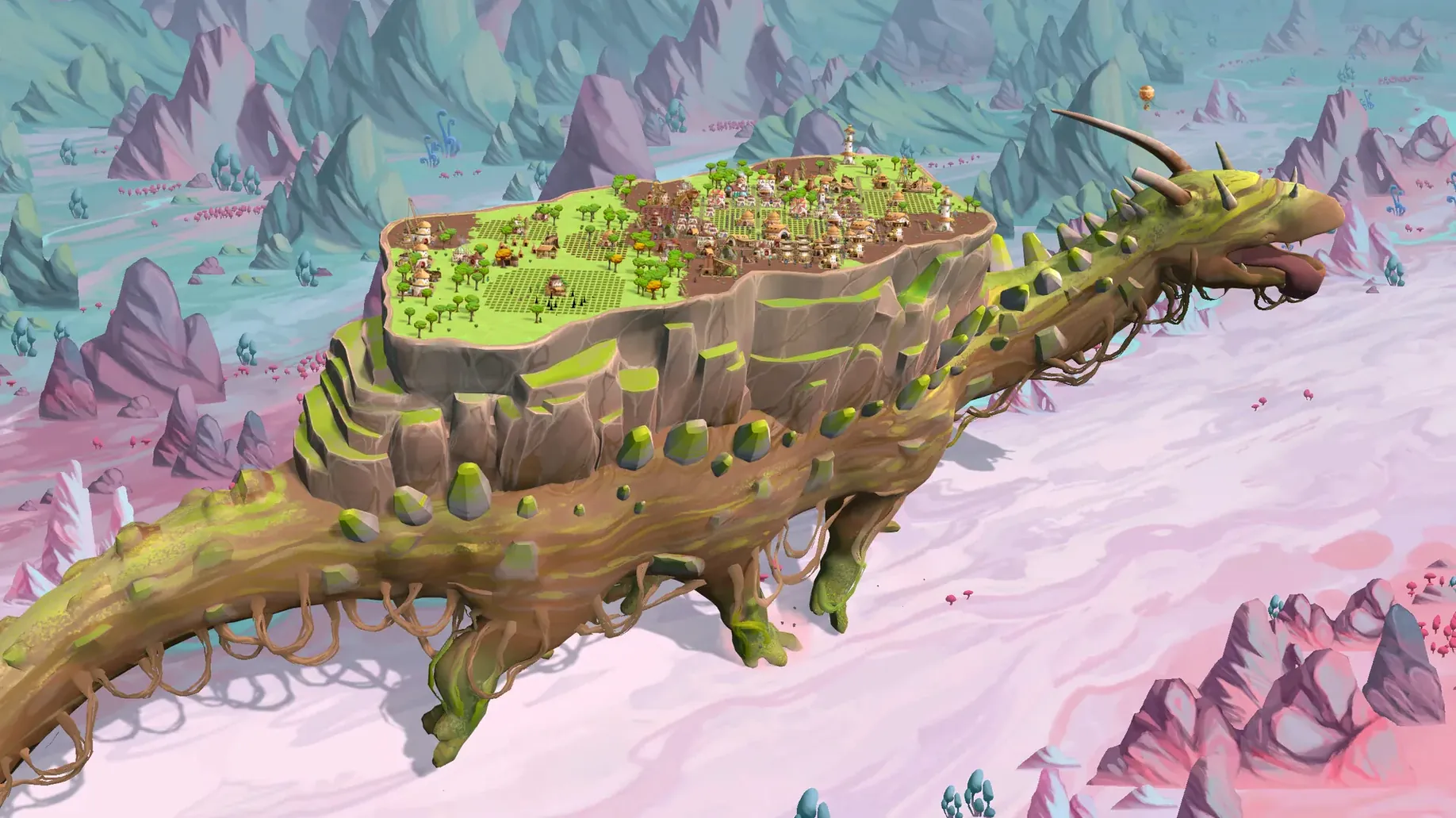
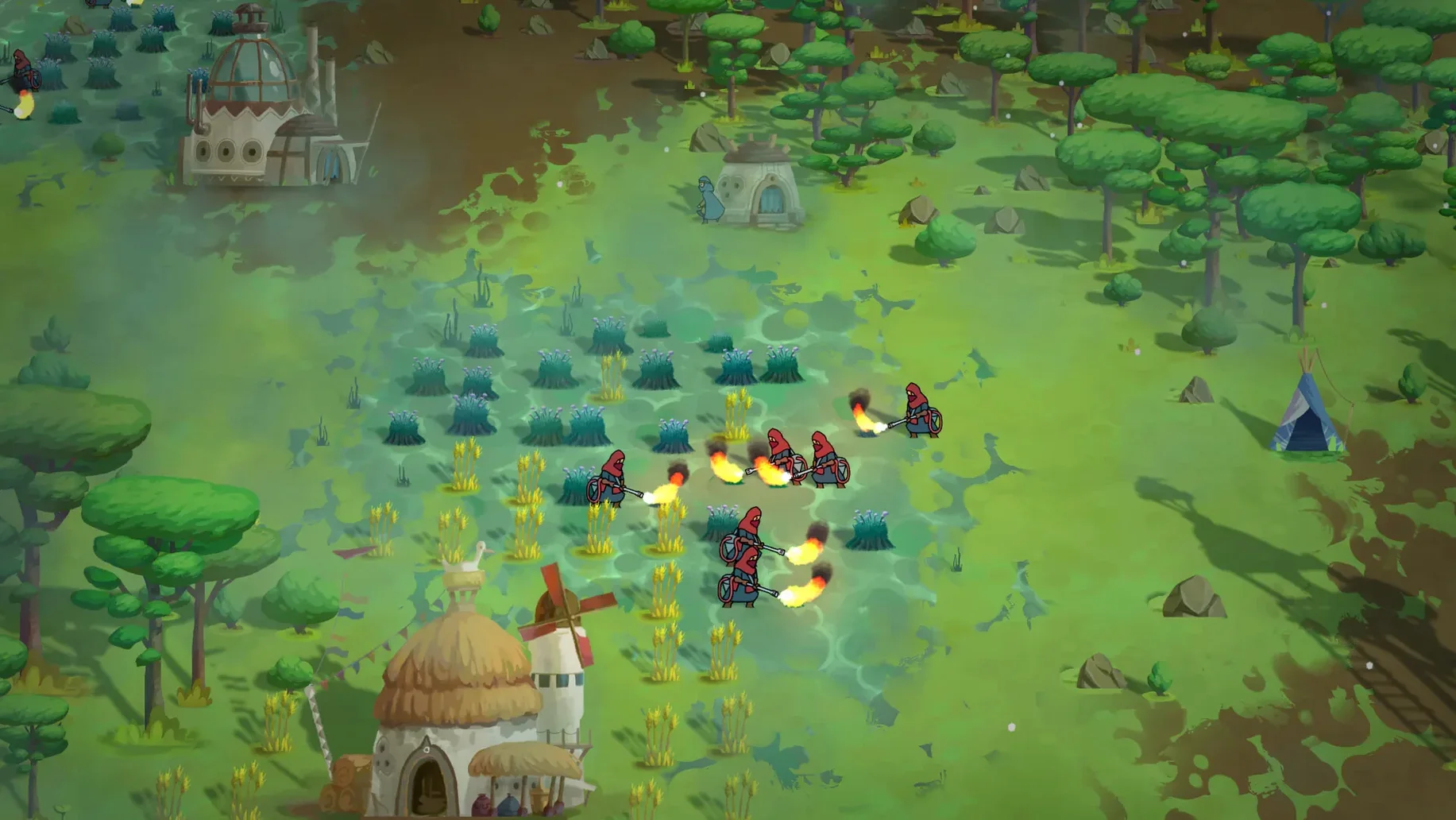
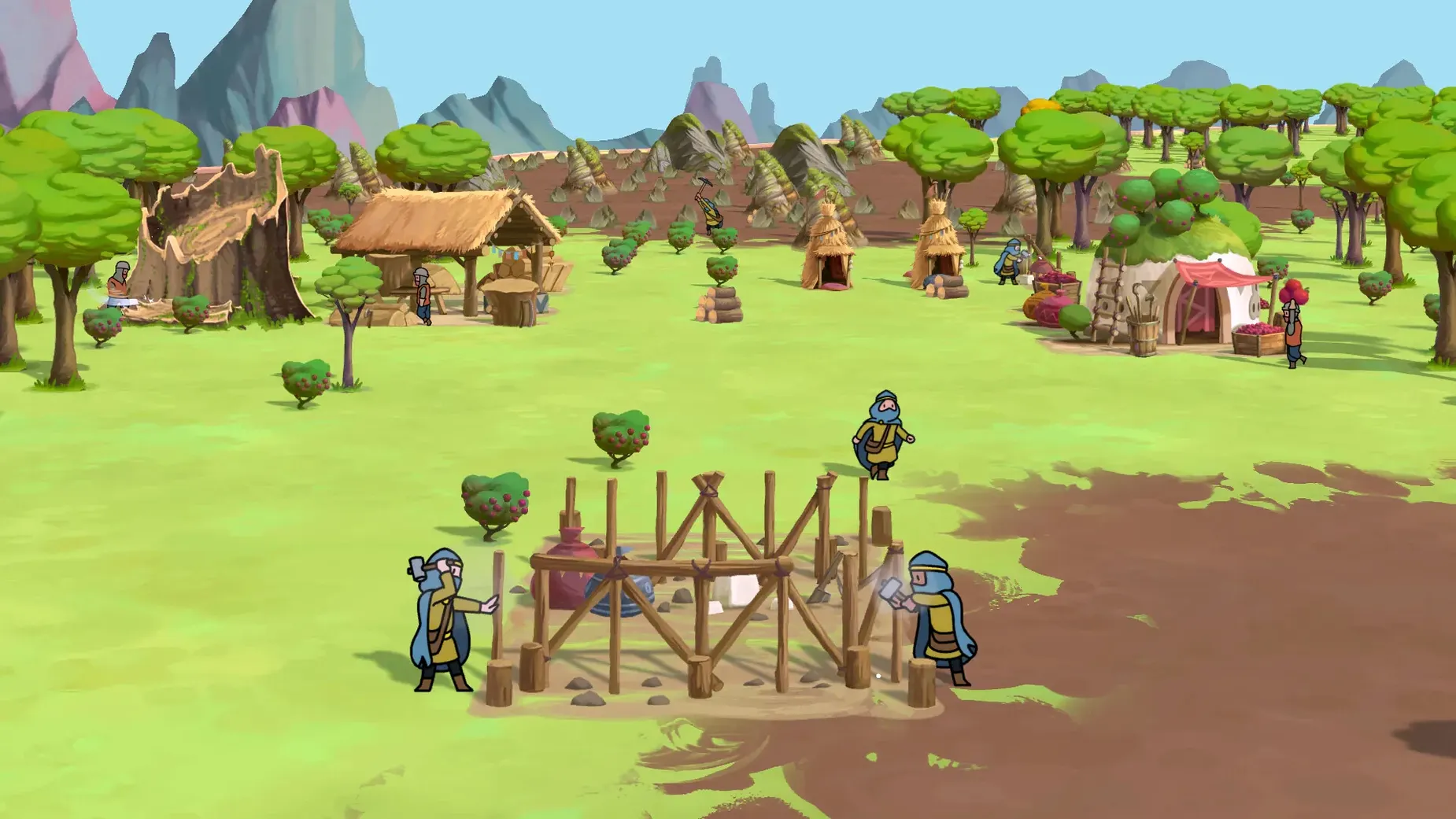
If you've spent time with Frostpunk or Banished, you know the rhythm: stockpile, research, and pray your settlement survives the next crisis. The Wandering Village takes that loop and places it squarely on the back of a lumbering creature named Onbu, striding through a world blanketed by toxic spores.
Good for players who enjoy
- Logistics with a living landscape. Your map moves. Farmland you placed in a sunny spot might shift into Onbu's shadow as it turns, so you're constantly adapting layouts rather than perfecting a static grid.
- Moral friction built into the mechanics. You can send scouts to retrieve rare artifacts, but you also decide whether to feed Onbu your hard-grown crops or let it weaken. A parasitic playstyle is a valid, functioning path, not just flavor text.
- Tech-tree progression with real constraints. Research unlocks new buildings and abilities, but space on Onbu's back is finite. Every new structure is a trade-off.
- Indirect creature bonding. Onbu isn't a pet with a friendship meter. You build a relationship through actions — treating wounds, directing its path away from spore clouds — and the game responds mechanically, not just with dialogue.
It asks for patience, not a power trip
- It's not a power fantasy. You manage scarcity and compromise. If you want a sprawling, consequence-free sandbox, this isn't that.
- The pace leans deliberate. Early hours involve watching crops grow and waiting for expeditions to return. Players who prefer rapid build-queue action may bounce off.
- Onbu's movement changes city-planning norms. Fixed-grid perfectionists might find the shifting sunlight and biome transitions frustrating rather than refreshing.
- Early Access roots still show a little. The core loop is polished, but the endgame can feel less dense than the midgame struggle. Version 1.1.6 fixed some hunger and harvesting bugs, and the developers continue refining things.
Onbu is a partner, not a fixed generator
Against Frostpunk. Both games ask you to shepherd a small population through environmental collapse, but Frostpunk pins you in a crater while The Wandering Village gives you a moving foundation. The Generator is a fixed center; Onbu is a partner you can neglect or nurture. Frostpunk's moral choices land as laws signed at a desk. Here, the choice lives in your crop allocation screen — feed the village, or feed the creature carrying it.
Against Banished. Banished is the purer logistics sim: no monsters, no narrative, just seasons and starvation. The Wandering Village adds biome shifts, spore clouds, and parasites that force you off a settled build order. If Banished rewards mastering a stable system, this game rewards staying unstable gracefully.
Against Airborne Kingdom. Both involve moving settlements, but Airborne Kingdom's flying city glides above the world while Onbu trudges through it. The airborne game emphasizes lift, tilt, and propulsion; this one emphasizes surface area, creature health, and what's growing underfoot. The tone here is earthier and the relationship with your mount more emotionally tangled.
Dial back edge scrolling to 30% before your first run
A few toggles make the difference between frustration and flow. Open the settings menu before your first real run.
- Edge scrolling sensitivity. The default is aggressive. If you overshoot your village constantly, dial it down to around 30%. Camera control improves immediately.
- Autosave interval. Set it to every 5–8 in-game days, not the default 15. Biome transitions can land you in a spore storm with no warning, and the game doesn't checkpoint before disasters.
- Show resource icons on buildings. Turn this on. It overlays tiny production-state icons on farms, kitchens, and workshops, so you spot a stalled harvester without clicking through every tile.
- Onbu path overlay. Enable it. The dotted line predicting Onbu's route through the current biome lets you plan expeditions and farm placement around upcoming shade and terrain shifts.
- Tooltip delay. Shorten it. The building tooltips carry exact production rates and worker requirements, and you'll want that information fast when you're shuffling labor between harvest and construction.
A hunger bug fix stopped villagers starving beside full granaries
Version 1.1.6 landed with two fixes that directly affect the rhythm of midgame survival. The first corrected a hunger bug: villagers would sometimes ignore available food stockpiles and starve while granaries sat full. Before the fix, players learned to overbuild kitchens as a workaround; now a single kitchen with a short path to storage behaves as expected. The second fix stopped farmers from abandoning decayed crops indefinitely. Previously, a blighted field could lock a farmer into a loop of refusing to harvest and refusing to replant, silently tanking your vegetable supply. With the patch, farmers clear the rot and reseed on their own.
Practically, these changes mean less babysitting of basic food chains. You can trust the numbers in the resource panel instead of double-checking every field manually. For a game where one missed harvest can cascade into a labor crisis, that reliability shifts the difficulty from "fighting the simulation" back to "fighting the spores."
- Fixed a bug where villagers reported hunger despite available food stocks.
- Fixed a bug where farmers ignored decayed crops instead of clearing them.
- Apple Silicon and 64-bit Intel Macs supported.
Comments 0
Sign in or create an account to leave a comment.
No comments yet. A codec, a slice, a machine — they appear after moderation.