The Classrooms for macOS
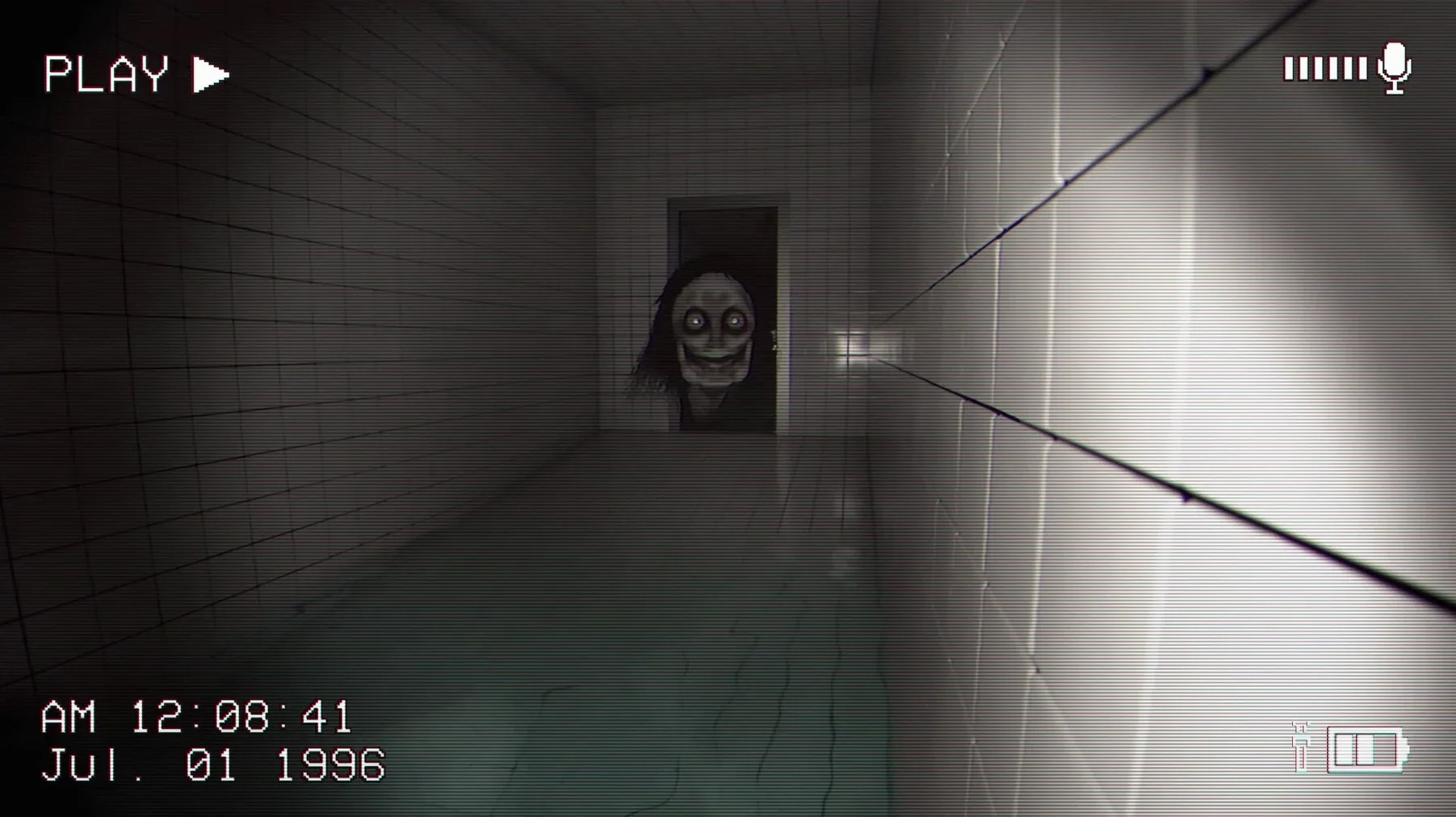
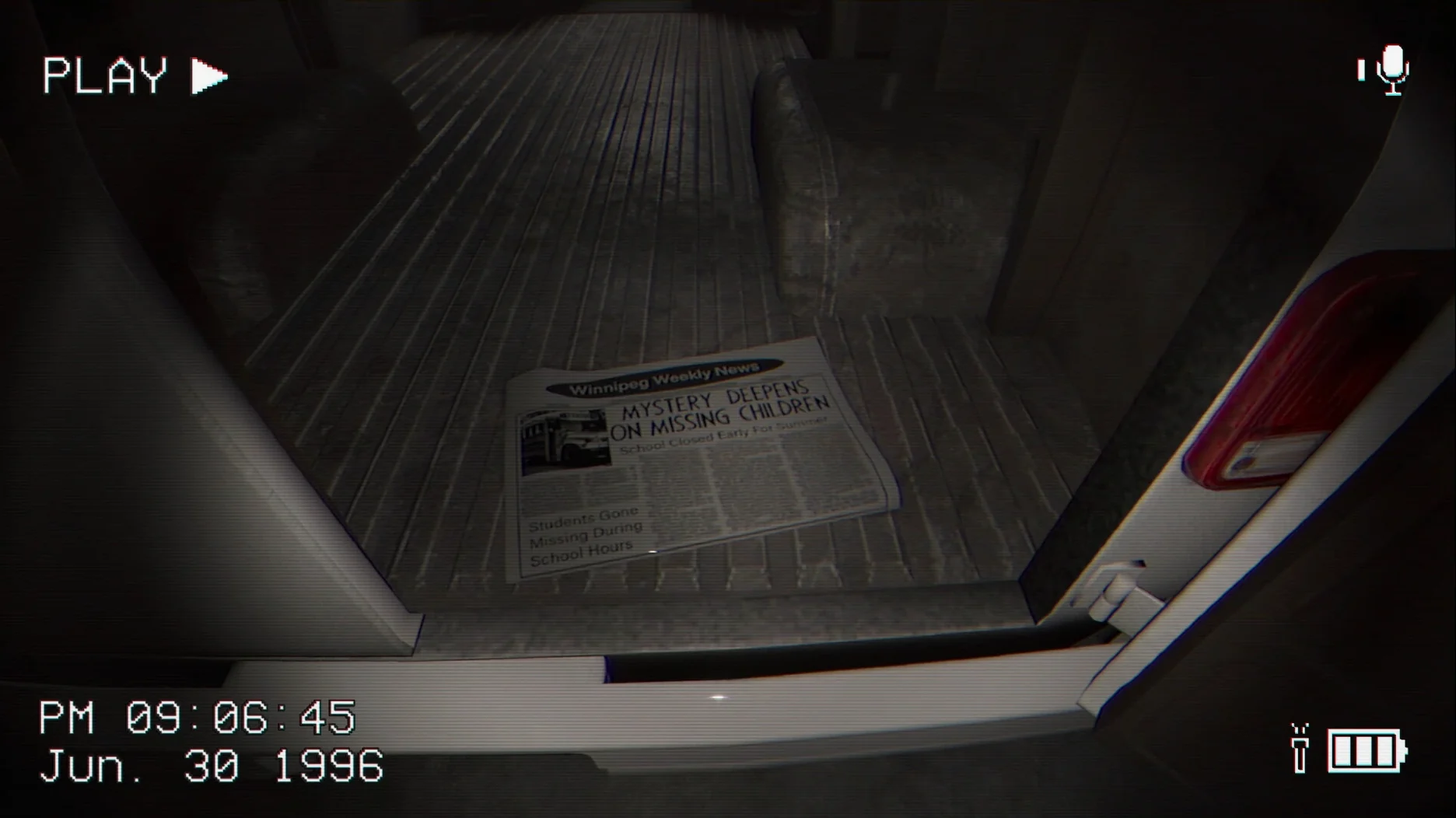
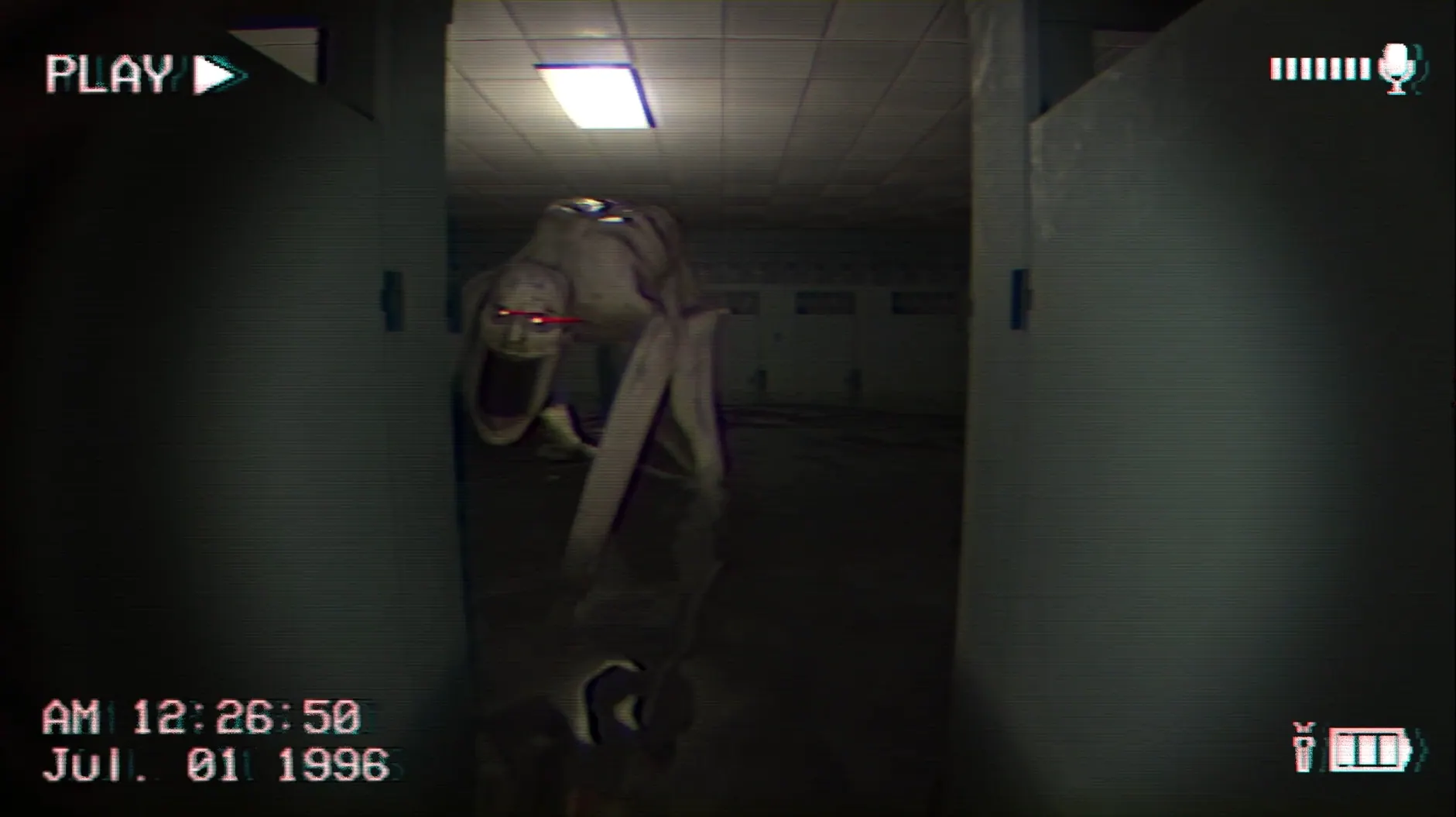
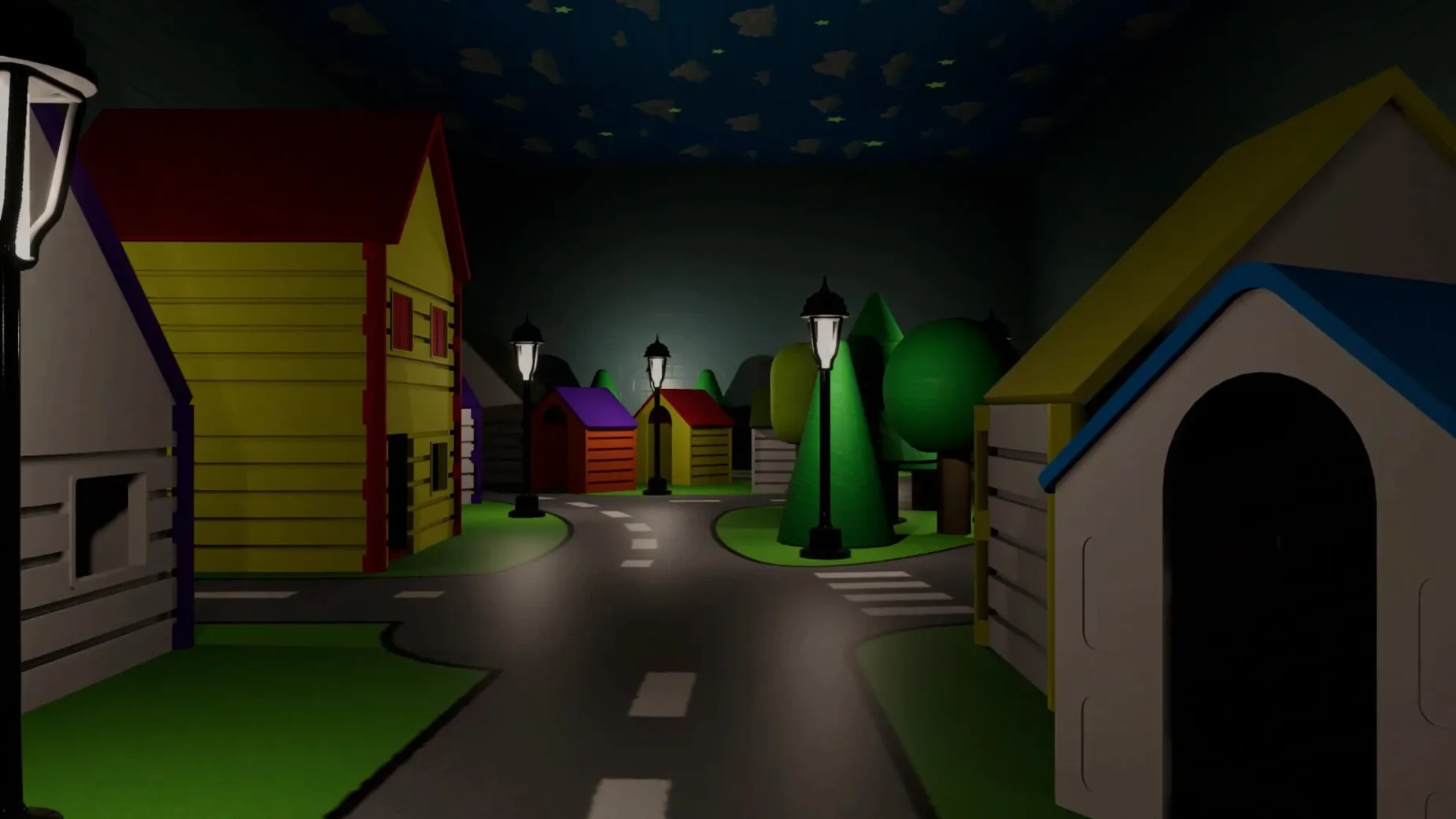
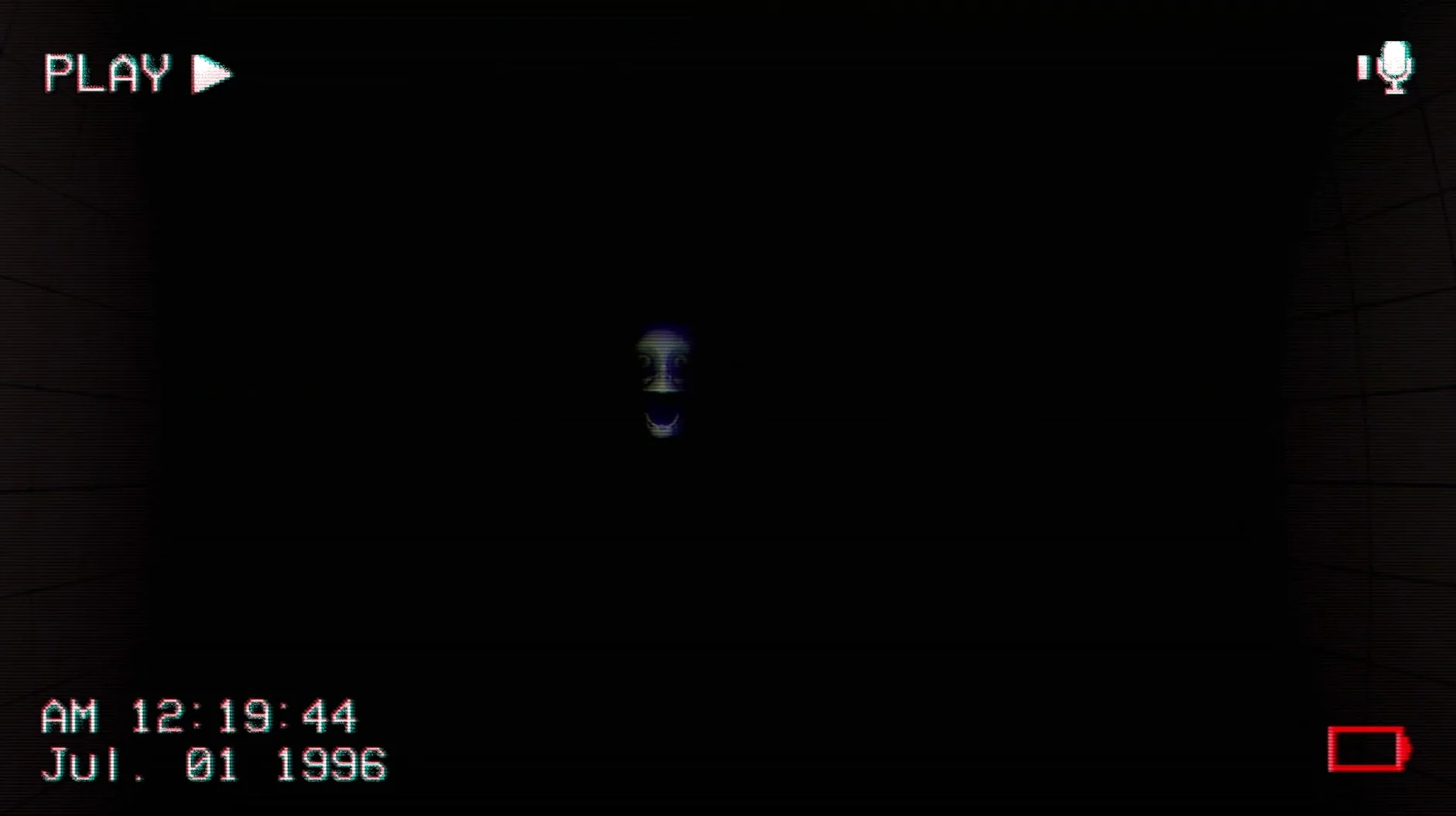
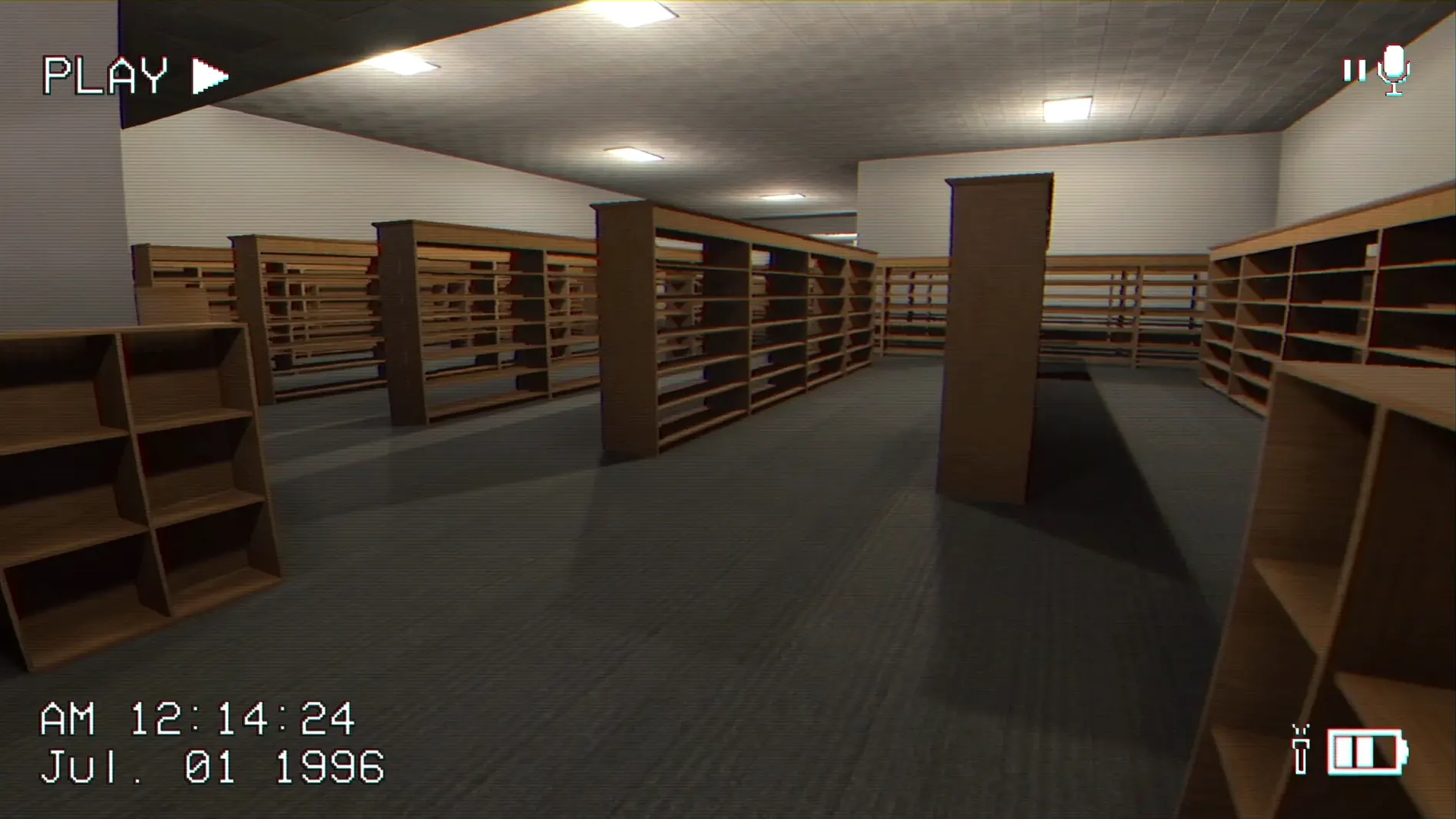
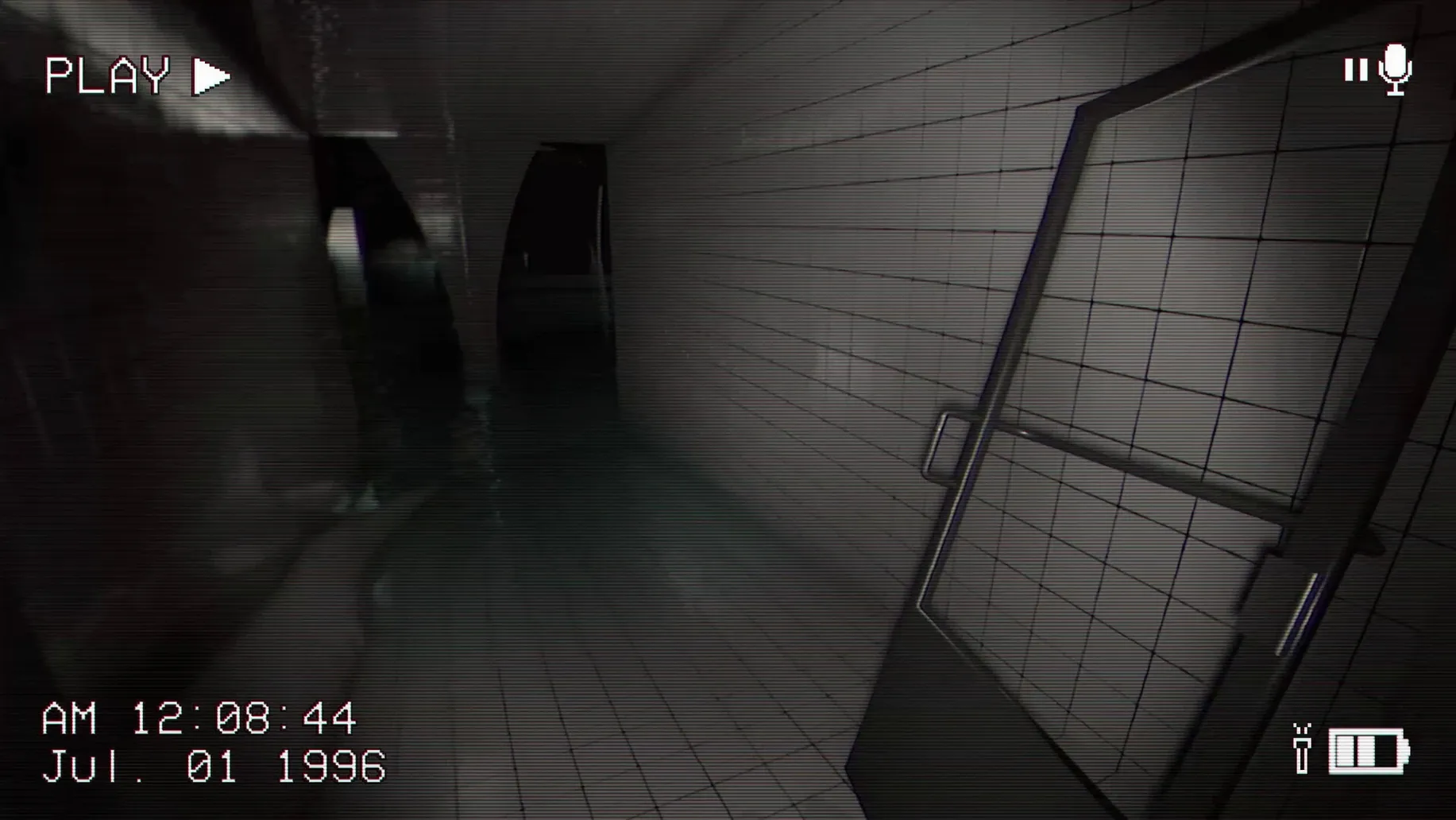
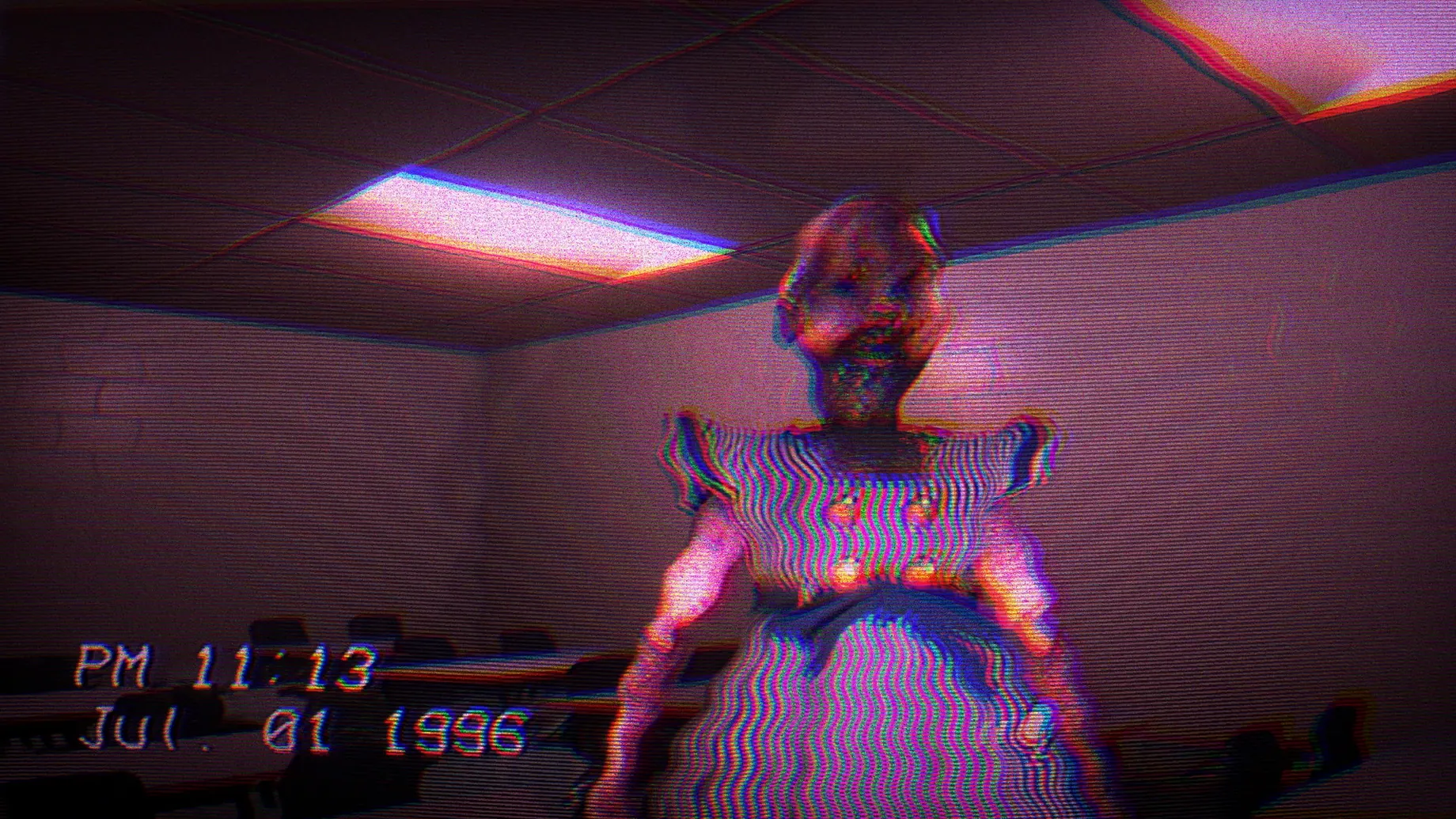
Build 20618086 runs the whole loop in roughly fifteen minutes per dive.
Run — walk speed is fixed; sprinting isn't a button, it's the camera sway from the VHS filter.
Tape — the found-footage layer is the entire interface. Health, stamina, and objective text are written onto the frame.
Maze — rooms, hallways, and exit routes are procedural. The map order changes each playthrough, but the school layout language stays liminal.
Entity — one persistent threat with line-of-sight rules. It doesn't pathfind; it appears where the tape cuts.
Loop — you enter, you record, you die or you leave. The footage you keep is the only persistence.
Why does the screen go black and hiss at you on launch?
You launch the app. The Wineskin wrapper spins for a few seconds on Apple Silicon — normal, not stalled — then the screen goes black and the VHS static hits. No menu music, no splash art. Just the hiss of tape and a date stamp: October 1996.
Robert Chen steps through the chain-link gate. The camera swings with mouse movement, slightly delayed, like a shoulder-mounted unit from the late nineties. You hear your own footsteps before you see the hallway. The school tiles are the wrong color — green where they should be beige — and that's your first anomaly. You pull up the codex with Tab, log it, and the tape counter ticks forward. That's your run. That's the whole loop.
Five minutes in, you hear breathing that isn't yours. The entity doesn't announce itself with a sting or a subtitle. The camera just cuts — a frame skip — and now it's standing at the end of the corridor. You back into a classroom, shut the door, and crouch behind a desk. The door handle rattles once, then stops. You wait. The tape keeps rolling. When you finally step out, the hallway has three doors where there used to be one. You pick left. It's always left.
The session ends twelve minutes later with the tape eject sound and a black screen. You died in the pool room, or you found the exit — either way, the footage saves. You can watch it back from the main menu, scrubbing through your own breathing and the thing you didn't see until it was too late. Next run, the pool room might not even exist.
Does the game listen when you cough or talk nearby?
"Does it need a microphone?" No, but it uses one if you have it. The game listens for ambient sound — a cough, a chair creak, someone talking in the next room. It doesn't record or upload anything; it just feeds volume spikes into the anomaly system. Louder rooms in real life can shift what spawns in the game. Play with headphones and it's a non-issue. Play with an open mic in a quiet apartment at 2 a.m. and you'll get a different experience than someone playing in a shared dorm.
"Is it a full game or a tech demo?" It's Early Access on Steam, and this build reflects that. The core loop — enter, explore, record, survive, extract — is complete. What's still growing is the variety: more entity types, more anomaly sets, more school templates. You get roughly fifteen minutes per dive, and the procedural generation means no two dives are identical. If you're comfortable with a game that treats each session as a self-contained horror short, you'll get it. If you want a twenty-hour campaign with cutscenes, this isn't that yet.
"Does the Wineskin wrapper cause problems?" On Apple Silicon Macs — this build was tested on a 2020 M1 mini running Sequoia — it's stable. The wrapper bundles its own runtime; you don't need to install anything separately. If you get an error on first launch, the disk image includes a Fix file that handles it. The only quirk worth knowing: if cloud saves try to load during startup, just click Cancel with the left mouse button and the game proceeds normally. Language switching happens in-game through the settings panel — English, German, French, Turkish, and several others are available in the interface, while voice lines stay English.
Recording a full anomaly log: a workflow
Say your goal for a session is to fill the codex — to document every anomaly type you can find in a single dive, not to reach the exit. Here's how that plays out.
Start in the courtyard. Before you move, open the inventory with I and check your starting equipment. One flashlight, one blank tape, one key item that's different every run. Make a mental note of the key — it tells you which wing you're being pointed toward. Ignore it for now. You're not here to solve the school; you're here to catalogue it.
Move room by room along the perimeter. The first anomaly is almost always visual — a poster that changes when you look away, a clock running backwards, a window showing daylight in a building with no power. Pull up the codex (Tab), find the matching entry, mark it. The tape counter advances. That's one.
By room four or five, you'll hear something. Stop moving. The microphone-aware system works best when you're still — your own footsteps mask the ambient cues. If you hear a locker door close two hallways away, that's an audio anomaly. Log it. If you hear breathing directly behind you, don't turn around. The entity triggers on visual confirmation. Back out slowly, camera fixed forward, until the sound fades. Log it as a proximity event.
Mid-dive, around the eight-minute mark, the school layout will have shifted at least once. This is where most players panic and run. You're documenting, so you do the opposite. Note the new room that wasn't there before. Check if doors that were open are now locked. Check if furniture has rearranged itself. Each confirmed change is a codex entry. Some entries unlock others — the game chains anomaly discoveries so that finding a "duplicate room" anomaly might unlock the entry for "infinite hallway."
By minute twelve, you've logged seven to ten anomalies. The entity is now actively hunting — the tape cuts are more frequent, the static heavier. Don't push for more. Find the exit or, if the map has sealed you in, just keep the camera rolling until the tape ends. The footage saves regardless. Back at the menu, your codex now has entries that will persist across future dives, and you can scrub the recording to catch anything you missed in the moment. That's the loop: you didn't survive, but you documented something. Next dive, the school will be different, and you'll have seven new things to find.
- Apple Silicon Mac
- Tested on macOS Sequoia, Mac mini 2020 M1
- Interface languages: English, German, Bulgarian, Greek, Danish, Romanian, Turkish, French, Swedish
$ man the-classrooms | grep -A2 "?"
Does the game change between playthroughs?
Yes, the layout is procedural, so room order and exits differ each run. It is also listed as Early Access on Steam.
Comments 0
Sign in or create an account to leave a comment.
No comments yet. A codec, a slice, a machine — they appear after moderation.