Terraforming Mars for macOS
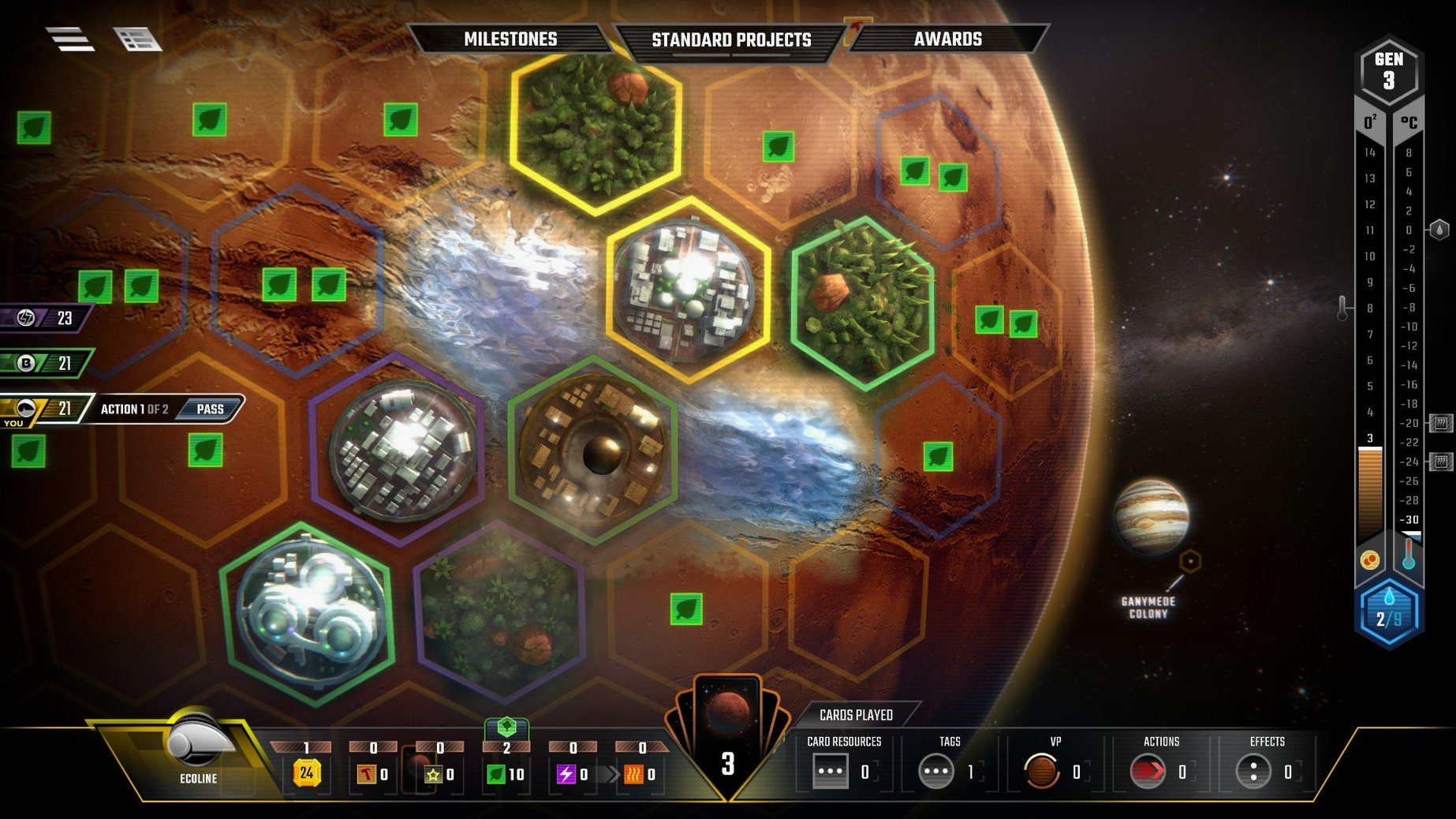
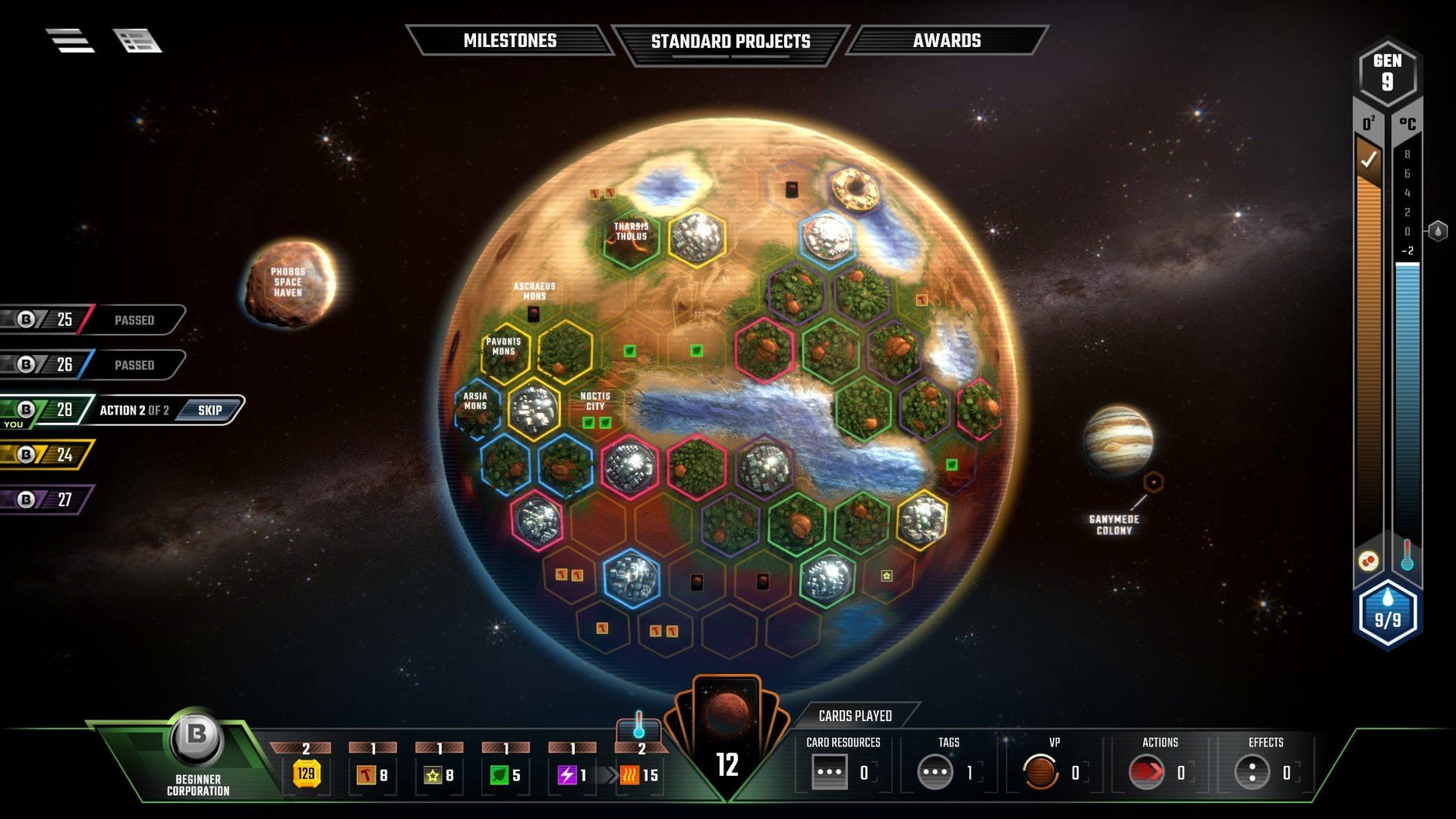
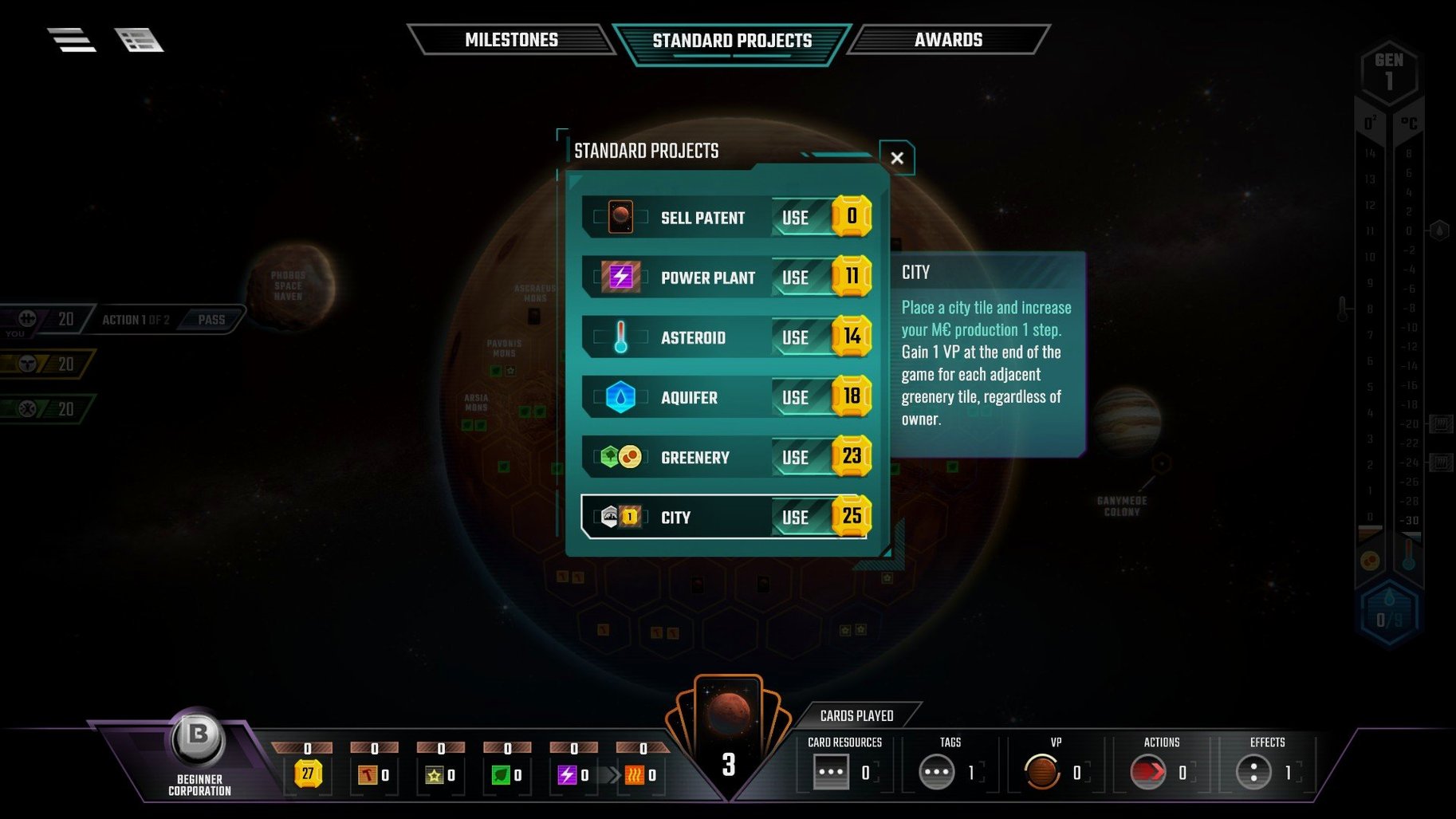
The Standard Project button is probably where you’ll live during the mid-game crunch. One click drops a city on a hex you’ve been eyeing for three generations. Another click slaps down a greenery tile next to it, instantly bumping your oxygen contribution and stealing a prime placement bonus from the opponent who was one credit short. Minute to minute, this is a game of sequencing small, concrete actions into a runaway engine.
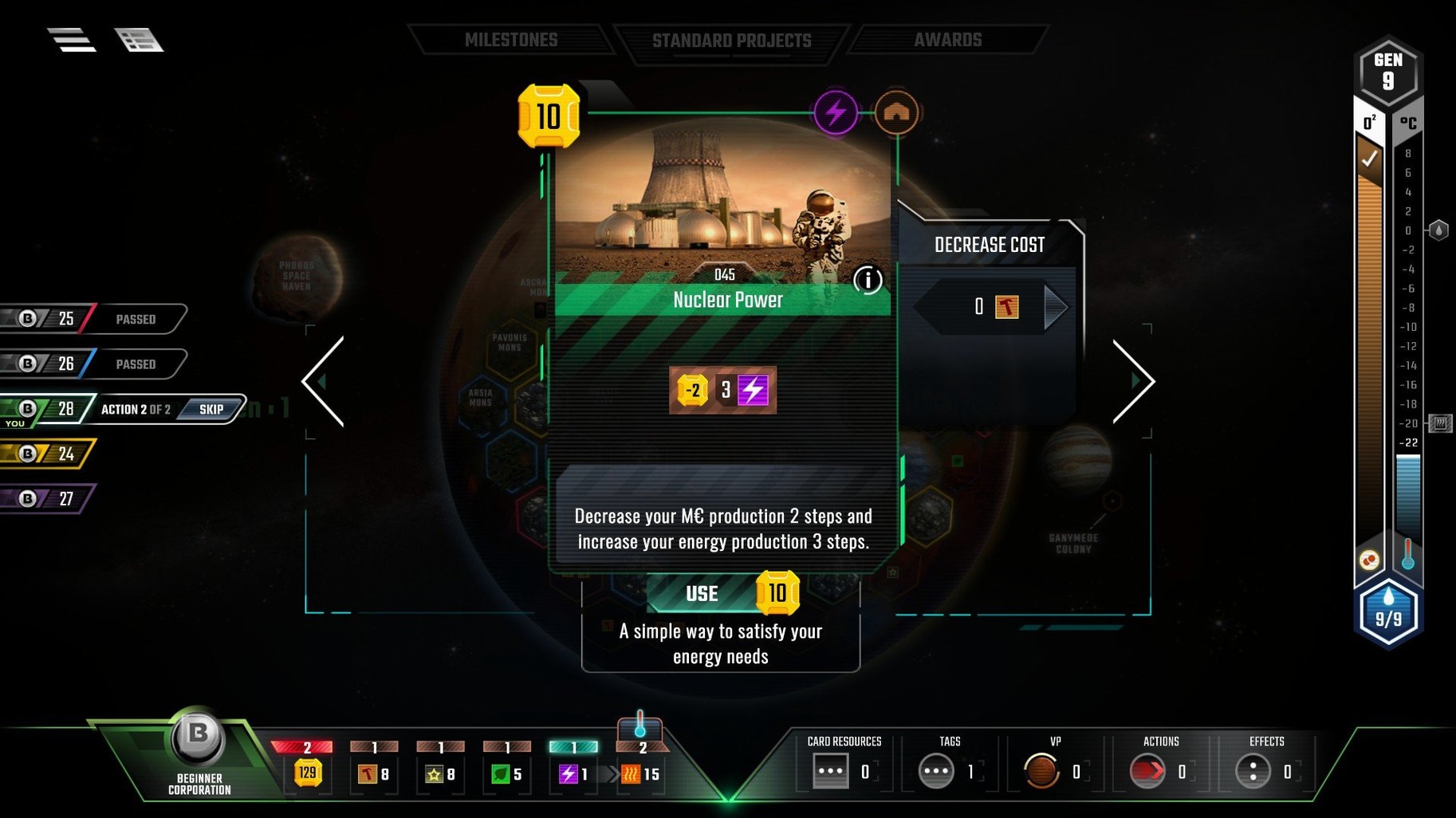
- Draw a hand of project cards and decide which to buy. You’re balancing the credit cost against a card’s long-term value—an early Electro Catapult pays for itself in oxygen, but buying it now means you can’t afford that asteroid that stops a rival’s plant production.
- Each generation, you spend your income on playing cards, funding standard projects, or claiming milestones. A turn might mean raising the temperature two degrees with a single event, then placing an ocean tile that gives you back two credits in steel rebates.
- Watch the global parameters. The map is a shared clock. As oxygen, temperature, and ocean coverage tick toward their targets, your corporation’s rating—and therefore your income—rises. Every greenery tile you place in the late game can be a three-point swing once you factor in adjacent cities.
- Between solo games, hotseat mode lets a group crowd around one machine. Each player takes a generation in sequence, passing control to the next corporation, which is how the original board game plays at a kitchen table.
The macOS build runs natively on both Apple silicon and Intel hardware, so the card draws and tile placements stay responsive even on a passive-cooled machine. Achievements track your milestones across sessions, giving you a record of how often you’ve pulled off a pure ground-game strategy versus a jovian tag engine that barely touches the board.
Why buying every card during research is dead weight
Overbuying cards in the research phase is the classic trap. Drafting every shiny project that crosses your hand feels productive, but each card costs three credits to keep, and a hand of ten unplayable cards is just dead weight by generation six. A better rule of thumb: buy two or three cards in the opening draft, and get ruthless about the rest.
The second mistake is ignoring milestones and awards until someone else claims them. These are point swings of up to ten victory points, and they get funded much earlier than a new player expects. If you spot a milestone like Mayor (three cities) and you’re already leaning into ground expansion, committing one or two turns earlier can lock in five points before anyone else qualifies.
Finally, new players tend to treat the global parameters as background noise rather than a shared timer. Every temperature bump and ocean placement pushes the game closer to its end, and a corporation that’s still setting up its engine on generation twelve while oxygen is nearly capped has already lost.
Testing weird corporation combos without shuffling cubes
Board game converts who already know the cardboard version find the digital edition a fast way to practice openings and test corporation synergies without shuffling hundreds of cubes. It’s especially useful for trying weird combos—Phobolog with no titanium production, for instance—that feel too risky to attempt during a three-hour table session.
Solo strategists get a tight puzzle with a hard generation limit and no opponent psychology to read. The solo mode strips the game down to pure efficiency, which appeals to Mac users who treat strategy games like optimization problems. Meanwhile, hotseat mode is perfect for households where one machine runs the show; a group of two or three people passing the trackpad between generations is the closest thing to a physical game night without clearing the dinner table. If you’ve been searching for Terraforming Mars Mac torrent to try the game locally, the DRM-free macOS build means you can install it on your main machine and a travel laptop without activation headaches.
- Base game release date noted as 2018-10-17.
- macOS 11.3 or later
- Apple silicon & Intel (64-bit)
Comments 0
Sign in or create an account to leave a comment.
No comments yet. A codec, a slice, a machine — they appear after moderation.