
InfraSpace for macOS
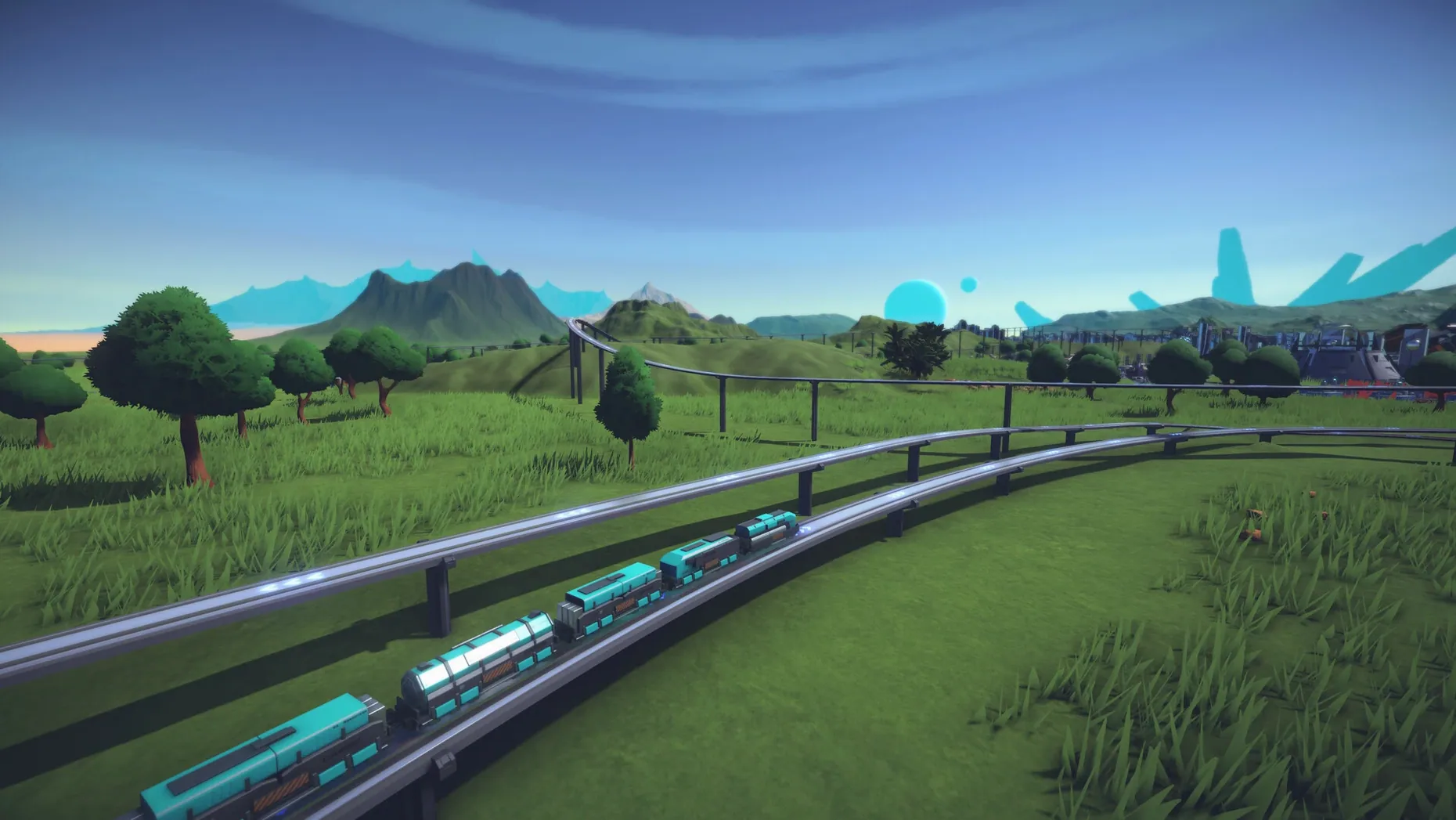
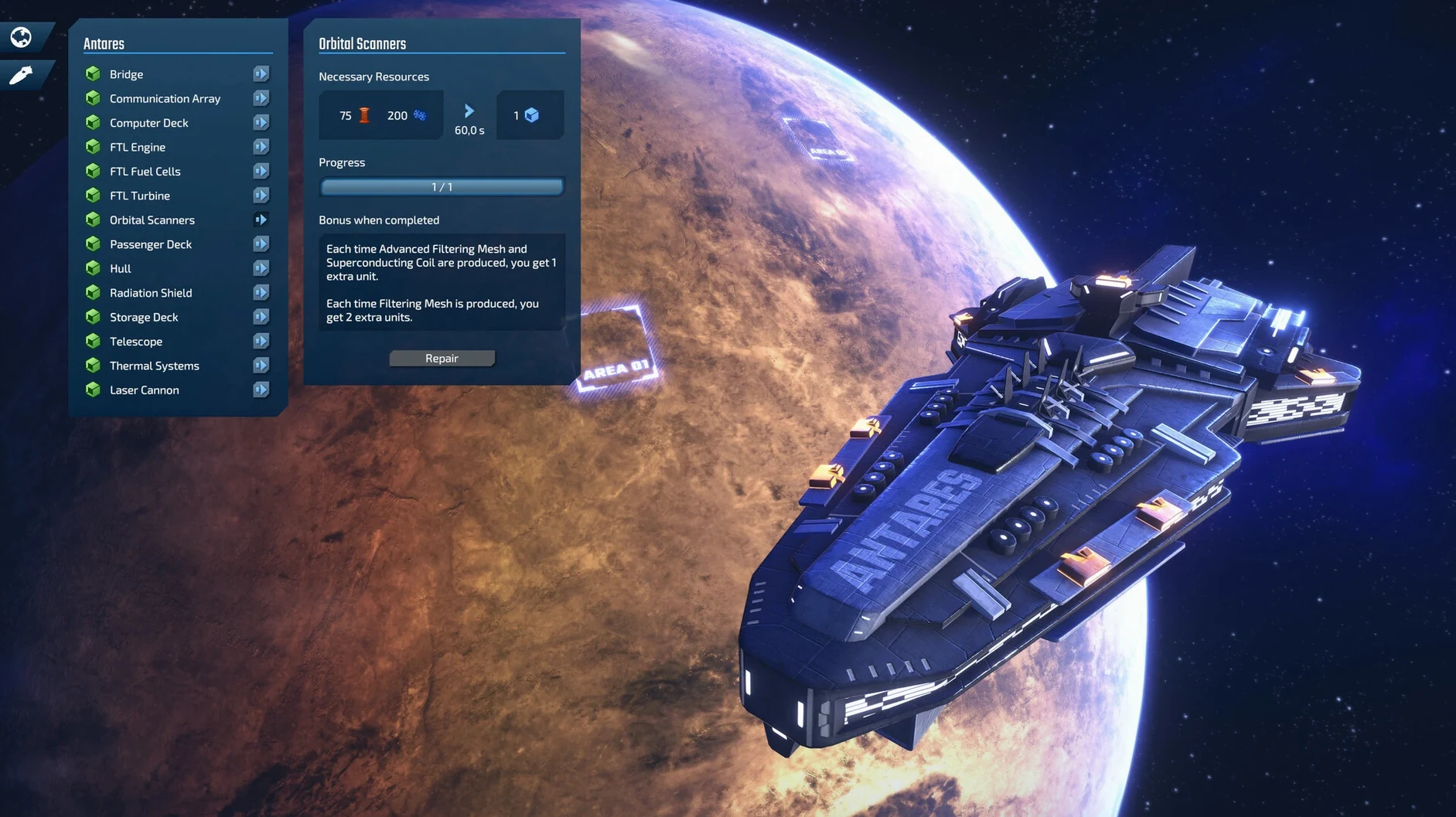
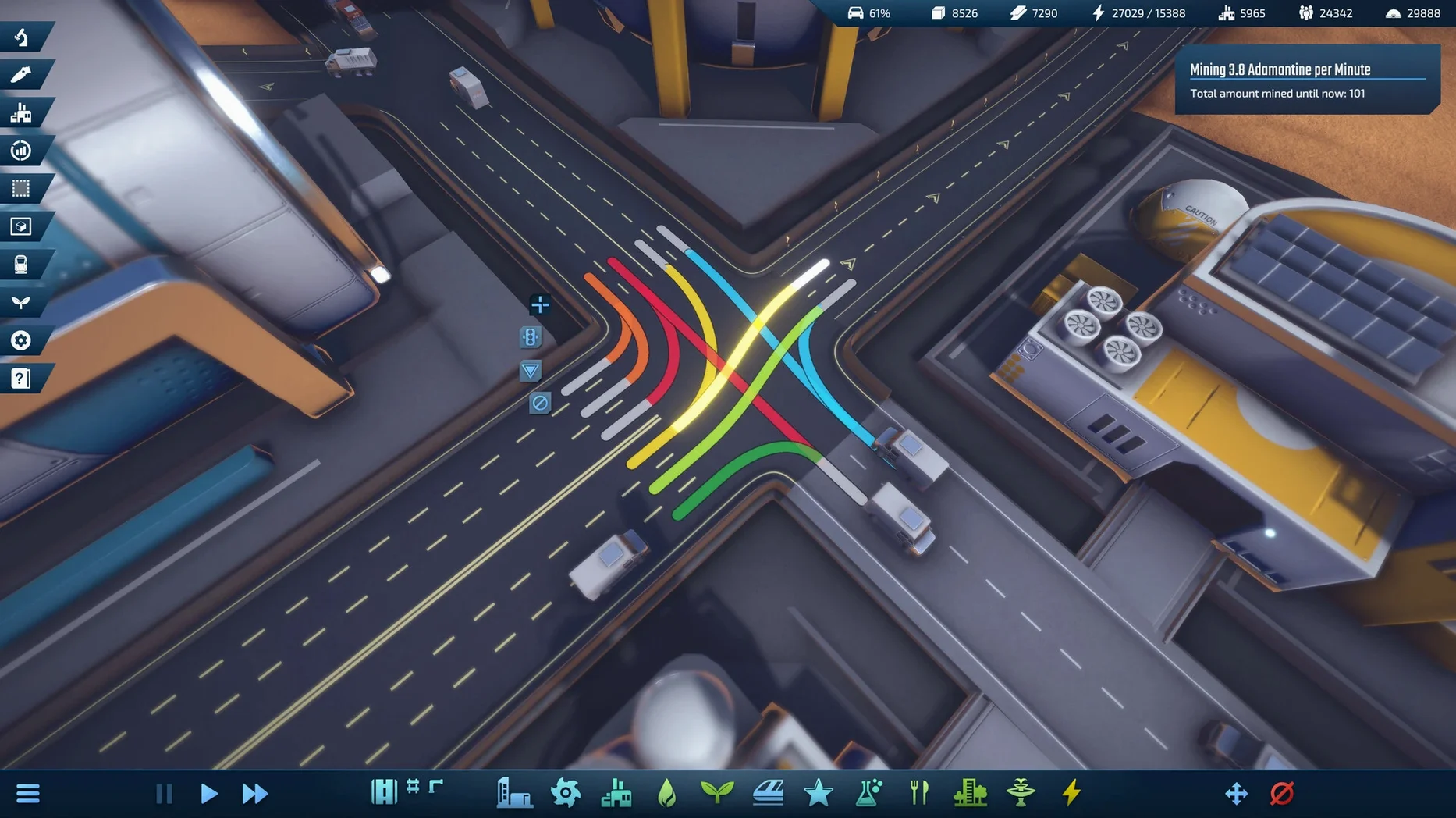
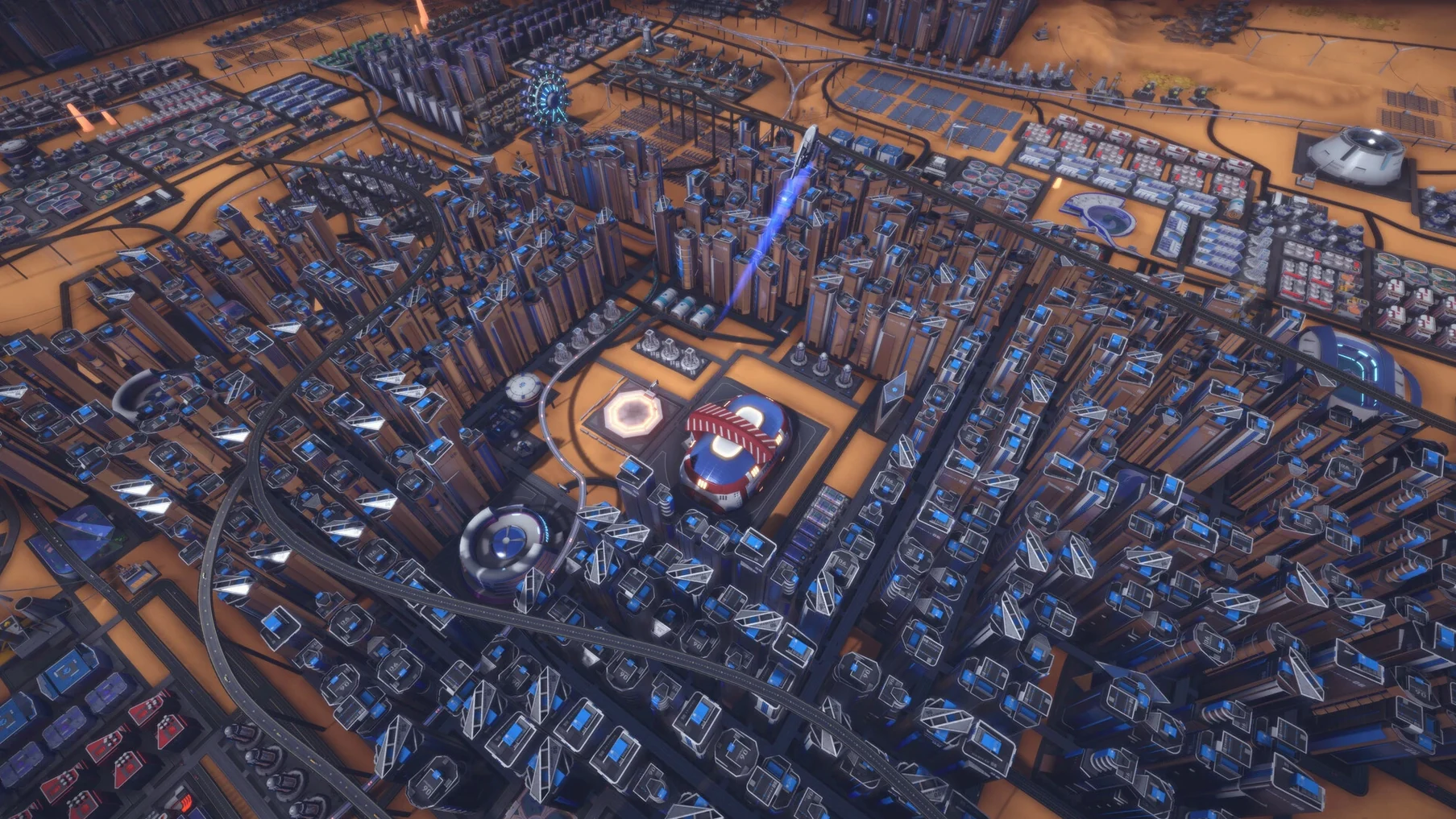
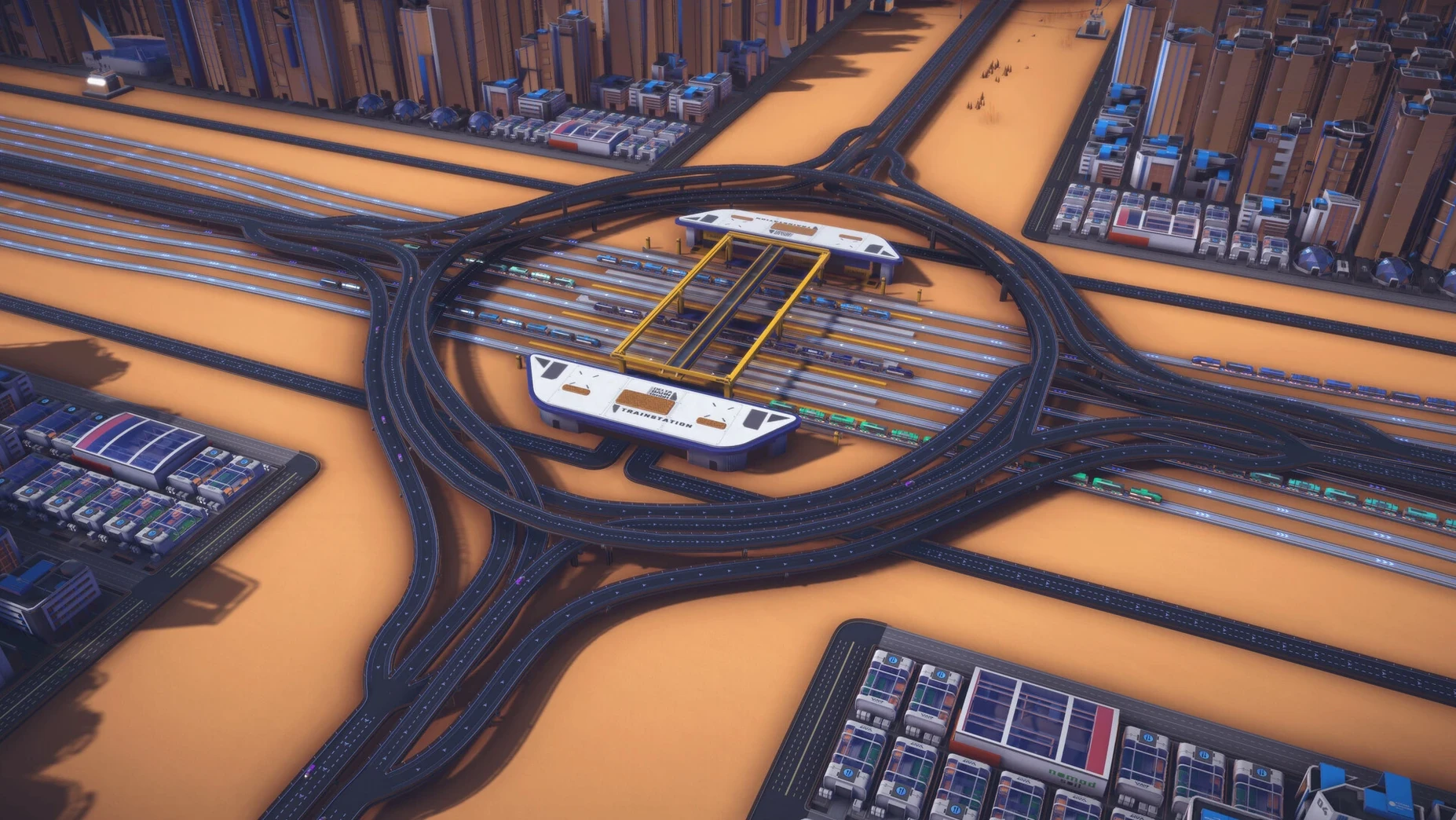
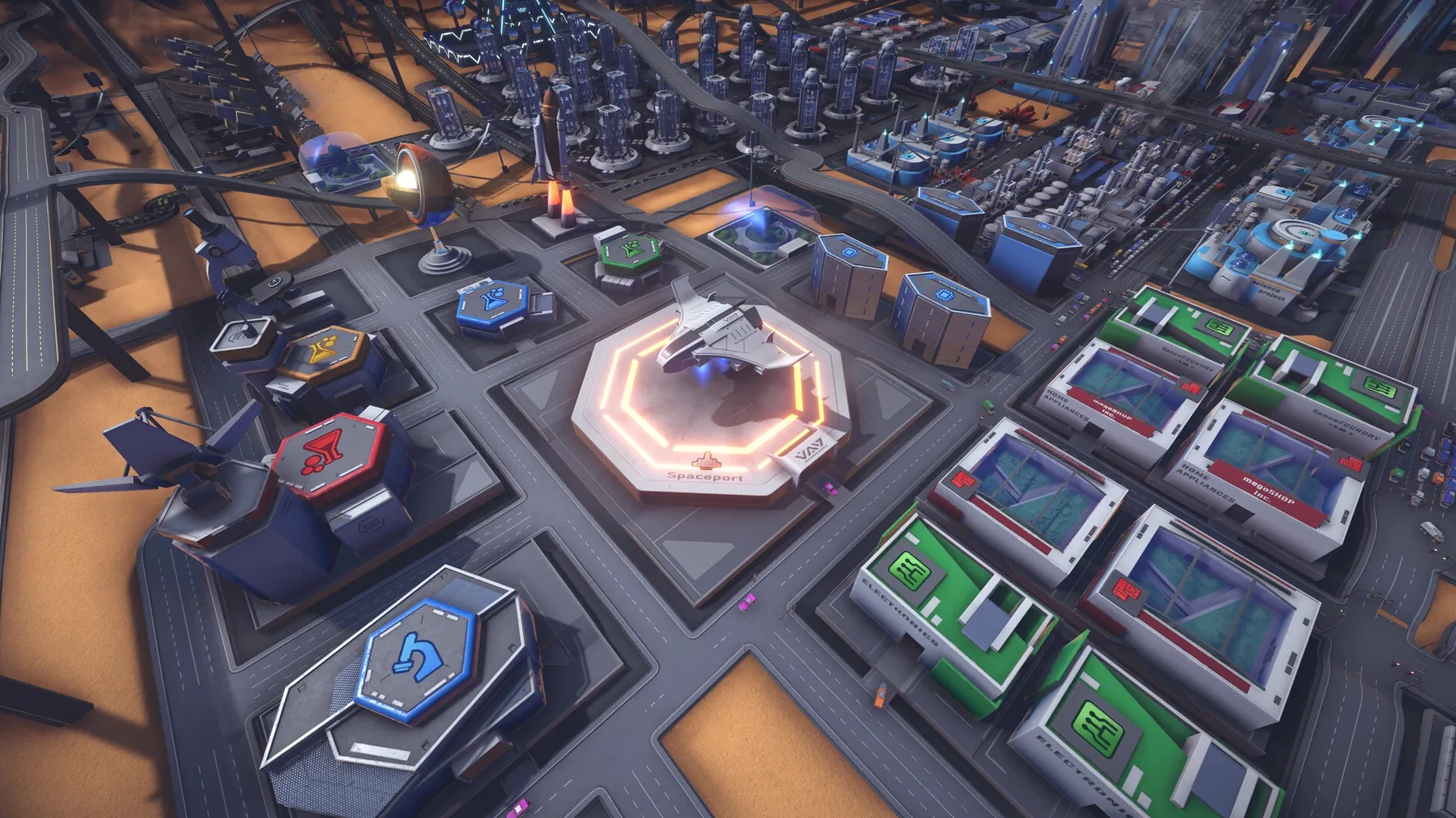
Highway exits. They sound mundane until you realize an entire colony’s oxygen supply is idling in a traffic jam just outside the industrial district. That’s the moment InfraSpace stops being a city painter and becomes a puzzle about flow.
- First colonists gather raw materials — iron, carbon, sand — straight from the surface. There’s no money, only trucks and time.
- Every product must reach a consumer’s habitat. A factory making electronics is useless if the chips sit in a warehouse because the road network can’t clear the intersection two blocks away.
- Food and oxygen depend on stable chains. One broken link in the conveyor-to-truck handoff, and habitats start flickering. The game pushes you toward dedicated highways, multi-lane roads, even roundabouts — not as decoration, but as actual throughput engineering.
- Schools scale with family growth. Larger cities bring larger households, and if the education infrastructure lags, the next generation of high-tech factories has nobody to staff them. It’s a quiet pressure that builds over hours.
This is a game for players who find spreadsheets calming and traffic-flow diagrams compelling. It strips out combat and narrative urgency, leaving only the hum of a production chain and the question “where is the bottleneck?” If you need a story, rival factions, or a reason to build beyond your own satisfaction, InfraSpace will feel dry. If your idea of a good evening is untangling a six-lane interchange so semiconductor deliveries hit their marks, it’s a rare, focused treat.
Can you soften the survival pressure?
The first question is almost always about difficulty. InfraSpace ships with a range of sliders that control how punishing the survival elements feel, so you can tune oxygen and food demands anywhere from “background ambiance” to “why is everyone leaving.” New players often get the best introduction by dialing survival pressure low for the first two hours, learning how steel and concrete plants slot into the resource web, then restarting with harsher settings once the transport logic clicks.
Another recurring worry is whether the game demands constant attention. A stable city with decent road hierarchy — arterials feeding into collectors, collectors into local spurs — can hum unattended for stretches. The simulation doesn’t throw random disasters at you. Problems come from your own design debt: the intersection you promised yourself you’d fix three hours ago finally seizes, and suddenly three habitats lose food while you’re on the other side of the map admiring sulfur mines. That’s not punishment; that’s consequence.
Some people grab an InfraSpace for Mac cracked copy just to poke at the logistics model without commitment, and the first thing they tend to ask is whether the production chains feel complete. They do, but with a deliberate ceiling: you won’t find infinite vertical recipes. The chain ends at high-tech goods feeding habitats and research, which means the depth comes from scaling and routing rather than from chasing the next tier indefinitely.
Does the simulation stay smooth on Apple Silicon?
On an M1 MacBook Air running Sequoia, the simulation stays fluid through mid-sized cities with several hundred trucks pathfinding simultaneously. Frame pacing holds steady enough that the camera pans over a busy industrial sector without stutter. Memory usage floats in the range you’d expect for a Unity-based builder — a few hundred megabytes above baseline — and there’s no creeping resource leak I could provoke in multi-hour sessions. Saving a large city takes a beat longer than saving a fresh one, but the autosave interval is short enough that you won’t lose much if you walk away.
The real stability story sits in how the traffic model handles edge cases. Trucks don’t ghost through each other, and pathfinding recalculates around congestion dynamically. When a roundabout locks up because too many vehicles enter from the same feeder lane, the simulation doesn’t crash — it just grinds. That’s the correct behavior. Fixing the junction feels like debugging a network protocol, and the game rewards you with visibly smoother flow the moment you add a dedicated turning lane.
- Japanese fonts were fixed; text should render correctly across the full interface now.
- Mac with Intel 64-bit or Apple Silicon processor
- macOS version not explicitly specified; tested on macOS Sequoia
$ man infraspace | grep -A2 "?"
Does InfraSpace run natively on Apple Silicon?
Yes. The current build runs on both Intel 64-bit and Apple Silicon Macs, and it was tested on macOS Sequoia on a MacBook Air (M1, 2020).
Comments 0
Sign in or create an account to leave a comment.
No comments yet. A codec, a slice, a machine — they appear after moderation.