Into the Breach for macOS
If you know FTL, you know Subset Games doesn't design for comfort. Into the Breach shares the same merciless clarity: no hiding behind percentages, no filler. The question is whether that clarity clicks for you.
Who enjoys the puzzle-like structure?
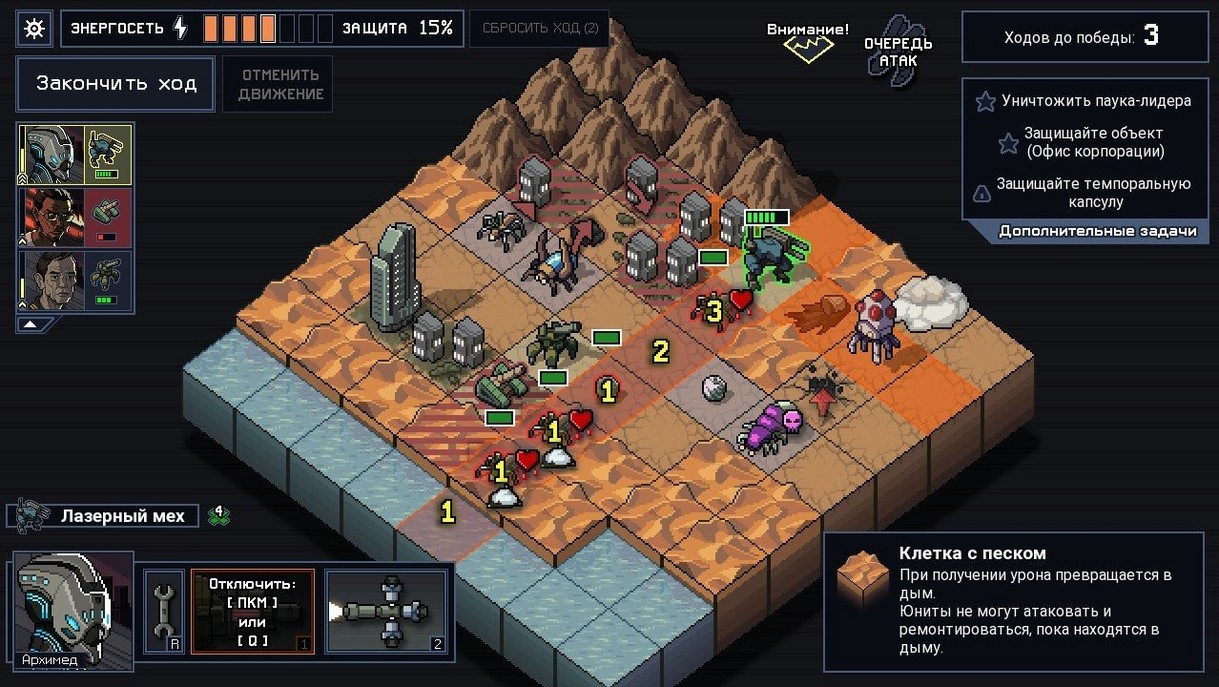
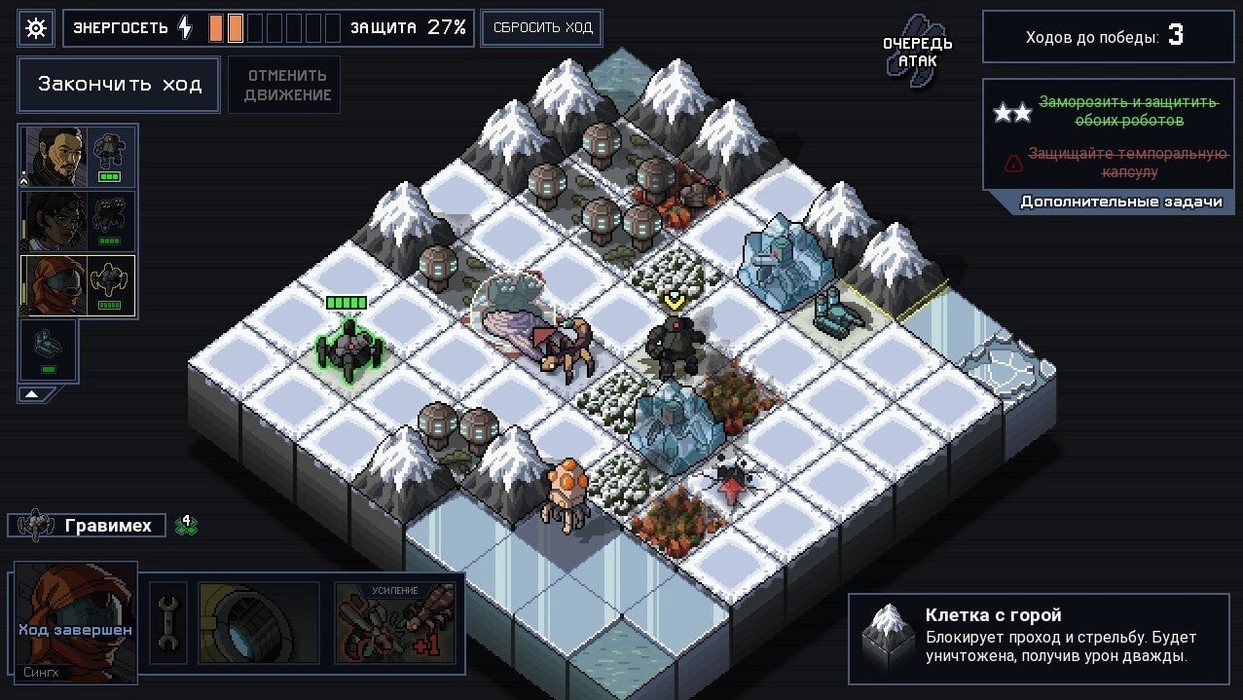
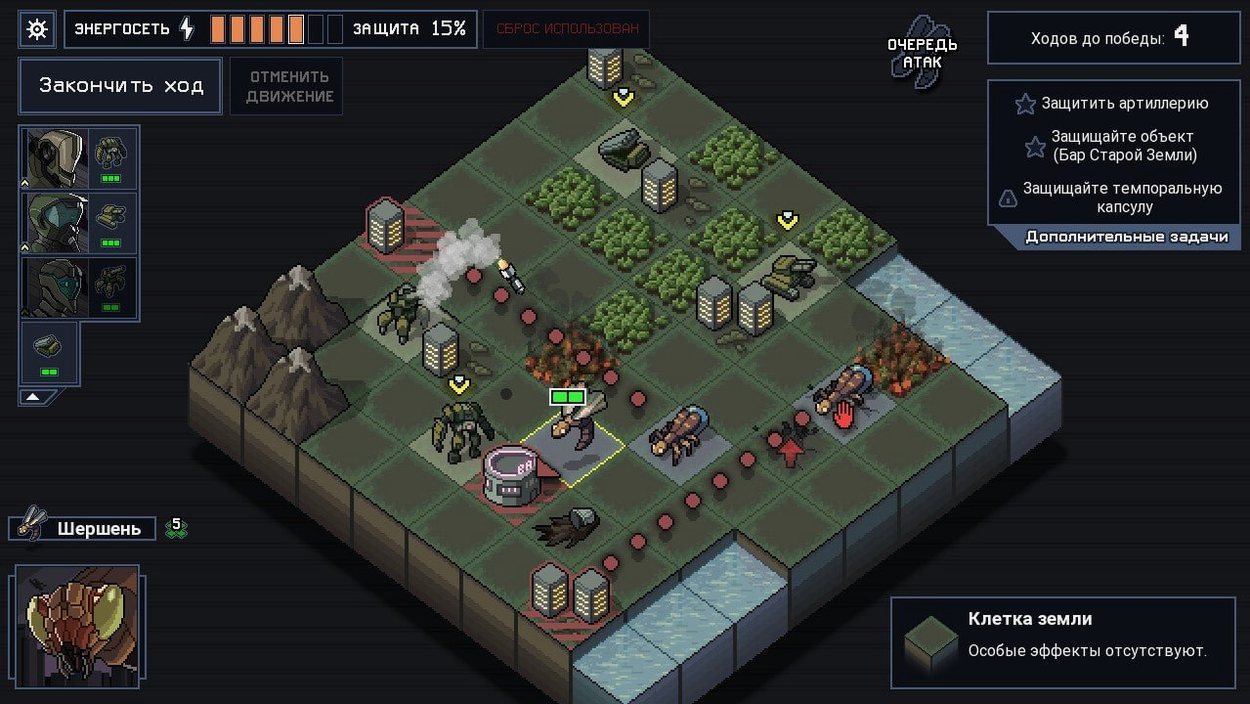
Players who treat every turn as a logic problem. Enemy attacks are telegraphed, so you see exactly what will happen and in what order. Winning means shifting threats, blocking spawns, and using pushback more than raw damage—a perfect fit if you like solving tight board-state puzzles under pressure.
What about players who dislike small numbers?
Every unit has low health and damage values. The game is won or lost on single-digit math. If you find satisfaction in extracting maximum value from a move that deals one damage and repositions two enemies, you will feel at home. If you prefer grand-scale spectacle and large stat sheets, the eight-by-eight grids may feel restrictive.
Who handles failure as part of the loop?
Losing a timeline is not a dead end. The game lets you send one pilot back through time to try again, carrying their experience forward. This appeals to players who view a run as a longer campaign rather than a single attempt. Anyone who resents restarting without a full reset will appreciate the mechanic; completionists who hate leaving timelines behind might struggle with it.
Right-click an enemy to see its exact attack tile
The interface hides a few time-savers. Right-clicking any enemy shows the exact tile it will attack, saving you from cycling through the turn order with the arrow keys. Holding Alt displays the attack order as numbered overlays on the grid — faster than watching the timeline bar at the top. If you ever reset a turn by accident, Ctrl+Z undoes your last move command, though only before you confirm the attack. The squad selection screen lets you rename pilots by clicking their names; the custom names carry across timelines when a pilot survives and travels back, which makes the continuity feel more personal than the default callsigns.
Turn order itself has a quirk the tutorial never explains. Enemies act in a fixed sequence tied to their type, not their spawn order. A burrower always moves before a standard scarab, regardless of which emerged first. Learning that sequence by heart means you can predict crossfire two turns ahead without checking the timeline bar constantly.
More deterministic than Invisible, Inc.
Next to Invisible, Inc., Into the Breach feels more deterministic. Both games reward repositioning over aggression and both punish you for treating them as shooters, but Klei's stealth tactics give you partial information and expect improvisation when alarms trigger. Here, nothing is hidden. The difference is that Invisible, Inc. asks you to adapt a plan; Into the Breach asks you to find the optimal line through a fully known board state. If you prefer perfect information and dislike RNG surprises mid-mission, Subset Games' approach will sit better.
Measured against XCOM 2, the contrast is scale. XCOM runs on percentage chances and long-term soldier attachment; losing a veteran hurts because you trained them across dozens of missions. Into the Breach compresses attachment into a single run's pilot, and the only percentages come from building resistance grids. The emotional register is quieter but sharper — a failed timeline stings for the civilians you could not save, not for the soldiers you lost to a 95% shot missing.
Compared to Wargroove, the similarity ends at the grid. Wargroove is a full turn-based tactics game with unit production, terrain bonuses, and lengthy campaign maps. Into the Breach strips that down to small squads on tiny maps. The puzzle DNA is stronger here; Wargroove wants you to manage an army, while Into the Breach wants you to solve eight turns of escalating spatial pressure.
A run from launch to first island clear
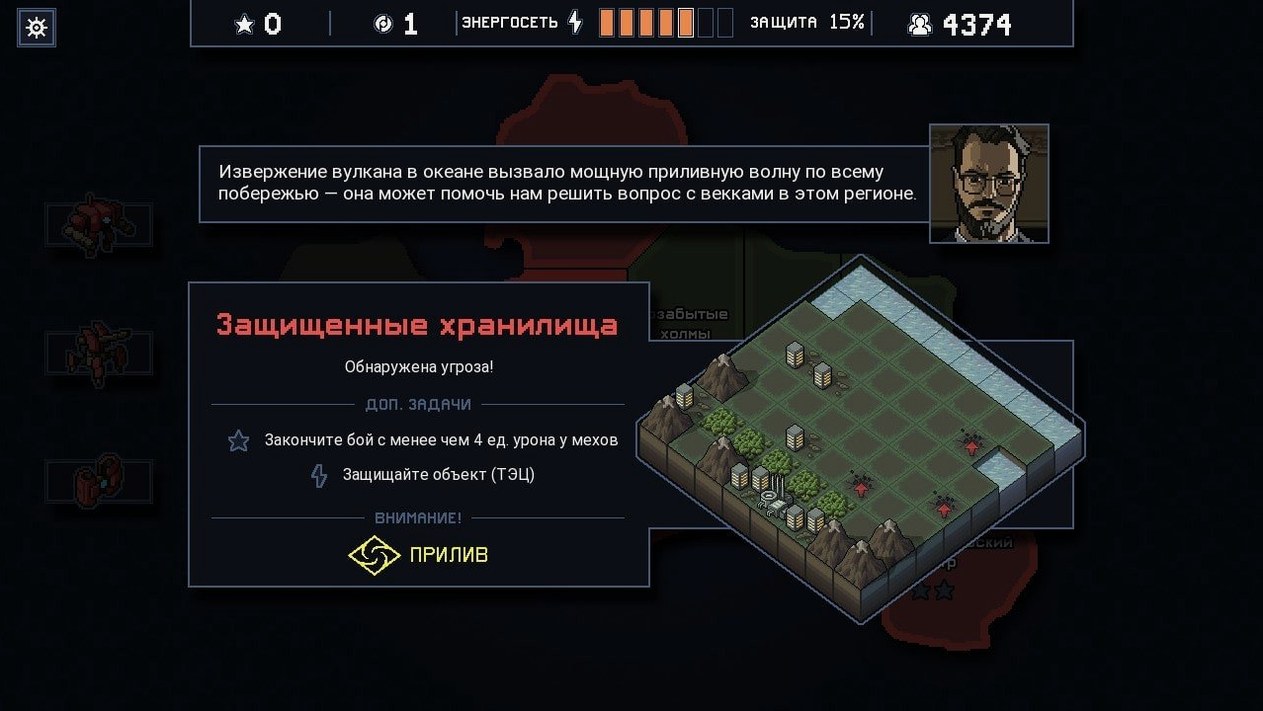
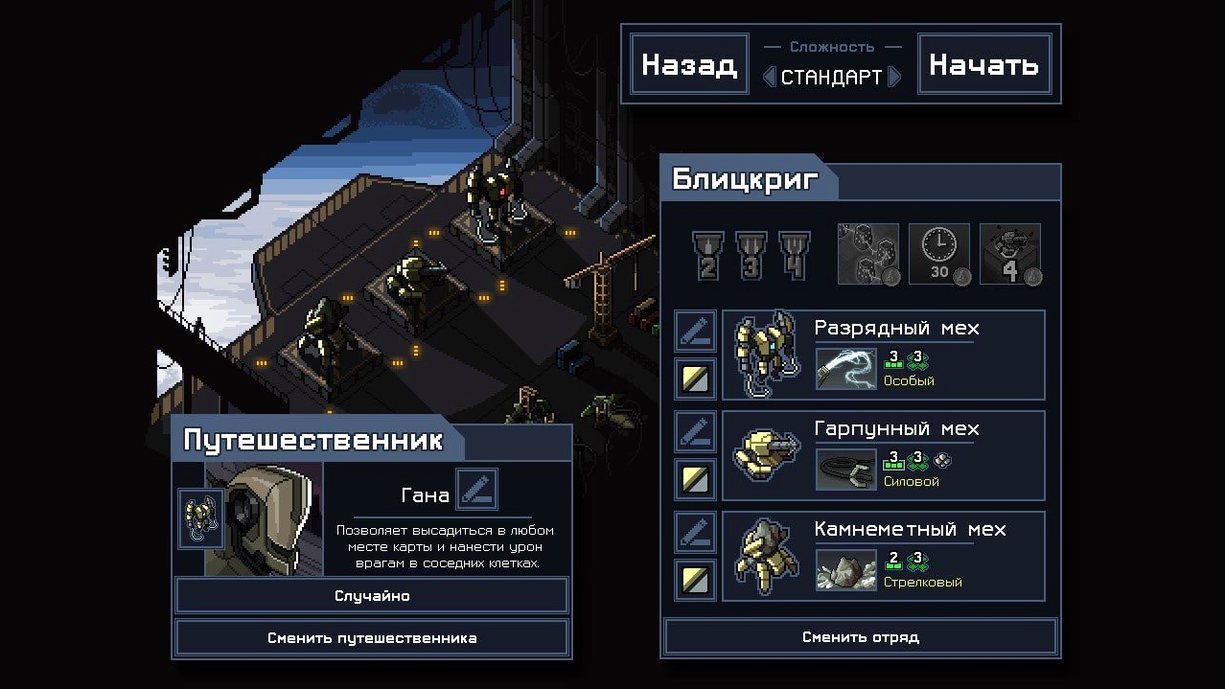
You open the .dmg, drag the game to /Applications, and launch it. The first screen offers a choice of squads — you stick with the Rift Walkers, the default trio with a balanced mix of punch and artillery. The island select screen shows four Corporate-Nation territories; you pick the one with the lowest threat bonus attached.
The first drop places you on a dockyard map. Three civilian buildings sit in a line along the water. Two Vek emerge on the left, both targeting the power plant in two turns. You move the cannon mech one tile right and fire into the nearer enemy, pushing it sideways so its attack vector now points harmlessly into the sea. The artillery mech drops a shell on the second Vek, shifting it one tile upward and breaking its line to the building. One turn in, both immediate threats are neutralized, and no damage has been dealt to the grid. The combat mech has nothing to punch yet, so you position it to block a spawn point marked on the next turn's forecast.
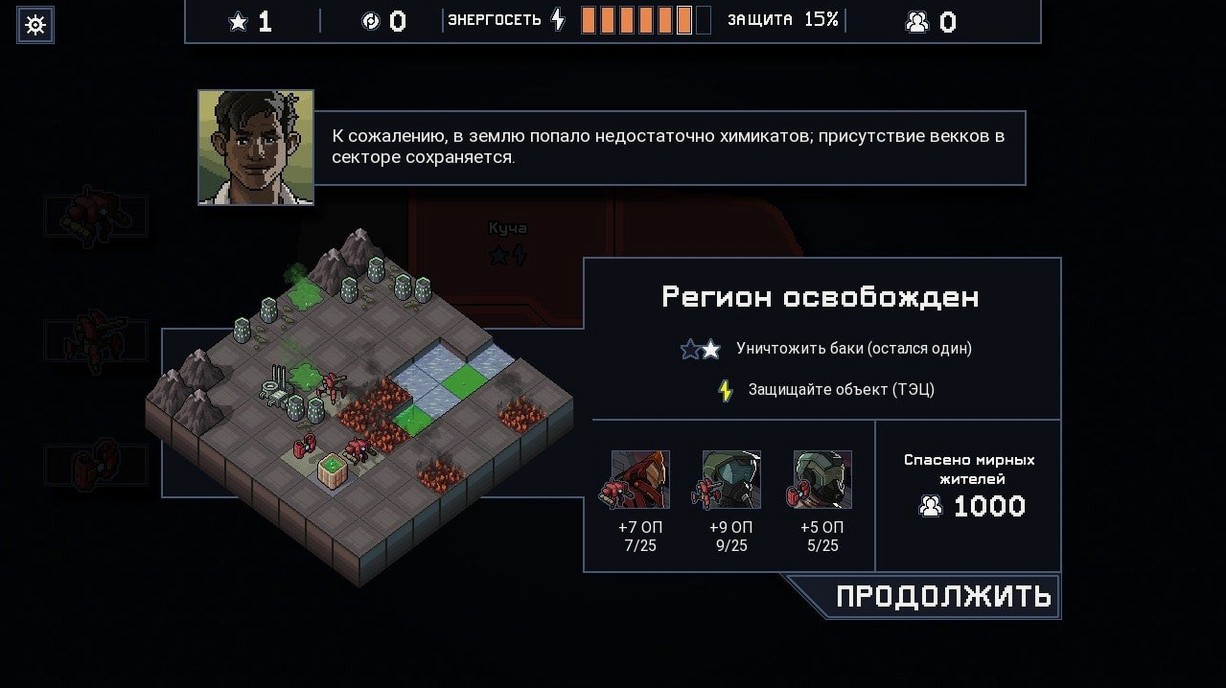
By the fourth mission, a new pilot joins with the "Adrenaline" trait — bonus movement after a kill. You finish the island's final defense with a close call: the corporate tower drops to one power, the grid takes a hit from a burrower you could not reach, and your artillery pilot gains enough XP to unlock a secondary weapon slot. The island clear screen tallies two perfect settlement rewards, one grid damage, and a reputation bonus you spend on a core upgrade for the cannon mech. You choose the next island with a desert biome and a higher threat bonus because your squad now has the positioning tools to handle denser spawns. The timeline continues.
- Architecture: Intel (x86 64-bit)
$ man into-the-breach | grep -A2 "?"
What audio content is included in the game?
The listed audio content is the game's music.
Comments 0
Sign in or create an account to leave a comment.
No comments yet. A codec, a slice, a machine — they appear after moderation.