
Old World for macOS
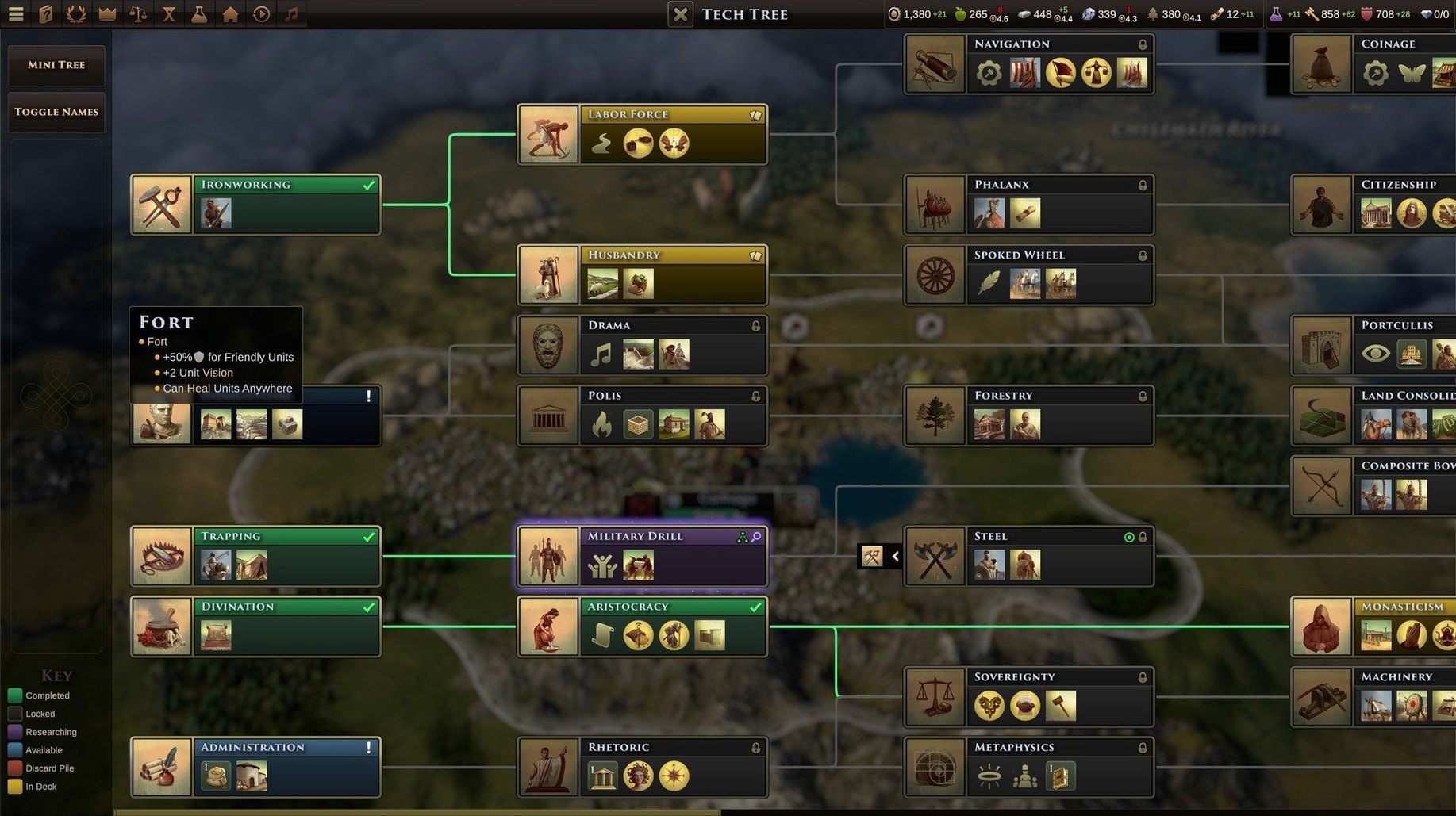
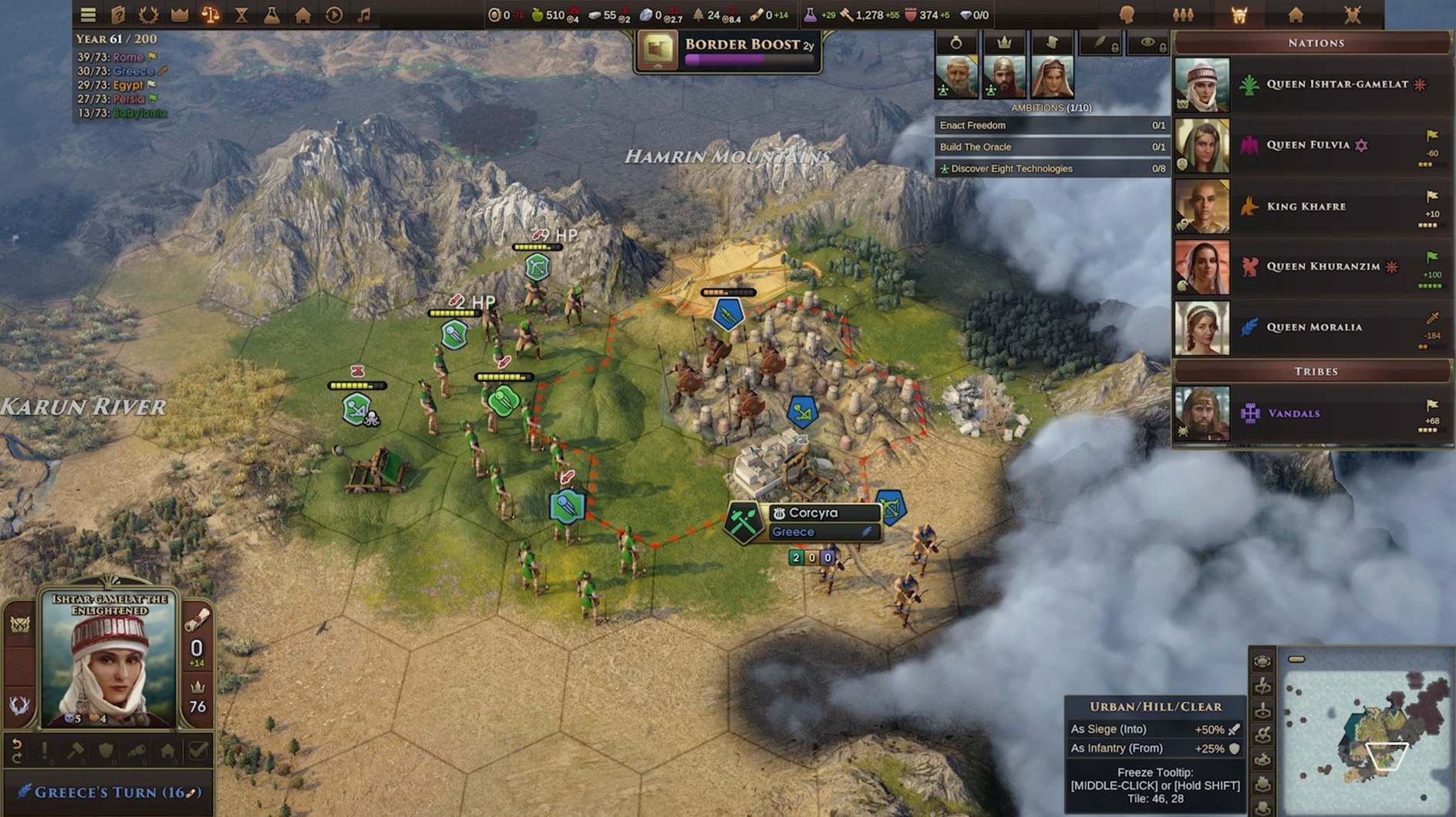
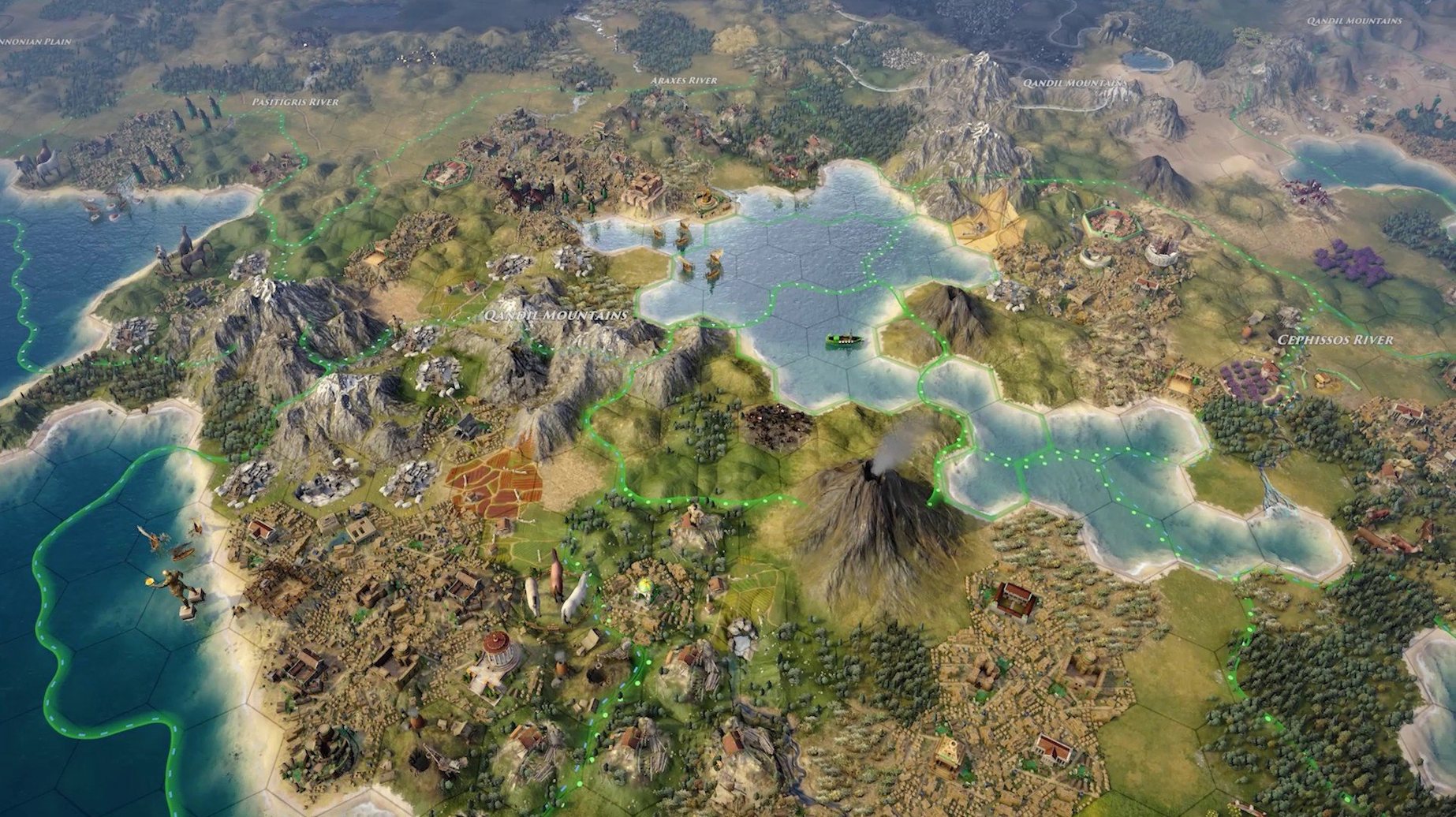
Version 84658 sharpens the battlefield and tightens the rules of empire. Polybolos now carry a +50% attack punch, Forts can no longer be placed adjacent to one another, and the AI has learned to build fewer Militia, Conscripts, and obsolete unit types. For Mac players, the update also ships with extra crash debugging hooks that should help Mohawk Games track down lingering issues.
Built around character mortality and an Orders budget from the Civ IV designer
- Players who enjoy a character-driven historical 4X. This is set in classic antiquity and comes from Soren Johnson, the lead designer behind Civilization IV.
- Working within constraints. The Orders system turns unit movement and actions into a core resource you must manage every turn.
- Stories that span centuries. Characters age and die, while new generations rise to take their place, shaped by over 3,000 unique events drawn from history and mythology.
- Tinkering. The game supports mods, so you can reshape the rules and content to your liking.
You cannot move every unit every turn—and death is permanent
- The Orders system means you cannot move every unit every turn. Deciding what gets done is the central tension.
- Character mortality is permanent. Losing a skilled governor or general to old age can disrupt your plans mid-stride.
- The macOS build is native for both ARM and x86 64-bit, but Mohawk is still actively debugging Mac-specific crashes.
The native ARM slice loads fast and hasn't crashed since the 84658 build
On an Apple Silicon Mac, the native ARM slice loads quickly and stays responsive through late-game turns with dozens of cities and units in play. I have not hit a single hard crash since the 84658 build added new Mac crash debugging, though I occasionally see a half-second hitch when the event system fires one of its 3,000+ scripted moments mid-turn. Memory pressure sits around 1.2 GB on a large random map with six AI opponents — nothing that stresses a modern Mac, but worth knowing if you are multitasking on an 8 GB machine.
The Orders system keeps turn times snappy. Because you are never moving fifty units individually, the AI has fewer pathfinding requests to grind through, and the bottleneck shifts to your own decision-making. Late-game AI turns resolve in under eight seconds on my M4. Fan noise stays flat; this is not a title that spins up the GPU unless you zoom deep into the hand-painted map and pan rapidly.
One rough edge: scrubbing through the event log after a long session can feel sluggish on integrated graphics. The UI redraws each entry card individually, and with hundreds of events stacked up, the scrollbar stutters. Minimizing the log panel fixes it immediately.
You budget actions empire-wide instead of nudging every unit like in Civ VI
Next to Civilization VI, the clearest difference is the Orders system. In Civ VI you can nudge every unit every turn; here you must budget actions across the entire empire. That makes small maps feel tight and large maps feel genuinely unmanageable without delegation. Civ VI also layers on district placement and religious combat, while Old World strips the map layer down and pushes complexity into character relationships and succession.
Humankind shares the antiquity setting and the ambition to weave narrative into 4X, but it leans on culture-switching between eras. Old World stays locked in a single era and makes you care about the people running your empire instead. The difference shows up everywhere: a Humankind game hinges on picking the right culture at the right time; an Old World game can pivot on whether your heir inherits your general's tactical traits.
Against Crusader Kings III, the comparison gets closer. Both are dynastic strategy games on a map, both care about marriages and heirs. CK3 is deeper on character simulation — personality traits, dread, lifestyle perks — but weaker on the 4X bones. Old World gives you a proper tech tree, city production queues, and unit micro through the Orders lens. If you want a strategy game that blends character drama with classic empire-building rather than replacing it, Old World hits the balance.
Workflow: founding a dynasty and surviving the first three rulers
Here is a concrete start-to-finish workflow for the first hundred turns, assuming a random map on standard difficulty with six AI kingdoms.
- Pick kingdom and family. I choose Carthage for the extra order per turn and pair it with a family that boosts science output. The family selection screen shows you the stat modifiers and starting city site before you commit.
- Scout with the starting unit. The first five turns are pure exploration. I send the scout in widening concentric rings around the capital, ignoring tribal camps, and tag city-site candidates with the map pin tool.
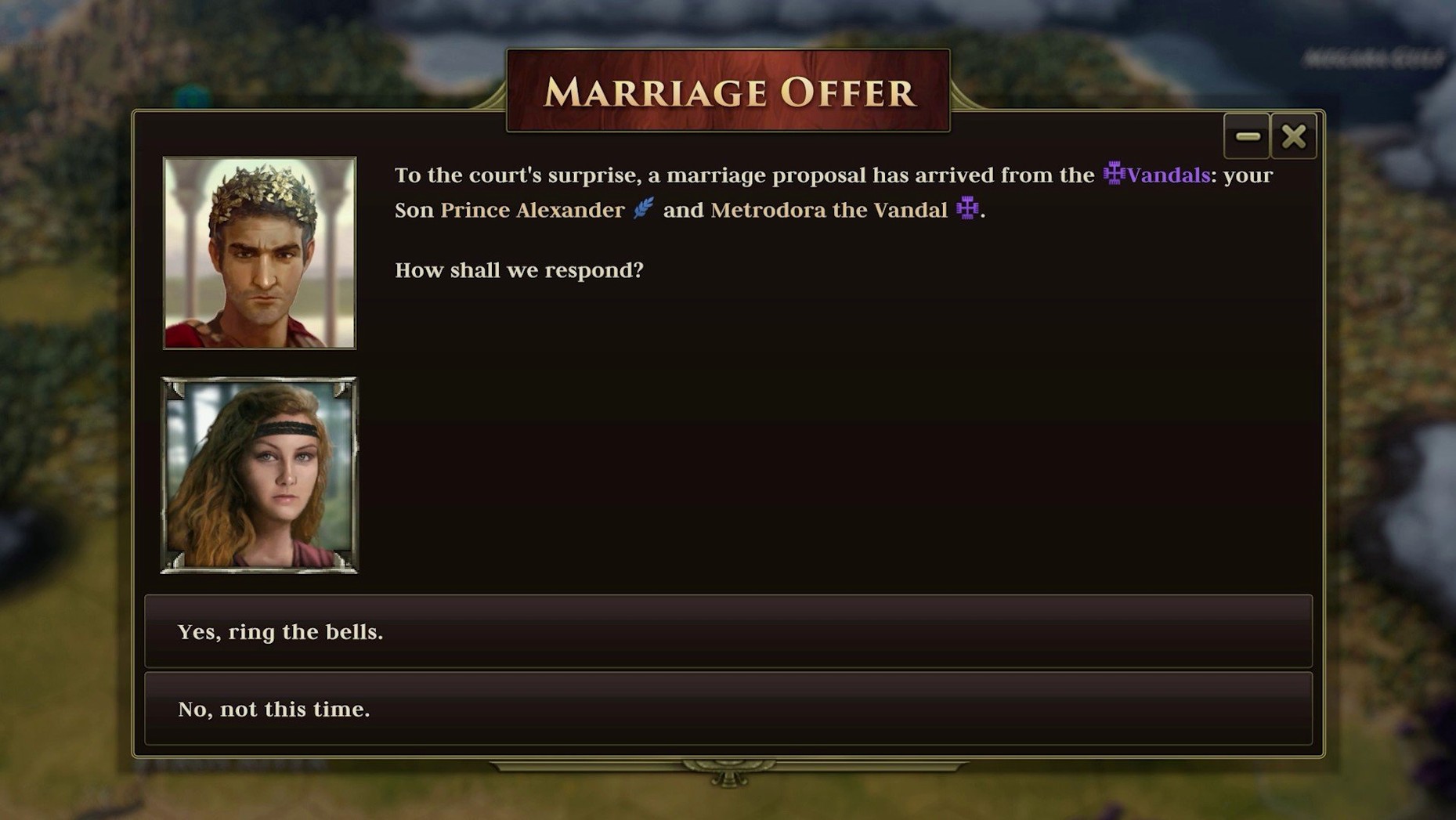
- Secure the heir in turn 6–10. I open the character screen for my ruler and arrange a marriage with a foreign kingdom. The diplomatic screen shows the opinion boost and any trait inheritance odds. I then tutor the heir in Wisdom to boost science yield later.
- Found the second city by turn 20. Using the Orders budget each turn, I move the settler to the best pinned site — freshwater and two luxury resources minimum — and settle. I immediately assign a governor from the family with the highest loyalty to that city.
- Manage the first succession, turns 40–60. When the founding ruler dies, I pause. The event log shows any contested claims. I check the new ruler's traits and spend the first Orders of the reign on a festival in the capital to bump legitimacy. Then I reassign governors to correct any loyalty drift.
- Push a military timing push, turns 70–100. With the second ruler stabilized and Polybolos unlocked, I train four of them — now hitting 50% harder — and pair them with two melee units. I declare war on the weakest neighbor, using the Orders system to keep the Polybolos firing while melee units hold the line. Every turn I check the ruler's health and the heir's military stat in case the ruler falls mid-war.
- Handle the third succession during peacetime. By turn 110, the second ruler is elderly. I broker a truce, adopt the heir, and spend the remaining turns on infrastructure. The third ruler inherits a stable empire with upgraded Forts spaced two tiles apart — no adjacency penalties — and a science lead from the Wisdom tutoring paid off early.
The whole loop — ruler, heir, war, succession — plays out in about two hours on normal speed. The Orders system forces you to pick between pushing military goals and shoring up internal stability each turn, and the character layer means every succession is a genuine pivot point rather than a stat change.
- Apple Silicon or Intel 64-bit Mac
$ man old-world | grep -A2 "?"
Does Old World support mods?
Yes, it ships with mod support so you can alter rules, events, and content.
What resource limits unit movement?
The Orders system is a core resource that governs how many units you can move and how many actions they can take each turn.
Comments 0
Sign in or create an account to leave a comment.
No comments yet. A codec, a slice, a machine — they appear after moderation.