KORG Collection for macOS
You're scoring a short film cue that needs a felted upright for the intro and a brassy, sweeping pad for the climax. Instead of loading two different plugins with mismatched routing, you open a single suite where the instruments share a common install base and predictable CPU behavior. That's the practical reality of working with a bundle like this.
Where acoustic piano meets synthesized textures in one engine
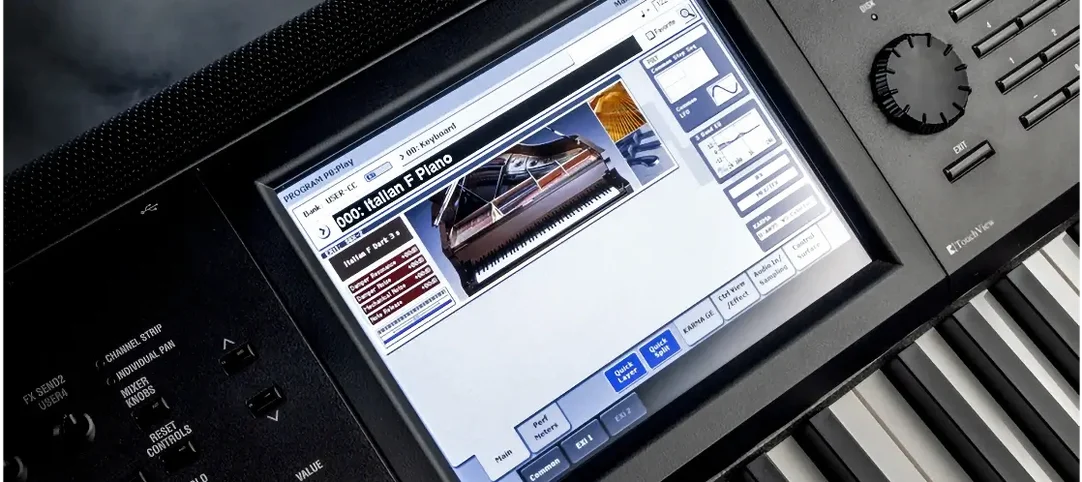
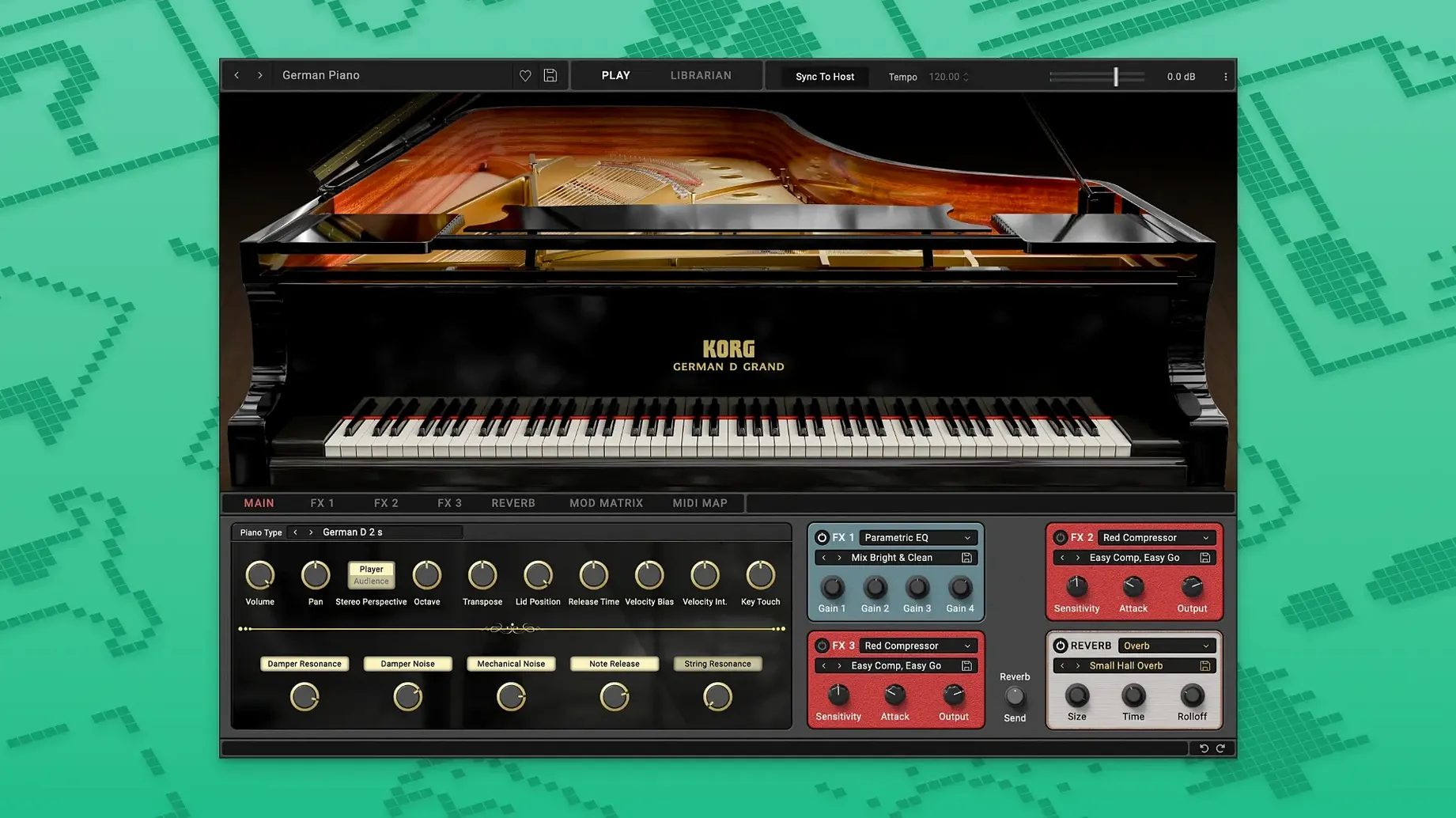
- Projects that move between acoustic piano and synthesized textures, since the SGX-2 grand piano engine lives alongside the synth recreations.
- Keyboard players who care about the details: the suite models natural note decay, soft pedaling behavior, and gives you per-engine controls for brightness, softness, reverb, and keyboard response.
- Scoring work across classical, jazz, pop, and soundtrack genres where you need a consistent install path and a single activation scheme.
Interface locked to English, and the version number can mislead you
- The interface language is English only.
- You need macOS 10.13 or later; the plug-ins run natively on both Intel and Apple Silicon Macs.
- Version tracking on this bundle can be confusing — the suite wrapper lists 1.0.3 while individual instruments may carry their own version numbers.
Map the keyboard curves before your first real project
Once the .component, .vst3 and standalone apps are in place, your DAW will find them on the next scan. Before you start a project, spend twenty minutes on three things.
First, map the keyboard response curves. The SGX-2 engine ships with a default velocity curve that feels fine on weighted controllers but can feel sluggish on semi-weighted or synth-action keys. Open the piano plugin in standalone mode, play a few soft chords across the velocity range, and tweak the curve until the quietest notes actually speak. Save that as a preset so it follows you into Logic or Ableton.
Second, check your reverb routing. The suite gives each instrument built-in ambience controls, but those are best treated as sound-design tools, not mix reverbs. In a session, bypass the internal reverbs on the synths and the SGX-2, then route everything to a single bus reverb. The instruments blend faster that way and you avoid four different "room" algorithms fighting each other.
Third, create a template track stack. Load the SGX-2 on one channel, a polysynth on another, and a mono lead on a third, all set to the same MIDI input. Label the stack "KORG sketch" and save it as a DAW template. On days when you're chasing an idea rather than mixing, you flip between piano and synth without touching the mouse.
Composers who need piano and tension synths under a single activation
Three groups stand out.
Composers working to picture get the obvious win: the piano handles emotional solo cues, the synthesizers fill out tension and transition scenes, and everything lives under one activation. No juggling separate license managers when a deadline is three hours away. The SGX-2's soft pedal modeling and natural decay curves matter here — when a scene relies on a single held chord fading into silence, a sampled piano with a truncated tail breaks the illusion.
Keyboardists who grew up on KORG hardware often find software recreations miss the quirks they actually use. This suite models the behaviors that matter: filter resonance that bites, oscillators that beat against each other when slightly detuned, and amp envelopes that snap. It's not a nostalgia box — it's the sound palette they already have muscle memory for, now inside a laptop.
Sound designers building layered patches get a coherent architecture across instruments. Because the engines share modulation routing conventions and a similar control layout, you learn one and understand the rest. Stacking a PS-3300 pad under an SGX-2 piano with a high-pass filter on the synth layer takes seconds, not minutes, because the control names and ranges are consistent.
AU and VST3 land natively on Apple Silicon with sample-accurate automation
The install lands as AU and VST3 plug-ins, so Logic Pro users get tight integration without a wrapper and Ableton Live users get parameter automation at sample accuracy. On Apple Silicon Macs, the binaries are native — no Rosetta translation layer adding latency or eating CPU headroom on large sessions.
With macOS 10.13 as the floor, even older studio machines on High Sierra or Mojave can run the collection. That matters in facilities where the audio computer stays offline and frozen at a proven OS version. The plug-ins also respect macOS audio conventions: they appear in the system's Audio Units registry, work with aggregate devices, and respond to MIDI program changes for live setlist switching.
On the file-system side, the instruments store their sample content in a shared library folder rather than scattering gigabytes across ~/Library/Application Support in unpredictable ways. If you back up your sound libraries or migrate to a new Mac, one folder copy moves everything.
A working composer's afternoon
Maria scores a six-minute documentary short about a glacier research station. The brief asks for "cold but not dystopian — vast, with a human thread."
She opens her DAW template with the KORG stack already routed. A single SGX-2 instance gives her a close-mic'd concert grand sound: she pulls the brightness back by about fifteen percent, adds just enough built-in ambience to suggest a room without washing out the transients, and plays a sparse four-chord figure in the instrument's upper-middle register. It sounds present but not warm — exactly right.
For the opening drone, she loads a polysynth from the collection, dials in two detuned sawtooth oscillators, and routes them through a slow band-pass filter sweep. She layers that under the piano at low level, panned slightly wide. The combination takes under three minutes to build because the synth's filter cutoff is labeled the same way as the one on the mono lead she used on her last project — no manual diving.
By the time the director calls for revisions, Maria has stems printed, a recallable session file, and no plugin authorization windows popping up mid-export. That's the kind of afternoon the suite is built for.
- macOS 10.13 or later
- Intel or Apple Silicon Mac
- AU or VST3 host DAW
$ man korg-collection | grep -A2 "?"
What plug-in formats does the KORG Collection use?
The instruments load as AU and VST3 plug-ins on macOS, giving you native compatibility with Logic Pro, Ableton Live, Cubase, and other major DAWs.
Does the SGX-2 piano engine model sympathetic resonance?
KORG states the engine recreates the sound and behavior of a concert grand piano, which includes natural note decay and soft pedaling response, though they don't publish the full DSP signal flow.
Is this version a unified installer or separate downloads?
The package bundles the instruments together with shared installation and activation instructions included, rather than requiring you to fetch each title individually.
Comments 0
Sign in or create an account to leave a comment.
No comments yet. A codec, a slice, a machine — they appear after moderation.
More in VST Plugins
cd ../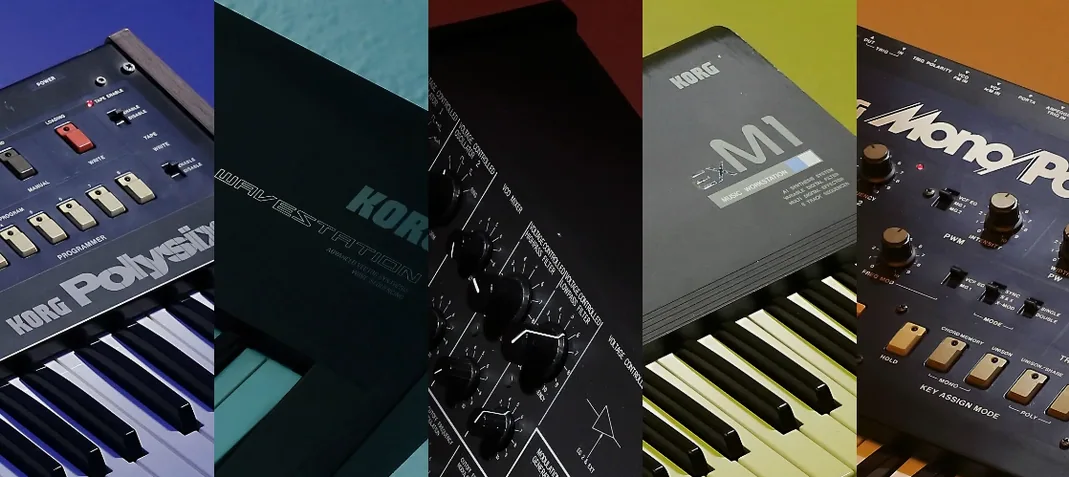 KORG TRITON
VST Plugins 586 MB
 LANDR Mastering Plugin PRO
VST Plugins 365 MB
 LANDR Vocal Bundle
VST Plugins 447 MB
 Komplete Kontrol
VST Plugins 785 MB
 Komplete FX Bundle
VST Plugins 3.2 GB
 kiloHearts Ultimate & Slate Digital Bundle
VST Plugins 4.9 GB
 LFOTool
VST Plugins 7 MB
 Kalifornia Dynamic KD Alkane
VST Plugins 270 MB