
Crusader Kings III for macOS
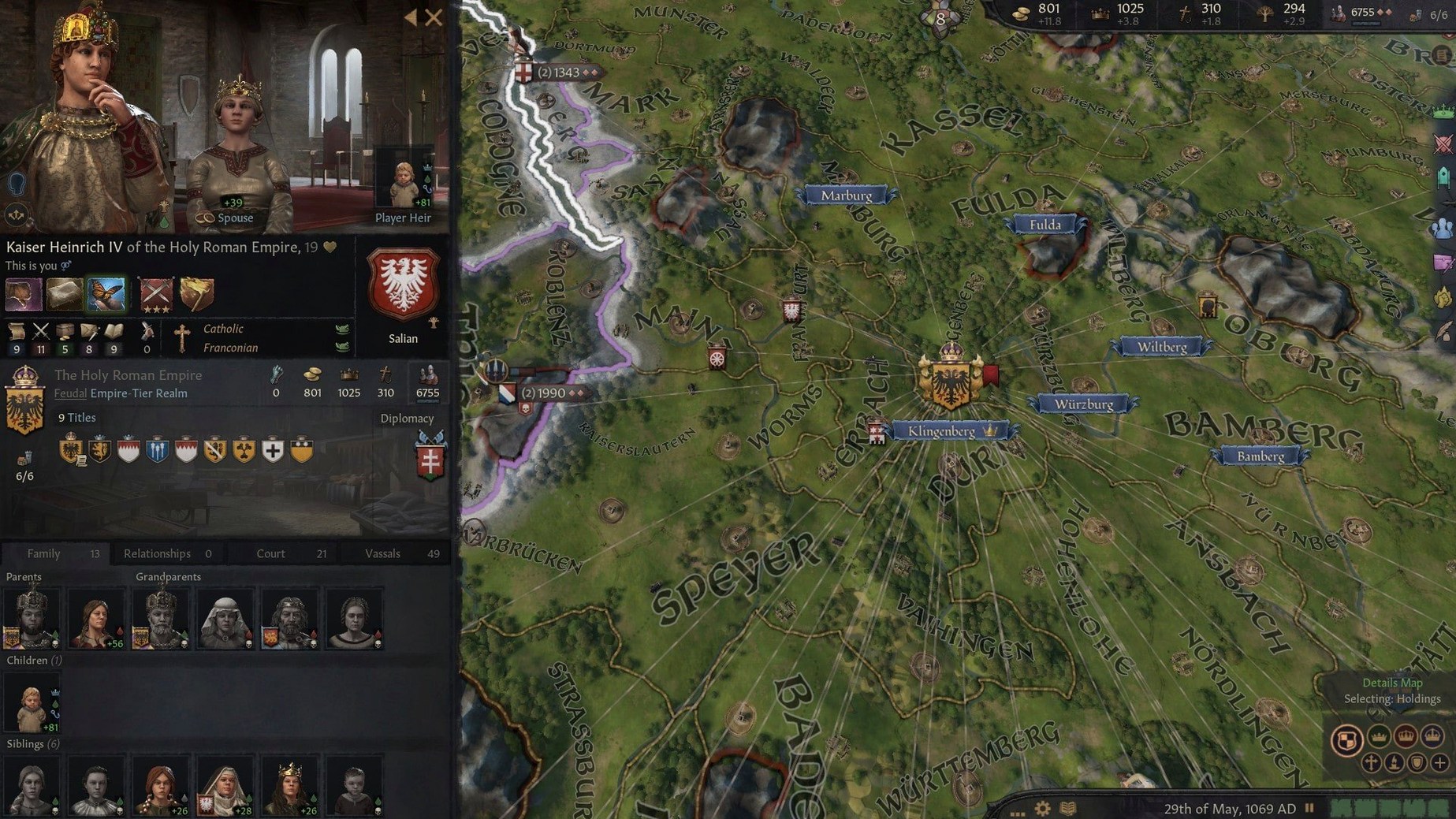
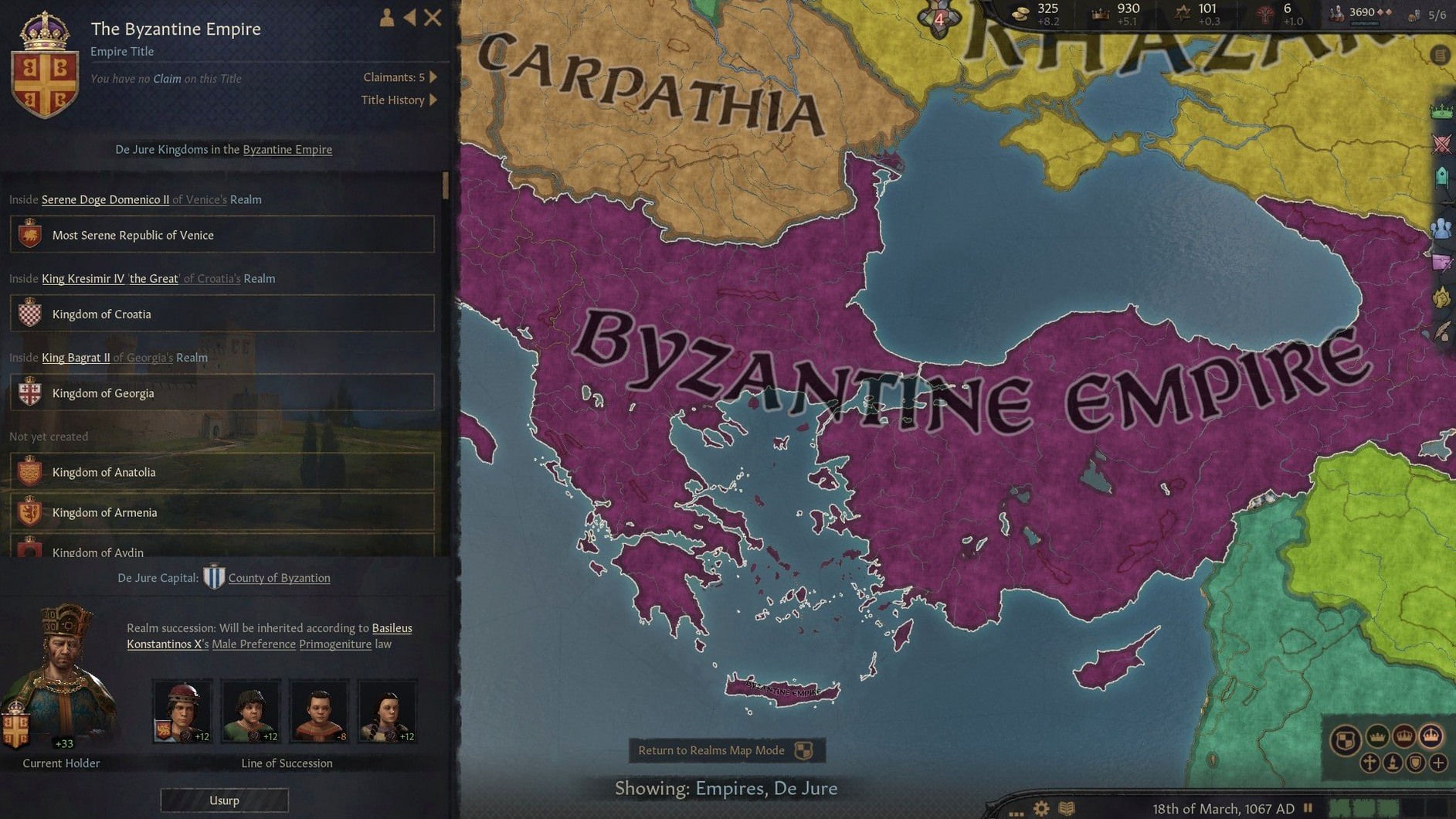
Dynasty builders who want more than just painting a map. Crusader Kings III is where grand strategy meets the messy, personal drama of medieval rule — your ruler has traits, vices, and a family that can prop up the realm or tear it apart. On a Mac, the experience is a complex simulation with a few technical details worth knowing before you install.
Rosetta 2 handles the Intel binary on Apple silicon
Paradox ships the game as an Intel binary, so it runs through Rosetta 2 on Apple silicon. On a Mac mini 2024 M4 under macOS Tahoe, that translation layer is efficient enough — you get the full simulation depth without noticeable friction in menus or the map view. Late-game slowdown is more about the sheer number of characters the engine tracks than your chip architecture. The disk image delivers the build the standard way: mount the .dmg, copy everything to Applications, and let the Paradox Installer sort out the launcher and the ck3.app bundle.
Disasters and epidemics regain their medieval lethality
The latest patch tuned two systems that were underperforming in opposite directions. Natural disasters and epidemics had been too gentle, making the world safer than the design intended — that lethality is back to its proper medieval baseline. Schemes also got a fix: you can once again manually pick which agents to invite into a plot, which returns a layer of control to intrigue-heavy playstyles. The interface languages cover English, French, German, Spanish, Russian, Simplified Chinese, and Korean.
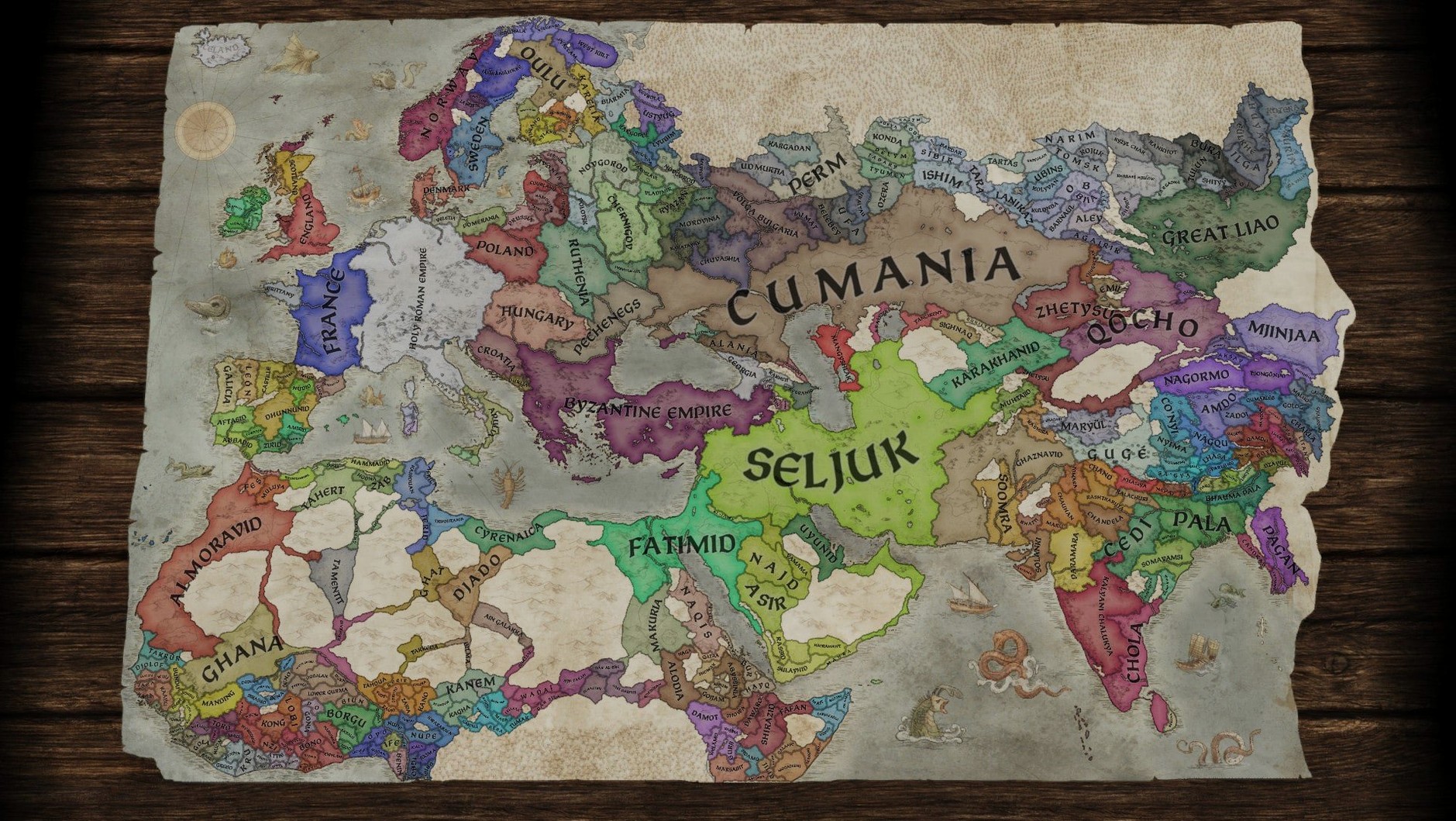
Launch the game and you land on a stylized map of Europe, North Africa, and parts of Asia. Let’s pick a start in 1066 — William the Conqueror’s bookmark is a classic — but instead of Normandy, I go for Duchess Matilda of Tuscany. She’s smart, ambitious, and surrounded by bigger powers, which makes for a lively session. The first thing you do is unpause and let a few days tick by so the council and event queues populate. Matilda has a good steward, so I set him to collect taxes in Firenze and park my marshal on train troops before I even think about war.
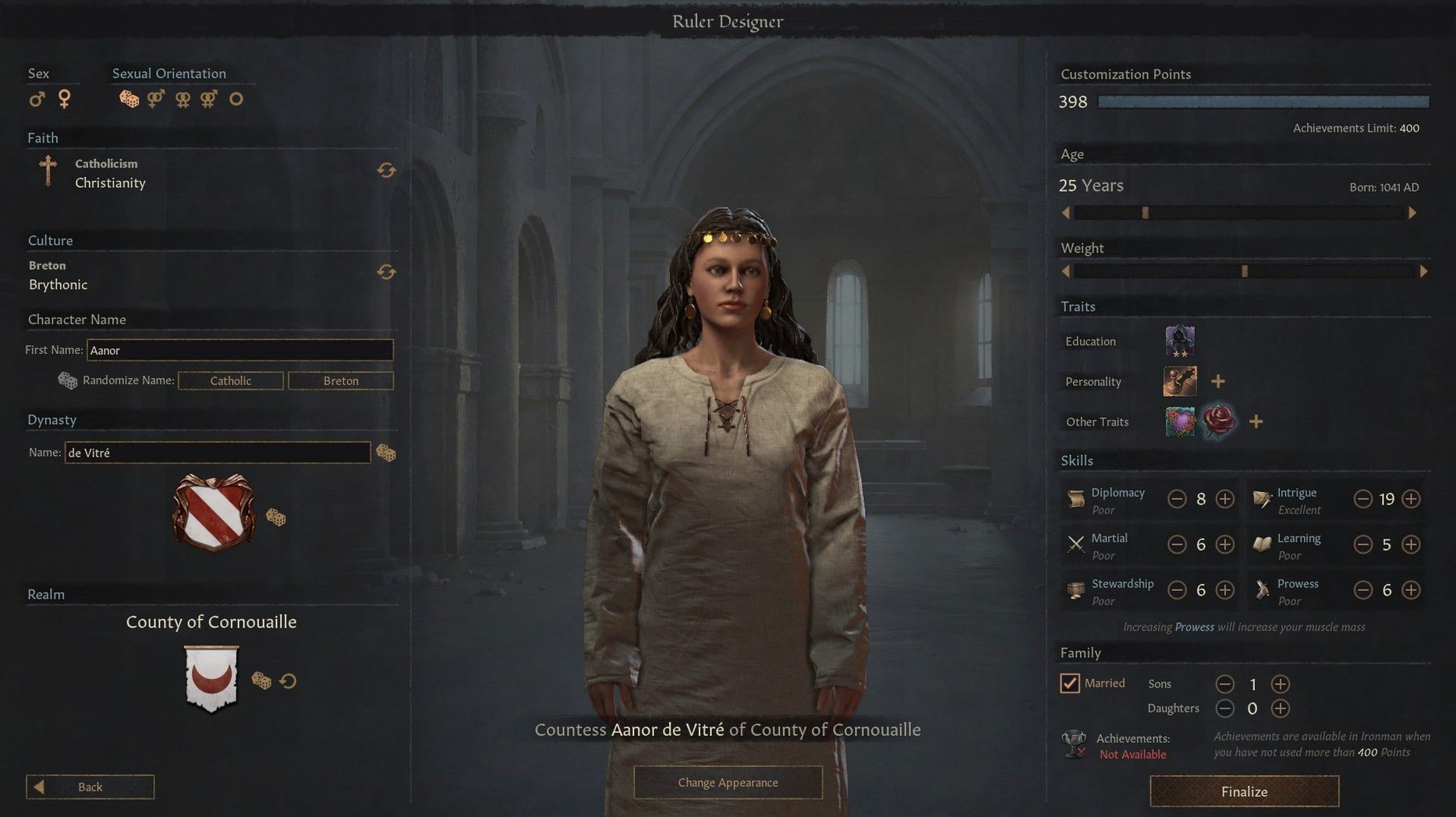
The character screen is the real command center. I check Matilda’s skills — high diplomacy, decent stewardship — and notice she’s unmarried at 20 with no heir. That’s a crisis waiting to happen. I open the find-character tool, filter for unmarried male rulers with inheritable traits, and spot a son of the Holy Roman Emperor. The acceptance score is low because of rank differences, so I spend a few months swaying the emperor with gifts and a diplomatic councilor. A betrothal fires; now I have an alliance with the most powerful realm in Christendom, and Matilda’s children will carry strong claims.
Mid-session, a vassal in Lucca fabricates a claim on a neighbor’s county. Instead of stopping him, I let the plot mature while I save gold. When the claim pops, I declare a de jure war, call my new ally, and watch the Imperial troops march south. Victory adds a county, but it also raises control problems and a peasant faction. That’s the loop: every gain creates friction. By the time I quit, Matilda is 38, mother to three, and Queen of a custom kingdom stretching from Pisa to Verona — built entirely through marriage and opportunistic war.
Stage Manager keeps the wiki alongside fullscreen
Paradox games are famously better with a wiki open, and Crusader Kings III is no exception. On macOS, Stage Manager or a second desktop space works well: keep the game fullscreen on one display and your browser on the other with the CK3 wiki, trait tables, or succession law charts handy. The game doesn’t hook into iCloud or any native Mac framework — save files live in ~/Documents/Paradox Interactive/Crusader Kings III/save games, which means Time Machine backs them up automatically if you haven’t excluded that folder. That’s a quiet safety net for ironman campaigns.
For note-takers, a floating Quick Note window (if you’re on a recent macOS) is handy for jotting down which vassal just slept with your spouse or which claimant has a weak hook you want to exploit later. The game’s own in-game notebook only goes so far. If you stream or record, OBS picks up the window fine under Rosetta 2, though you’ll want to test audio capture of the dynamic soundtrack — some Mac setups route game audio oddly when the launcher spawns the ck3.app process.
Workflow: building a religion from scratch
Say you’re playing a custom Norse ruler in 867 and you want to reform the Ásatrú faith into something that rewards conquest. Here’s a focused workflow:
- Hold three holy sites. Open the religion tab, click the holy sites map mode, and identify the closest ones — Sjaelland, Uppsala, and either Paderborn or Zeeland. Fabricate claims or use the conquest casus belli to take them.
- Bank at least 2,500 piety. Raid temple holdings, execute prisoners of a hostile faith, and pick the theology focus for your ruler. Piety is the bottleneck, not gold.
- Open the reform window. Choose doctrines that synergize: Warmonger nature for permanent casus belli, Communion for gold from indulgences, and the Temporal head-of-faith title so you keep control.
- Convert your realm. After reform, demand conversion from your direct vassals in order of power — strongest first, because they’ll help convert their own sub-vassals. Unreformed counties will revolt; station your army nearby before you hit the convert button.
What you end up with is a self-funding faith where every holy war generates piety, every sinful prisoner funds your treasury through executions, and you call crusade-equivalent Great Holy Wars without a pope telling you the target. The religion screen feels dense the first time you open it, but the reform button shows you exactly which doctrines you can afford with your current piety level — trust the tooltip math.
Partition succession turns a realm into splinters after death
New players coming from other strategy titles often treat Crusader Kings III like a map-painter. They ignore succession laws, die, and watch a brother inherit half the realm while the other half splinters into independence. Partition succession is the default for most starts, and it doesn’t care how hard you worked to conquer that duchy. Spend your first ruler’s lifetime securing a single top-tier title — a kingdom or empire — so your heir at least keeps vassals intact.
Another common slip: marrying your heir for an alliance without checking the spouse’s traits. You get a military partner but your grandson inherits “Craven” and “Lazy,” and suddenly your carefully managed eugenics program is back to square one. The character finder’s “inheritable traits” filter is there for a reason.
Council tasks also get misused. Beginners often park the spymaster on “disrupt schemes” in their own capital and forget him. Move him to Constantinople or Rome to study technology instead — the passive boost to innovations is small but compounds over decades. And never, ever execute prisoners of your own faith without checking the piety cost. One misclick can tank your devotion level and lock you out of holy wars for a generation.
- Apple Silicon native and Intel 64-bit
$ man crusader-kings-iii | grep -A2 "?"
Does Crusader Kings III run natively on Apple silicon?
No, the current build is x86 64-bit and runs through Rosetta 2 translation on M-series Macs, with performance that holds up well for this type of simulation-heavy game.
Comments 0
Sign in or create an account to leave a comment.
No comments yet. A codec, a slice, a machine — they appear after moderation.