Serato Hex FX for macOS
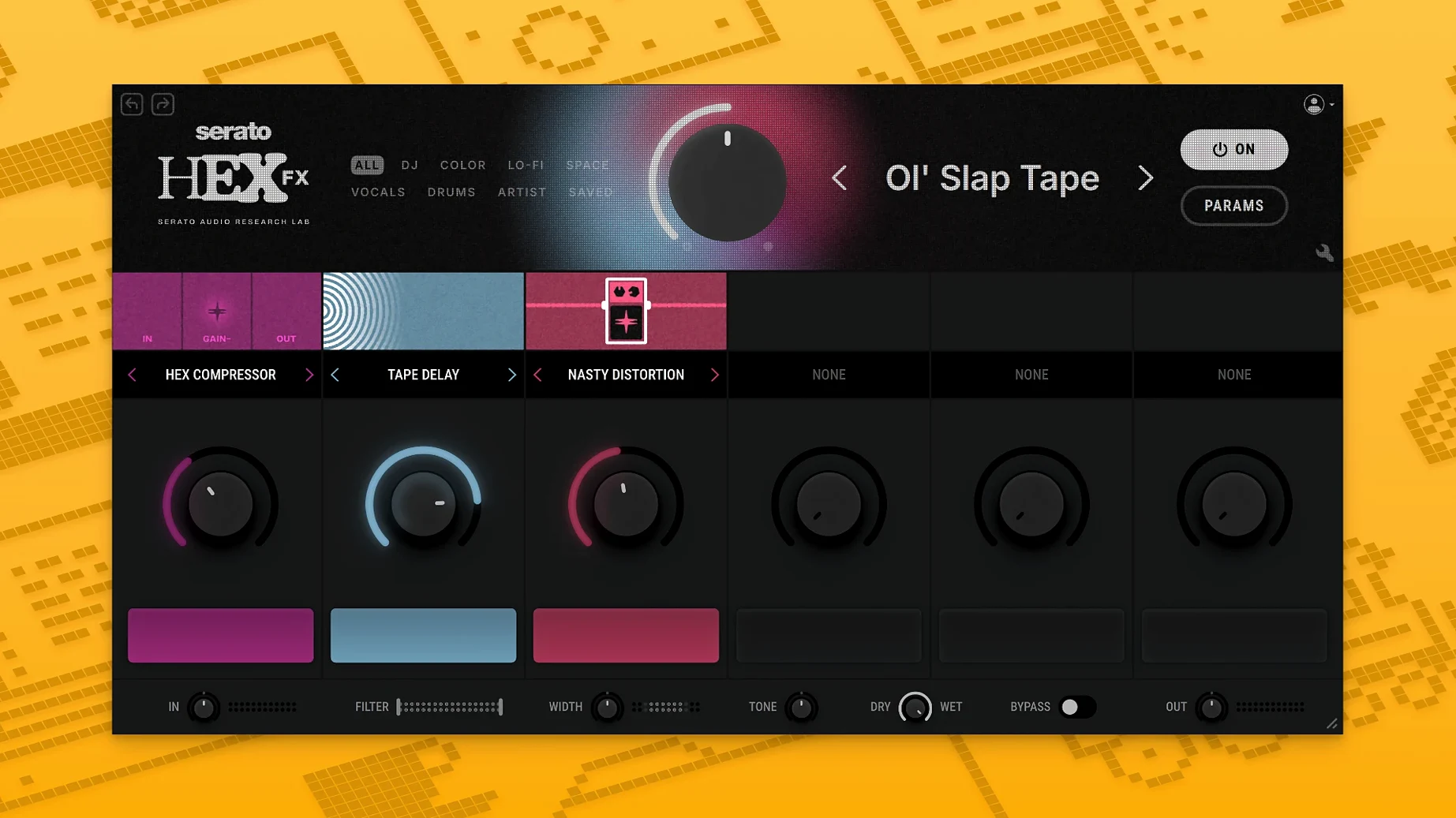
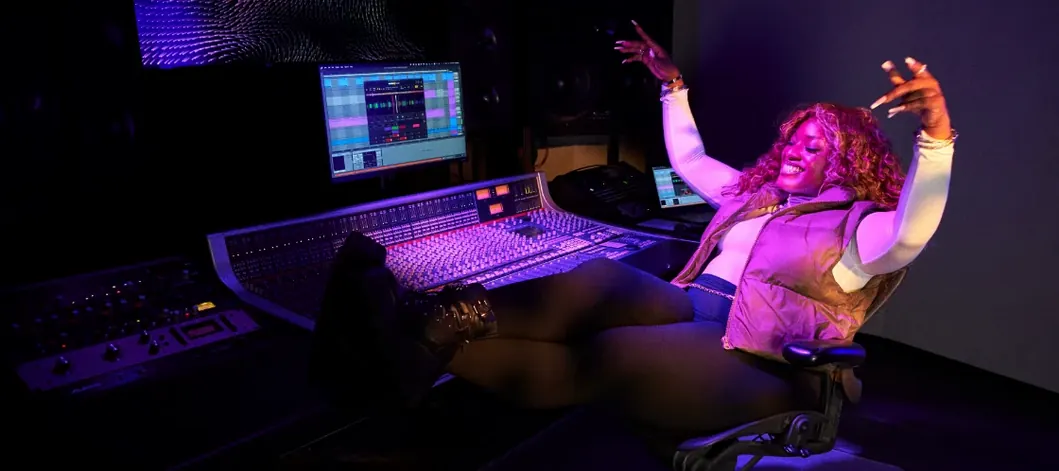
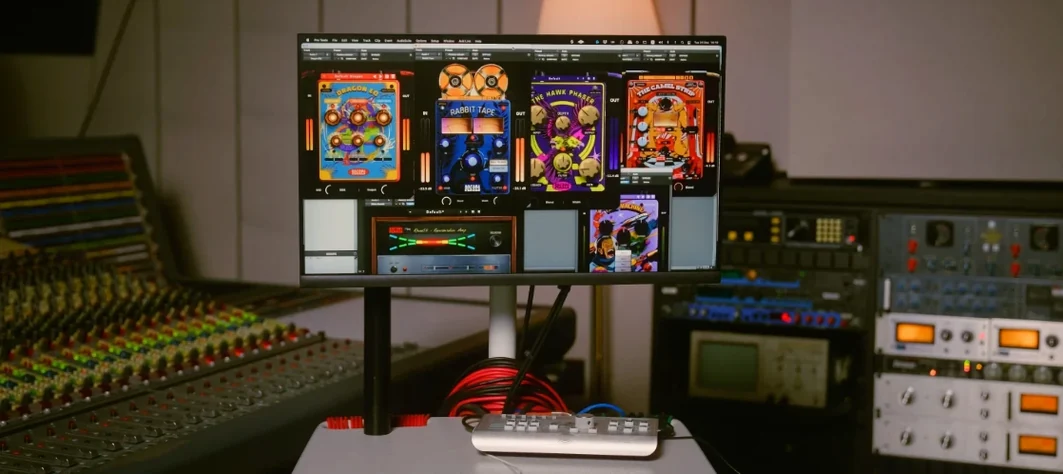
You load a simple Rhodes chord into a DAW track, drop Hex FX on the insert, and suddenly the signal path is a modular playground. A bit-crusher feeds a shimmer reverb that spills into a warbly tape delay — all before you've touched a single fader.
Building a lo-fi wash from scratch
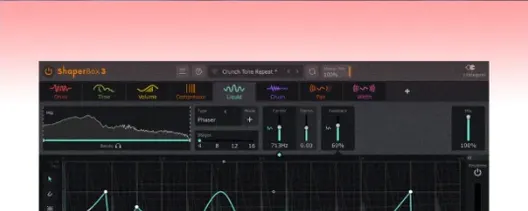
Drag the modules around in the chain to reorder them. A pitch shifter into a resonant filter into a saturator sounds completely different when the saturator hits before the filter — Hex FX makes that reordering frictionless, so you can chase the sound as it changes.
Dialing in a preset, then breaking it
The 200+ presets are authored by people like DECAP, Jake One, and Amber Navran — studio and stage heavyweights. Load one, then swap a module, tweak a wet/dry mix, and save it as your own. It's a fast way to land on textures you wouldn't have programmed from zero.
Running it live without a safety net
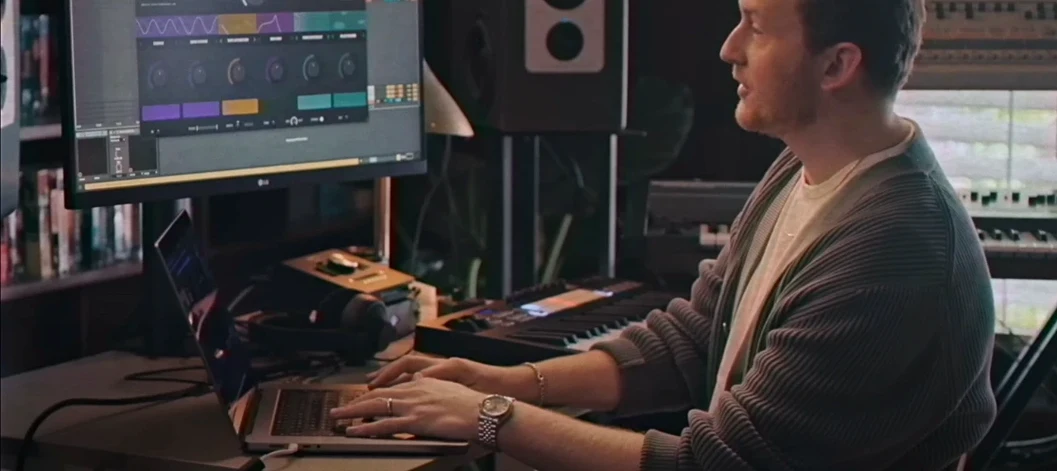
Because all 50 effects are chainable and the interface stays responsive under real-time input, you can treat Hex FX like an instrument. Map a knob to the reverb size or the delay feedback and perform the effects — the chain reacts immediately, no glitching.
Runs at 60 fps with 20-plus tracks on Apple Silicon
On an Apple Silicon Mac, Hex FX loads quickly and sits comfortably in a project with 20-plus tracks. The UI redraws at 60 fps even when you're dragging modules around during playback — no stutter, no spinning beachball. CPU hit depends on the chain: a single distortion plus reverb barely registers; stacking a granulizer, two delays, and the resonant filter pushes a single core a bit harder, but it stays manageable on an M1 or M2. On older Intel machines, the same heavy chains will spike the meter sooner, so you'll want to freeze or bounce when things get dense.
RAM usage is modest — the plugin doesn't load giant sample libraries, so it won't suddenly eat half a gigabyte of memory. In Logic Pro, loading 12 instances across a session added roughly 180 MB to the total memory footprint, which is easy on a 16 GB system. Stability across an eight-hour production day was solid: no crashes, no lost MIDI mapping, no parameter values drifting on their own. The one exception came when switching sample rates with a project open — Hex FX sometimes hiccups and mutes the output until you reload the plugin. A quick remove-and-reinsert fixes it.
Fix the missing plugin after installation
A few things trip people up regularly. The most common: after installation, the plugin is missing from the DAW's list. This happens when the .component or .vst3 file ends up in a user-level folder the DAW doesn't scan. Running a rescan usually sorts it, but on some setups you'll need to manually drag the files to /Library/Audio/Plug-Ins/Components and /Library/Audio/Plug-Ins/VST3.
Another snag: the plugin crashes with an error on launch. The 1.2.0 installer includes a readme with exact Terminal commands — copy them line by line, press return after each, and the crash clears up. Skipping that step leaves the plugin dead on arrival.
Preset browsing can feel sluggish if your DAW's plugin wrapper caches aggressively. Loading a preset sometimes takes a second longer than expected, especially when the chain includes the convolution reverb. Turning off the DAW's plugin sandboxing reduces the wait noticeably. Finally, if you're running a cracked copy from a serato hex torrent, the AAX component is often missing — the Team V.R release bundles it properly, but unofficial repacks strip it out, so you won't see Hex FX in Pro Tools.
Drag modules to reorder, unlike Soundtoys Effect Rack
Next to Soundtoys Effect Rack, Hex FX feels more immediate for chain experimentation. Effect Rack gives you deeper modulation and analog-modeled warmth per module, but reordering the signal path takes more clicks. Hex FX wins on speed: you drag modules left and right and hear the change instantly, no menus. Effect Rack's Tweak panel goes further for surgical sound design, but Hex FX's 50 effects cover more ground — granular, pitch, and time-stretching modules don't exist in the Soundtoys ecosystem.
Compared to Devious Machines Infiltrator 2, Hex FX is broader but shallower. Infiltrator offers a modulation sequencer that turns effects into rhythmic patterns — something Hex FX doesn't attempt. Infiltrator's curve editor and envelope follower let you program precise effect movements, while Hex FX keeps things manual or DAW-automated. For live performance, Hex FX feels more immediate; for programmed glitch and sequenced texture, Infiltrator pulls ahead.
Against Kilohearts Snap Heap, the comparison shifts to modularity. Snap Heap is a true sandbox — you wire modules with virtual cables, create parallel paths, and modulate anything with anything. Hex FX trades that freedom for a linear chain that's easier to grasp in a live setting. Snap Heap's individual effects are also sold separately, so you build a collection over time; Hex FX gives you 50 effects up front. If you want one multi-FX to install and immediately use across genres, Hex FX is the more complete package out of the box.
AAX support puts it natively in Pro Tools
The headline change is AAX support. Before 1.2.0, Pro Tools users had to route audio through a VST wrapper or stay in another DAW. Now Hex FX shows up natively in the AAX list, which means faster loading, proper automation mapping, and no wrapper-related CPU overhead. If you split time between Logic Pro and Pro Tools, you can now share presets across both without extra conversion steps.
The bug fixes are quieter but noticeable. In earlier builds, the convolution reverb module would occasionally mute the entire chain when you changed the impulse response while audio was passing — that's gone. Another fixed bug affected parameter recall when reopening a project: a few users reported that the EQ bands reset to flat, which no longer happens. The installer now includes an explicit AAX format checkbox, so you don't have to dig through a custom install path to get Pro Tools working. If you grabbed an earlier version through a serato hex fx free download link and skipped updating, 1.2.0 is worth it for the stability improvements alone.
On macOS 26 Tahoe, the plugin runs without compatibility mode — Serato shipped a native build alongside the AAX work. For Apple Silicon users, that means no Rosetta translation layer for the AU or VST3 formats, keeping CPU use lower on the latest hardware. The Serato Hex FX crack scene has already updated to 1.2.0, so if you're experimenting before committing, the current build is out there and stable on Intel and ARM machines.
- AAX Native plug-in format is now supported — Hex FX loads directly in Pro Tools sessions on Apple Silicon and Intel Macs.
- The installer offers an explicit AAX option during setup.
- Several under-the-hood bug fixes improve stability across all plug-in formats.
- macOS 10.15 or later, including macOS 26 Tahoe
- Apple Silicon or 64‑bit Intel processor
- Host that loads AU, VST3, or AAX Native plug‑ins
$ man serato-hex-fx | grep -A2 "?"
Does Serato Hex FX work inside Pro Tools?
Yes — version 1.2.0 added AAX Native support, so you can insert it on Pro Tools tracks on both Apple Silicon and Intel Macs running macOS 10.15 or later.
Comments 0
Sign in or create an account to leave a comment.
No comments yet. A codec, a slice, a machine — they appear after moderation.