Fender Studio Pro for macOS
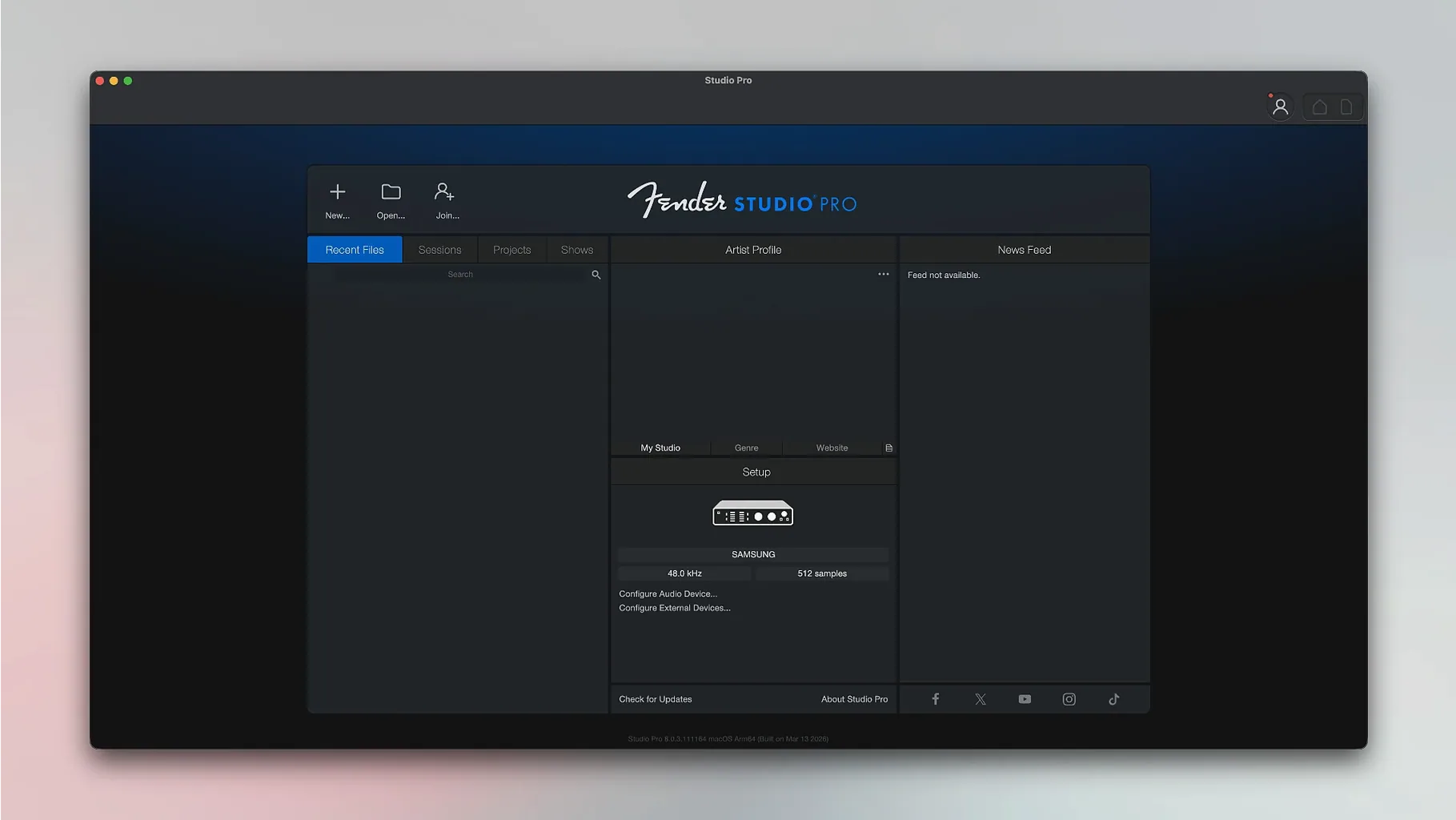
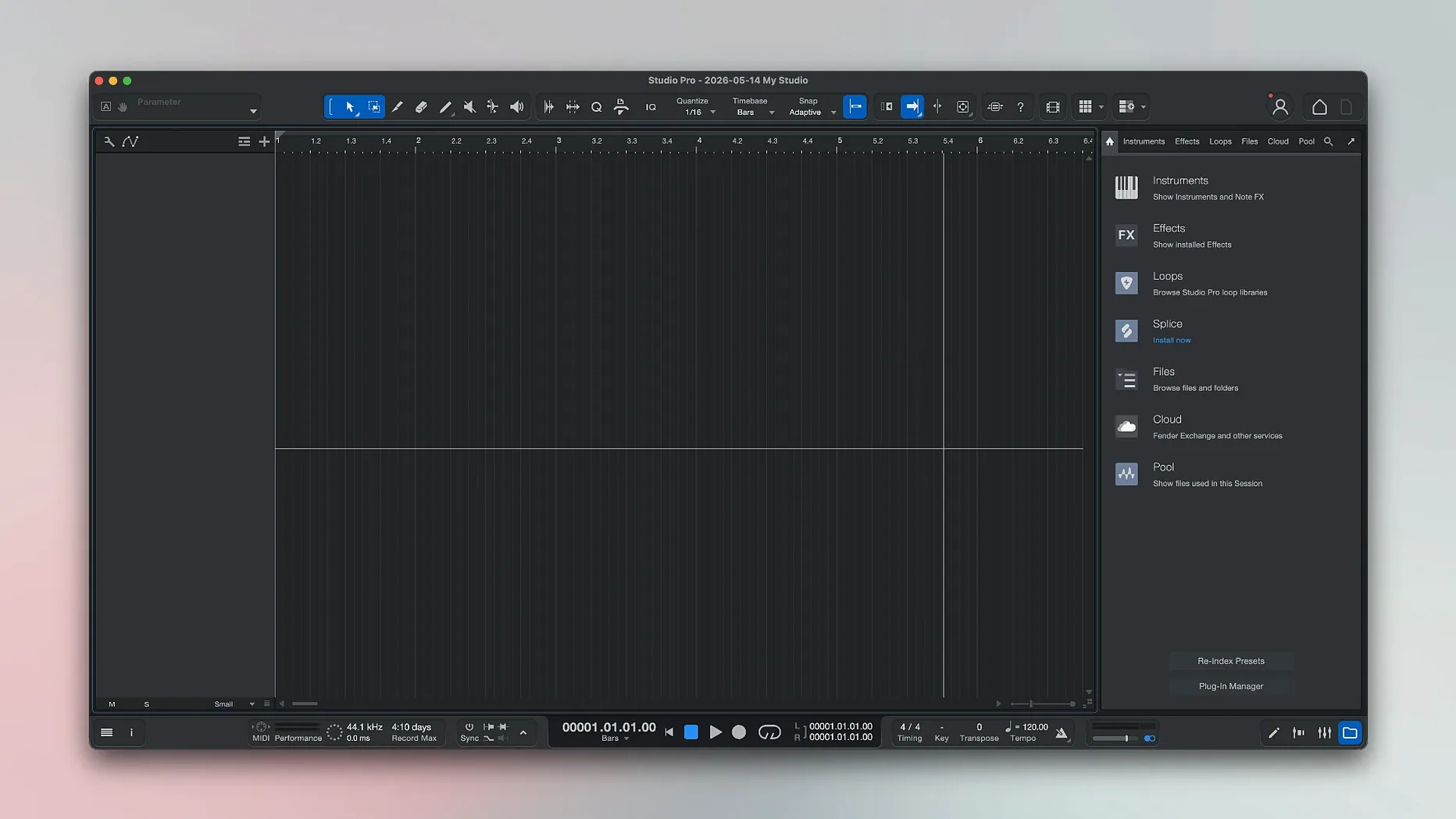
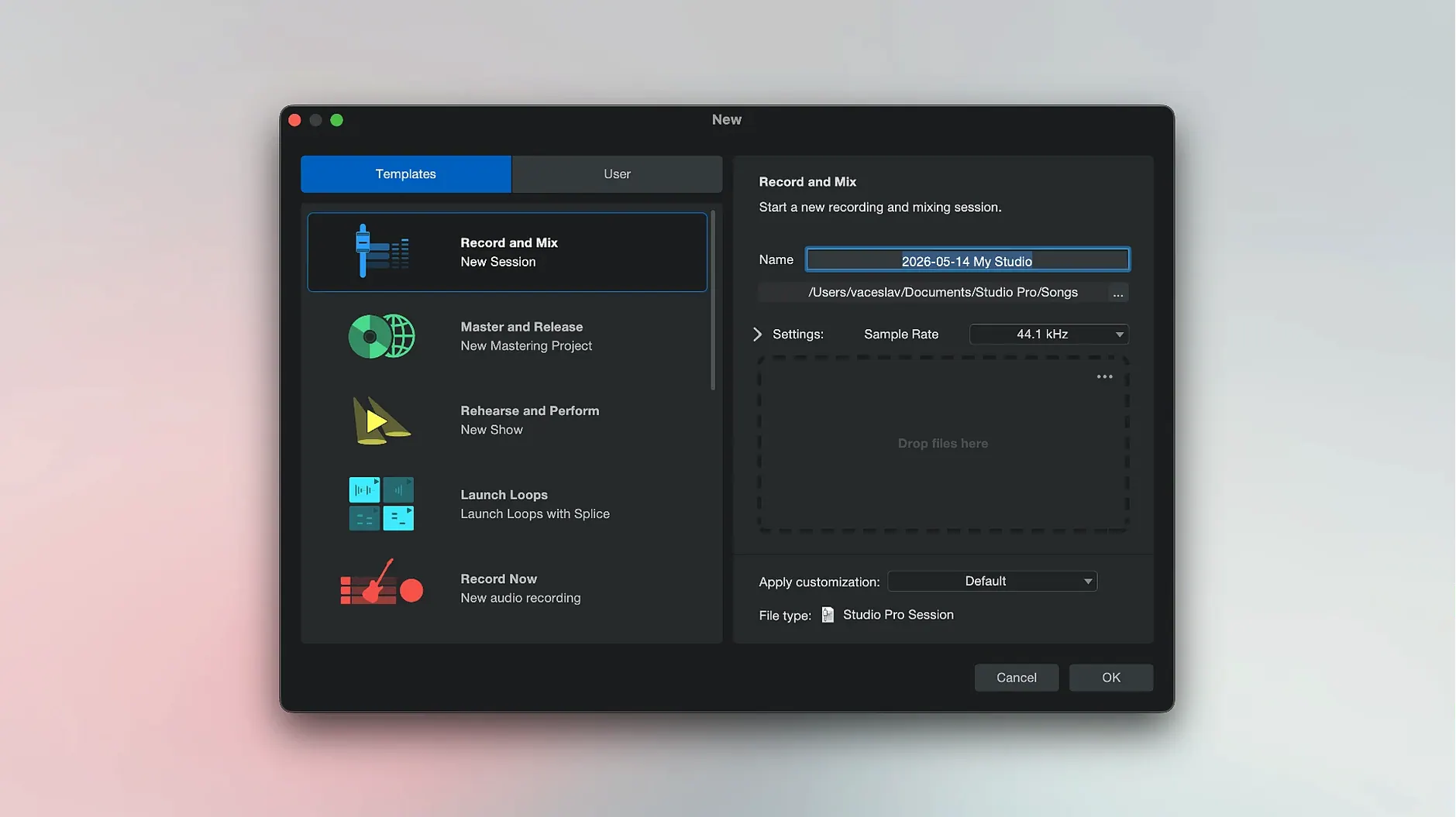
Audio Batch Converter plug-in latency compensation lands in 8.1.1, and it's the excuse we needed to pull apart a few things people ask before they grab the .dmg.
Fender Studio Pro 8 Mac torrent — a search term that bundles the whole recording, mixing, and processing suite into one window, now continuing the Studio One Pro lineage under the Fender badge.
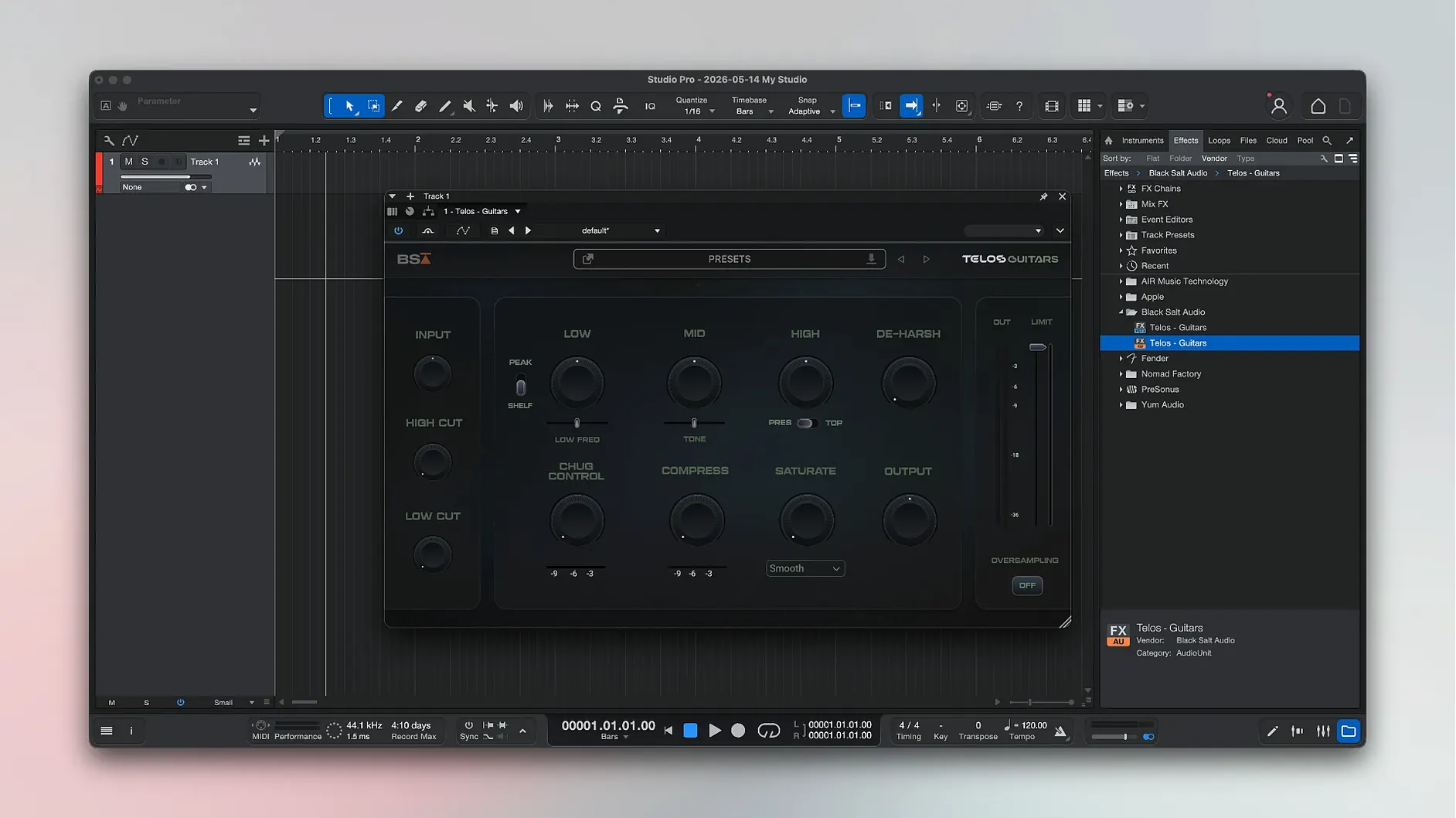
Mustang/Rumble native plug-ins — the built-in guitar and bass amplifiers. They now follow automation properly when Direct Monitoring is switched on, so your fader rides translate to what you hear in real time.
Fender Studio Pro Remote — a companion app for controlling the DAW from a Mac or Windows machine on the same network. Not a mixer surface; it's the software remote that talks to the main session.
Freeze Instrument Track — now accessible right from the Launcher. Bounce a virtual instrument track to audio without digging through menus. Useful when you're stacking the Fender-branded instrument sounds and hitting a CPU ceiling on an older Intel Mac.
Apple Silicon native — the binary runs directly on M-series chips and Intel 64-bit Macs, no Rosetta translation layer for the ARM build.
What are people asking before they install it?
One question that keeps coming up is whether this acts as a standalone DAW or just a front-end for PreSonus hardware. It is a full, self-contained recording environment — no interface lock-in, no dongle requirement beyond what the activation instructions in the package walk through. You can track with a Scarlett, an Apollo, a built-in mic, whatever the system sees as a Core Audio device.
Another recurring ask: does it open old Studio One sessions? Yes, the lineage under the Fender name means your .song files from earlier Studio One Pro versions load directly. Third-party AU and VST3 plug-ins you already have installed get scanned on first launch, same as before.
People also want to know if the guitar amp models are just repackaged Ampire presets. They are not — the Mustang and Rumble native plug-ins are distinct models built around Fender's own amplifier circuits. You get the clean headroom of a Twin, the midrange character of a Bassman, and the growl of a Rumble bass amp as separate loadable instances, not wrapped impulse responses.
The chord suggestion and audio-to-notes features raise a common question too: does it need an internet connection for analysis? No — chord detection, transient splitting, and monophonic pitch conversion all run locally. The Harmonize engine that suggests chord progressions works offline.
Skipping the I/O setup wizard: no signal on armed tracks
The first one is ignoring the I/O setup wizard that appears after the initial scan. Skipping it leaves input channels unassigned, and then the obvious symptom is a track armed for recording with no signal showing on the meter. Walk through it once — it maps every available input on your interface and sets the default output pair.
Another classic slip: loading a Mustang amp insert on a stereo track. The plug-in expects a mono input — feed it a stereo guitar bus and the left channel drives the amp model while the right one passes through unaffected. It sounds thin, and the fix is just switching the track to mono in the inspector.
The Audio Batch Converter catches people too. Dropping a folder of .wav stems onto it without checking the target format preset can resample everything to 44.1 kHz when you meant to keep 48 kHz. The latency compensation added in 8.1.1 helps during conversion of plug-in-processed files, but the sample rate setting is still manual — set it before you drag files in.
Newcomers also tend to freeze tracks unnecessarily. Freeze Instrument Track in the Launcher is one click, but freezing converts the virtual instrument output to a rendered audio file and disables the synth engine. If you want to tweak the amp gain on a Mustang insert later, unfreeze first — otherwise you are editing a flattened waveform with no amp model behind it.
Finally, the stem separation feature — splitting a mixed recording into vocals, drums, bass, and other instruments — is impressive, but it expects a well-recorded source. Running it on a phone recording of a band practice yields phase artifacts. Feed it a clean stereo mixdown and the separation is surprisingly clean.
Cold launch under four seconds on an M1 Max
On an M1 Max with 32 GB of RAM, the ARM build launches cold in under four seconds. The plug-in scanner runs once after installation and again only when you add new AU or VST3 components to the system folders. Loading a 40-track session with three Mustang instances, two Rumble bass amps, a handful of pedalboard inserts, and Superior Drummer 3 puts CPU load around 25 percent with a 128-sample buffer. No dropouts during tracking, even with Direct Monitoring off.
Stability has been uneventful in the best way. Across several eight-hour mixing days, the only crash came from a third-party convolution reverb that also misbehaves in Logic. Fender's native plug-ins — the amps, the effects pedals, the instrument library — have not caused a single hang. The 8.1.1 fix for Mustang/Rumble automation following Direct Monitoring matters if you ride faders during a punch-in; previously the plug-in ignored automation lanes when DM was enabled, and that is now corrected.
Memory use sits around 1.8 GB for the application process with an empty project open. A dense session with virtual instruments pushes it toward 6 GB, which is reasonable for a modern DAW. Disk I/O for audio recording defaults to the system temp location unless you set a dedicated scratch folder — worth doing on an external NVMe drive if your internal storage is tight.
The Remote app adds about 120 MB of background memory when connected over Wi-Fi. Latency between the main session and the remote display is under half a second on a local network; enough to hit transport controls from a tracking room without feeling laggy.
Opening a template with Mustang and Rumble tracks pre-loaded
Imagine a songwriter tracking a demo at home on a MacBook Air M2. She opens a session template with four tracks pre-loaded: a software drum kit, a Rumble bass amp instance, and two Mustang guitar channels — one set to a Deluxe Reverb model with spring reverb, the other to a clean Princeton with tremolo. She plugs a Telecaster into a USB interface, arms the Deluxe track, and plays through the preset. The Direct Monitoring path keeps latency under three milliseconds; the amp responds to pick attack the way a hardware combo does.
She records a rhythm part, then uses the chord suggestion feature on the recorded audio. Harmonize reads the changes — a I-IV-V progression in G — and offers extensions on a sidebar. She drags a suggested minor seventh onto the timeline as a MIDI region, loads the Fender Rhodes virtual instrument, and lets the MIDI drive the electric piano part.
The bass line comes next. She drops the guitar DI into a new track, inserts the Rumble amp, and shapes a tone with the onboard 4-band EQ and compression. The Freeze Instrument Track command in the Launcher bounces the CPU-heavy drum kit to audio so the Air's fan stays quiet.
Finally, she records a vocal, applies a pedalboard-style slap delay from the built-in effects, and uses the stem separation on a rough stereo bounce to pull the drum transients into their own lane for independent level control. The whole session — tracking, amp modeling, chord analysis, virtual instruments, stem splitting — happens inside one window, on battery power, with no external DSP box. That is the workflow the program enables.
- Audio Batch Converter compensates plug-in latency during batch processing.
- Mustang and Rumble native plug-ins respect automation data with Direct Monitoring active.
- Freeze Instrument Track is available directly in the Launcher.
- macOS 13.5 Ventura or later
- Apple Silicon or Intel 64-bit Mac
Comments 0
Sign in or create an account to leave a comment.
No comments yet. A codec, a slice, a machine — they appear after moderation.