
Deus Ex: Mankind Divided for macOS
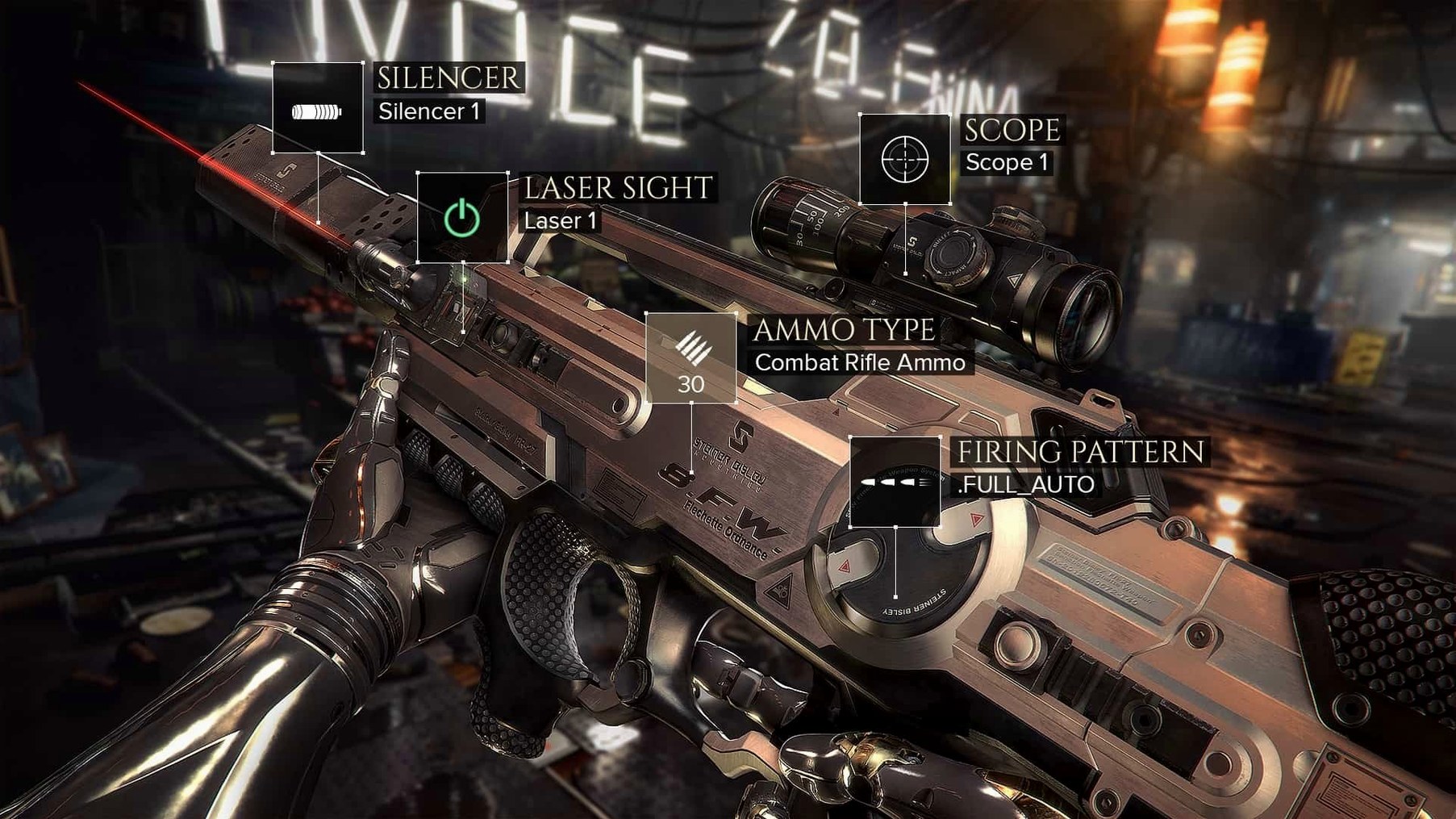
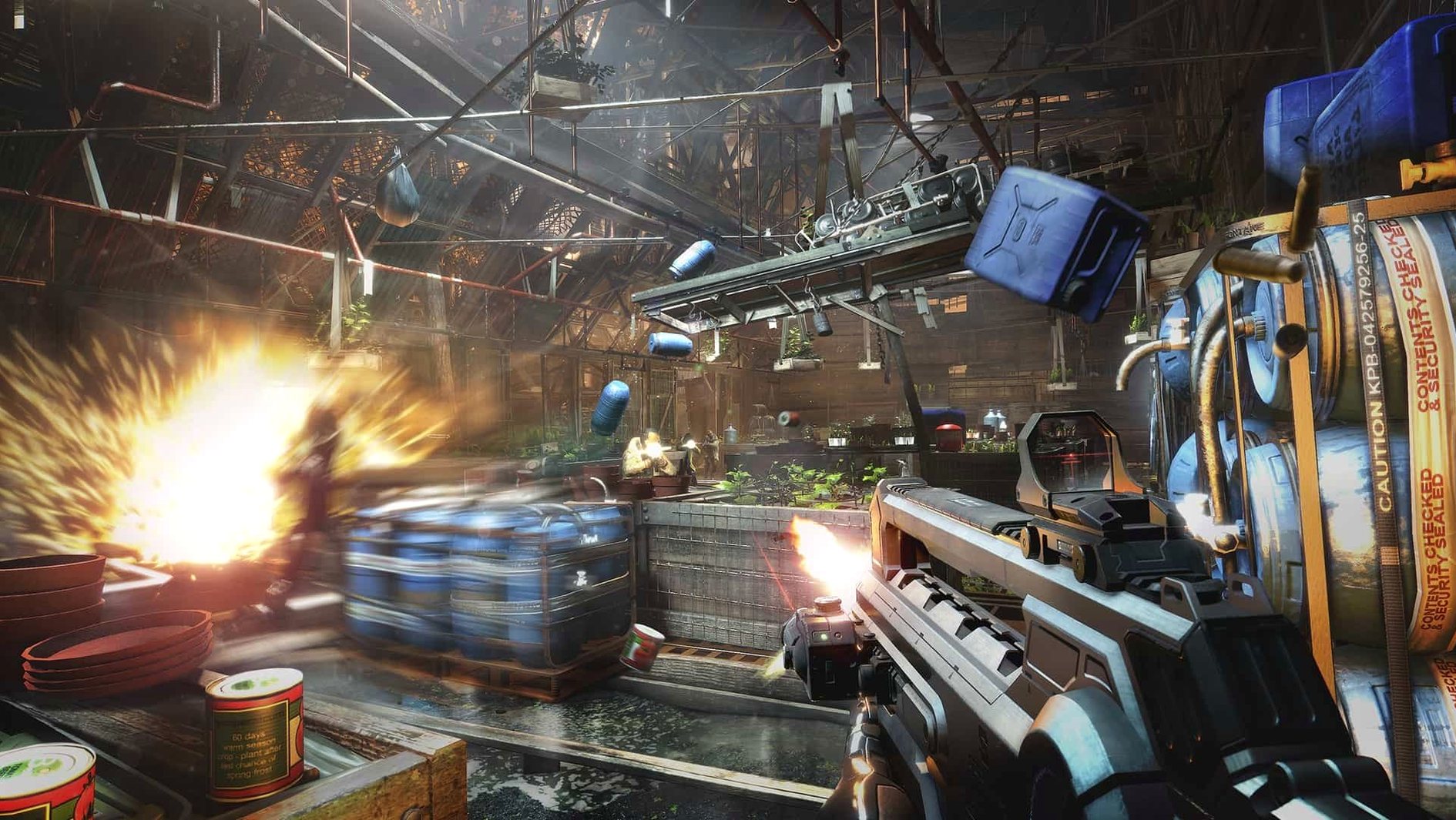
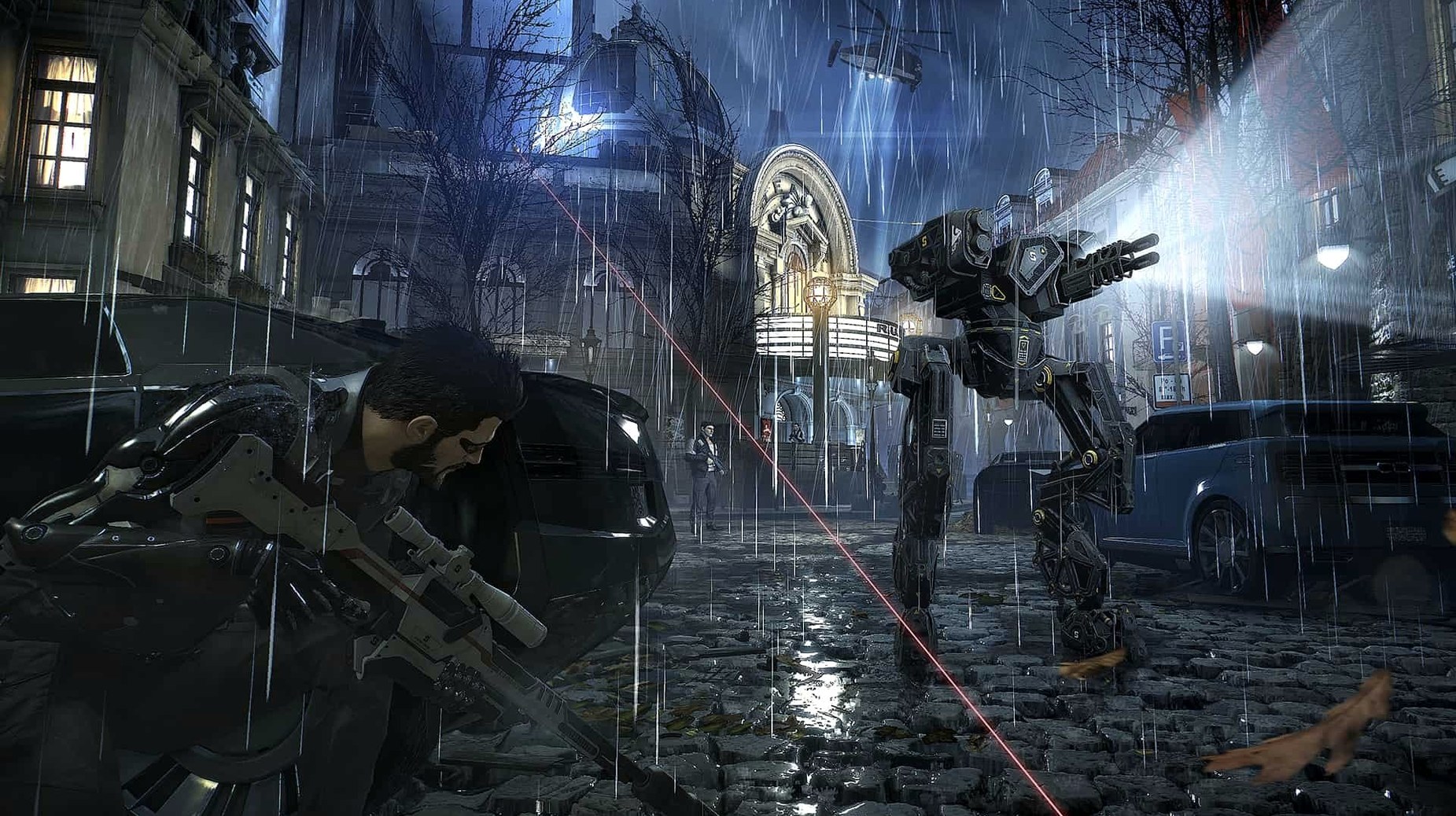
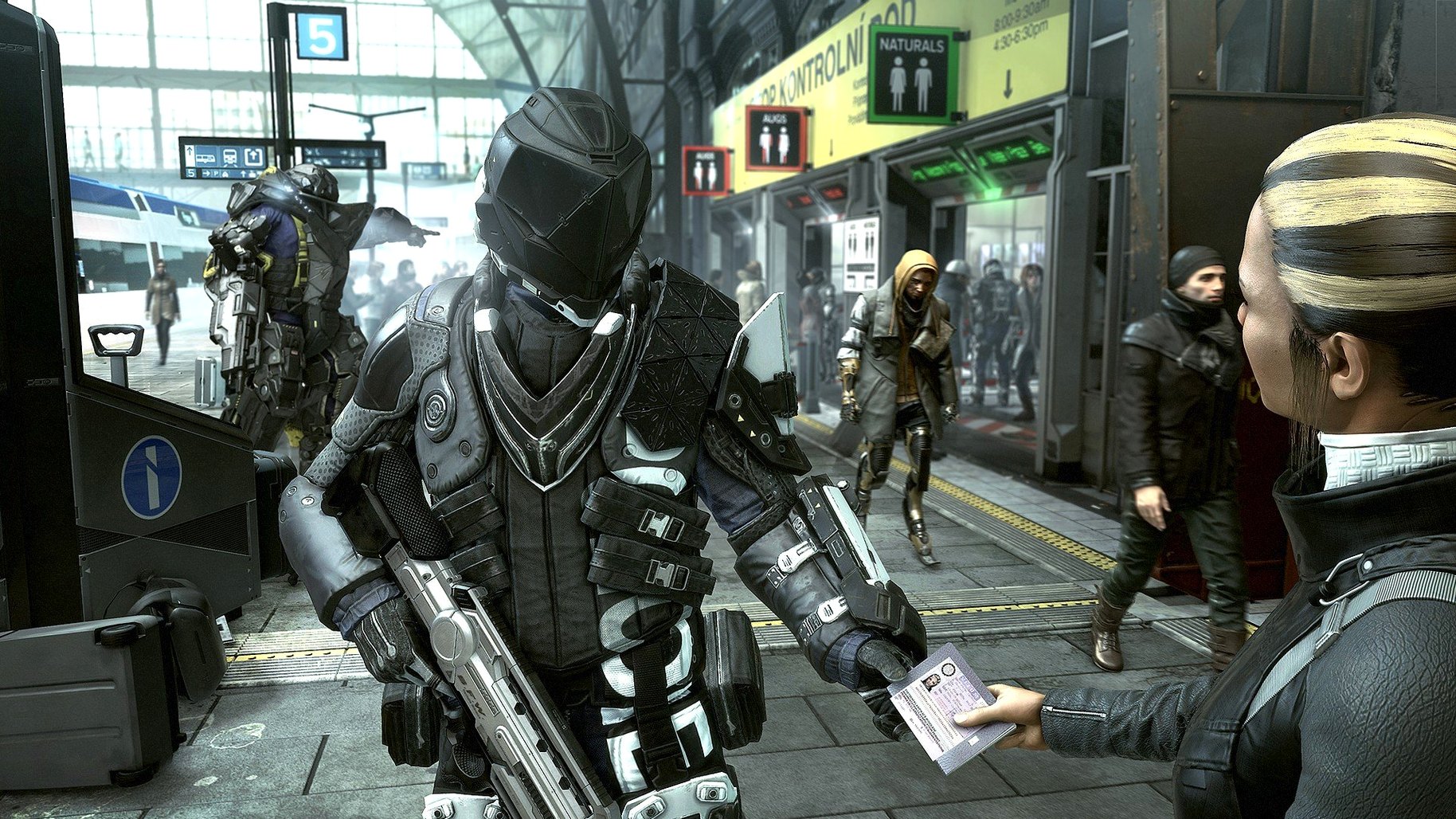
Stealth players who treat shadows as a second inventory, and action fans who prefer to solve problems with a Tesla arm cannon — both find their corner in this one. You step into the augmented limbs of Adam Jensen, working through a near-future Prague where the choice between a ventilation shaft and a firefight is always yours.
The Mac build arrives as an x86 64-bit binary, so it runs on Intel machines and the Rosetta 2 layer on Apple Silicon. Feral Interactive handled the port, and everything in the base game is here. You get the full campaign, plus the Nanoblade and Titan skin armor for moments when stealth goes sideways and you need to tank some damage in open combat. The Tesla arm cannon takes a starring role — after upgrades, you can lock on and disable up to four targets at once, a satisfying way to clear a room without firing a single ballistic round.
On the language side, it is a generous package. The interface ships in English, Russian, German, Spanish, Italian, Polish, Portuguese, and French. Voice work covers most of those too — English, Russian, German, Spanish, Italian, Portuguese, and French are all on the audio track, so you can match subtitles to spoken language or mix them however you like.
What should I change in the settings before playing?
Open the display options first. The Mac build defaults to a resolution that is safe but often soft on Retina screens. Push it to your panel's native pixel count and let the 2GB Radeon M290 floor handle the rest — frame pacing on the Feral port holds up better than the spec sheet suggests. While you are there, disable motion blur. Jensen's first-person pivot benefits from sharp edges, especially when you are tracking a guard's head movement through a gap in a shipping container.
Field of view is the other slider worth moving. The default is around 80 degrees, which feels cramped inside Prague's tight interiors. Bump it to 90–95. The wider view gives you a better read on patrolling enemies without breaking the visual density of the environments. If the HUD markers start to feel like hand-holding, toggle objective waypoints down to minimal — the level design in Golem City and the Palisade Bank is readable enough from signs and environmental cues alone.
A stealth run through the Palisade Bank, step by step
The bank vault sequence is a good showcase for a pure stealth workflow. Here is one route through it that leans entirely on Jensen's augments and none on his trigger finger.
- Approach from the underground parking entrance on the west side. Crouch-walk to the security booth and use the Smart Vision module to tag the two guards inside. Wait for the patrol loop to split them — one moves to the stairwell at the 40-second mark.
- Remote-hack the camera above the booth door. Cycle its feed to a loop, then lock the door behind the second guard. That gives you a quiet corridor to the server room.
- Inside the server room, hack the level-3 terminal on the left rack. This pulls the vault schematics and disables the laser grid on the executive floor above. Do not skip this — the grid covers the only silent entry to the vault antechamber.
- Take the maintenance ladder behind the server racks. It drops you into a ventilation shaft that runs directly above the vault antechamber. Drop through the ceiling grate, stay low, and hack the retinal scanner on the vault door. No alarms, no bodies, no reload.
The Tesla aug gets its moment if the script triggers an alert during the exit cutscene — a known quirk on version 1.1.2. If guards swarm the lobby, a charged Tesla shot to the floor disables the first wave long enough for you to reach the elevator and leave clean.
Unlock the silent landing aug early to evade guards in Prague
Invest early in the Icarus Landing augmentation. It is not just for dramatic rooftop descents — the silent landing modifier lets you drop from balconies without the crash-and-roll noise that alerts guards two floors down. In a dense hub like Prague, that one upgrade opens five times as many infiltration routes.
Rebind the cover toggle to a thumb mouse button if you have one. The default Q key is fine for keyboard-only play, but the snap-to-cover mechanic is sticky by design, and you will be entering and leaving cover dozens of times per mission. A faster input makes the rhythm feel less interrupted.
Pick up every piece of scrap electronics. The crafting economy rewards hoarding — weapon parts and multitools are scarce in the early hours, and you can break down pocket secretaries and broken tablets into the biocells you need for prolonged cloak sequences. Golem City, in particular, is a loot pinata if you check the dumpsters behind the marketplace stalls.
Save manually and often. The autosave checkpoints are spaced for a console cadence and can cost you fifteen minutes of careful ghosting if a patrol route surprises you. Bind quicksave to a key you will not fat-finger, and rotate three manual slots — one for hub exploration, one for mission entry, and one for the mid-mission pivot point where the level opens up.
- Small fixes and general improvements.
- macOS 10.13.1 or later
- Intel x86 64‑bit CPU (3.0 GHz Core i5 or better)
- 8 GB RAM
- 2 GB AMD Radeon M290 or better
Comments 0
Sign in or create an account to leave a comment.
No comments yet. A codec, a slice, a machine — they appear after moderation.